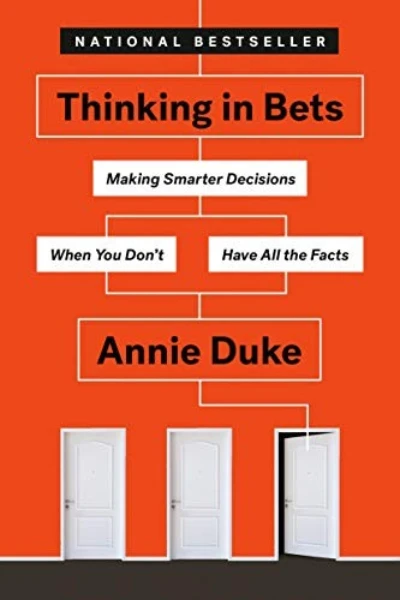
Thinking in Bets
Thinking in Bets — Our bets are only as good as our beliefs
Our bets are only as good as our beliefs
In an episode of the classic sitcom WKRP in Cincinnati, called “Turkeys Away,” the radio station’s middle-aged manager, Mr. Carlson, tries to prove he can stage a successful promotion for the rock-and-roll station. He sends his veteran news reporter, Les Nessman, to a local shopping center and tells him to report, live, on a turkey giveaway he is about to unleash.
The station’s DJ, Johnny Fever, cuts from his show to a live “man on the scene” report from Nessman. Nessman fills time, describing a helicopter overhead. Then something comes out of the helicopter. “No parachutes yet . . . Those can’t be skydivers. I can’t tell what they are but—oh, my God! They’re turkeys! . . . One just went through the windshield of a parked car! This is terrible! . . . Oh, the humanity! . . . The turkeys are hitting the ground like sacks of wet cement!” Nessman has to flee amid an ensuing riot. He returns to the studio and describes how Mr. Carlson tried to land the helicopter and free the remaining turkeys, but they waged a counterattack.
Carlson enters, ragged and covered with feathers. “As God is my witness, I thought turkeys could fly.”
We bet based on what we believe about the world. Pete Carroll’s Super Bowl decision to pass on the Patriots’ one-yard line was driven by his beliefs—his beliefs about quarterback Russell Wilson’s likelihood of completing the pass, of having the pass intercepted, of getting sacked (or scrambling for a touchdown). He had data on and experience about all these things, and then had to apply that to this unique situation, considering his beliefs about the Patriots’ defense and how their coach, Bill Belichick, would set up the defense for a likely running play on the goal line. He then made a choice about the best play to call based on these beliefs. He bet on a pass play.
The CEO who suffered all that anguish over firing the president did what he did based on his beliefs. He made his decision based on his beliefs about how the company was doing compared with competitors, what he thought the president did that contributed to or detracted from that, the likelihood he could get the president’s performance to improve, the costs and benefits to splitting the job between two people, and the likelihood he could find a replacement. He bet on letting the president go.