
Book Renzo
Short Stories
14 books in this genre
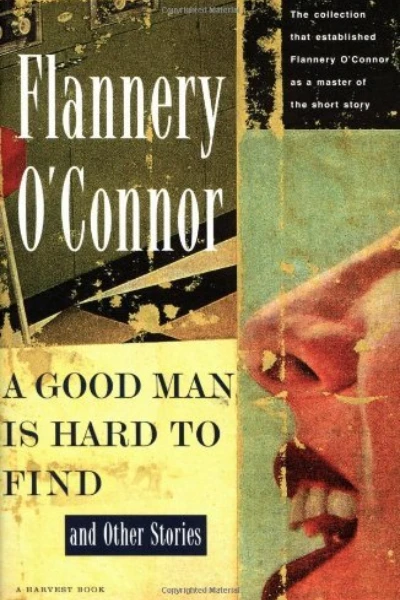
A Good Man Is Hard to Find and Other Stories
Flannery O’Connor
One Basket
Edna Ferber
The Door in the Wall, and Other Stories
H. G. Wells
The Magic Egg, and Other Stories
Frank R. Stockton
Tales and Fantasies
Robert Louis Stevenson
Round the Red Lamp
Arthur Conan Doyle
Hell Fer Sartain and Other Stories
John Fox
The Lady, or the Tiger?
Frank R. Stockton
An Occurrence at Owl Creek Bridge
Ambrose Bierce
Buttered Side Down
Edna Ferber
The Troll Garden
Willa Cather
Old Indian Days
Charles A. Eastman
Three Elephant Power, and Other Stories
Andrew Barton Paterson
Tales from Two Hemispheres
Hjalmar Hjorth Boyesen
Classic Short Stories — The Compressed Art of the Great Storytellers
The short story is a specific and demanding literary form, and it is not simply — as some readers assume — a shorter version of a novel. A great novel builds slowly, accumulating character and world and consequence over hundreds of pages. A great short story has to do everything in a fraction of that space: establish a world, introduce characters, dramatize a situation, and land some kind of ending, all in the span of a train ride. Writers who work in the form seriously have to be economical, precise, and merciless about what to leave out.
The Book Renzo short stories shelf gathers work from some of the writers who understood that discipline best.
Edgar Allan Poe's short stories are one obvious starting point. Poe essentially invented the modern American short story as a form, and his best tales — The Fall of the House of Usher, The Cask of Amontillado, The Tell-Tale Heart, The Masque of the Red Death — are examples of what compressed atmospheric fiction can do at its highest level. Poe believed the short story had one enormous advantage over the novel: it could be read in a single sitting, which meant every effect of tone, image, and structure could be calculated to build toward a single overwhelming emotional impression. His theory of the "unity of effect" shaped how serious American short fiction was written for the next century.
Anton Chekhov, working in a completely different key, is another writer whose short stories belong on any serious shelf. Chekhov's stories are usually quiet, small in scale, and focused on the interior lives of ordinary people. Almost nothing "happens" in the traditional plot sense. And yet by the end of a Chekhov story you feel that you have understood something essential about a person you have only just met. His influence on the modern short story — through writers as different as Katherine Mansfield, Raymond Carver, and Alice Munro — is difficult to overstate.
Between Poe's high-atmospheric compression and Chekhov's quiet psychological realism lies a huge range of possibility, and the classic short story tradition explores most of it. We're continuing to expand this shelf toward more of it: Guy de Maupassant's precise French realism, Katherine Mansfield's psychological modernism, James Joyce's Dubliners, W.W. Jacobs's dark tales, Stephen Crane's American realism, and the wider body of nineteenth- and early-twentieth-century short fiction that shaped the modern form. Every story on this shelf is a verified public-domain text.
For a reader looking for a quick literary experience without a long commitment, the short story is the ideal form. Read one over lunch. Read three in an evening. Start reading.