
Book Renzo
Genre
Gothic Fiction
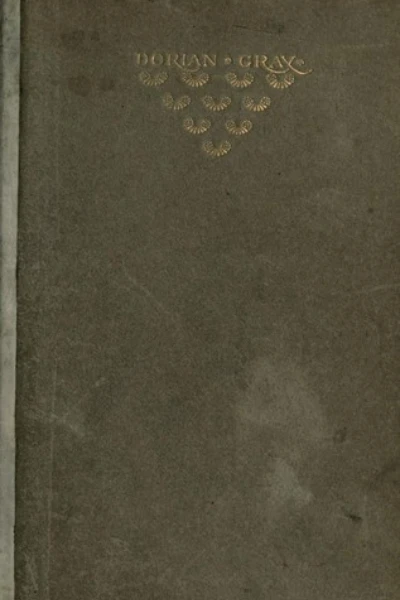
Gothic Fiction — Oscar Wilde and the Literature of Beauty and Corruption
Gothic fiction is one of the most enduring literary traditions in the English language. Its origins go back to the late eighteenth century — Horace Walpole's The Castle of Otranto in 1764 is usually cited as the founding text — but its influence runs everywhere in modern literature: through horror, mystery, romance, dark fantasy, and psychological fiction. What defines the Gothic mode isn't a specific setting or plot but a specific set of preoccupations: with darkness, with beauty and its costs, with moral decay, with the supernatural, and with the strange places inside the human self that most fiction refuses to look at directly.
The Book Renzo Gothic fiction shelf features Oscar Wilde's The Picture of Dorian Gray, published in 1890 — one of the most iconic Gothic novels ever written and Wilde's only novel. The premise is simple and unforgettable. Dorian Gray, a young and extraordinarily beautiful man, has his portrait painted by an artist named Basil Hallward. In a moment of vanity Dorian wishes that the portrait would age instead of him, and — in a way the novel never fully explains — his wish is granted. Dorian remains outwardly young and beautiful; his portrait, hidden away in an upstairs room, records every act of moral corruption he commits.
What Wilde does with this premise is far more interesting than the horror it enables. Dorian Gray is a book about aestheticism — the belief that beauty is the highest value — and about what happens to a person who lives that belief through to its logical end. Dorian, under the influence of the cynical and endlessly quotable Lord Henry Wotton, pursues a life devoted entirely to sensation, pleasure, and beauty. He treats other people as objects. He commits acts of cruelty. And because his face registers none of it, he is able to continue pretending to himself that none of it matters.
The novel is philosophically rich, aphoristic, and unlike almost anything else Wilde wrote — which is saying something, because Wilde was one of the sharpest wits in nineteenth-century English literature. His prose in Dorian Gray moves between epigrammatic dialogue that could belong in one of his plays and passages of dense atmospheric description that belong entirely to the Gothic tradition. The book was scandalous on publication; Wilde was later cross-examined about it in the trial that ended his career. Read today, more than 130 years after its publication, it remains startlingly modern — a novel about the corruption of a person by his own image that feels, if anything, more relevant now than when it was first written.
Gothic fiction as a wider category is enormous. Mary Shelley's Frankenstein, Bram Stoker's Dracula, Emily Brontë's Wuthering Heights, Charlotte Brontë's Jane Eyre, the ghost stories of M.R. James, Sheridan Le Fanu's Carmilla, the darker works of Edgar Allan Poe — every one of these belongs on a Gothic fiction shelf. We're continuing to expand ours toward all of them. Every book here is a verified public-domain text. Start reading.