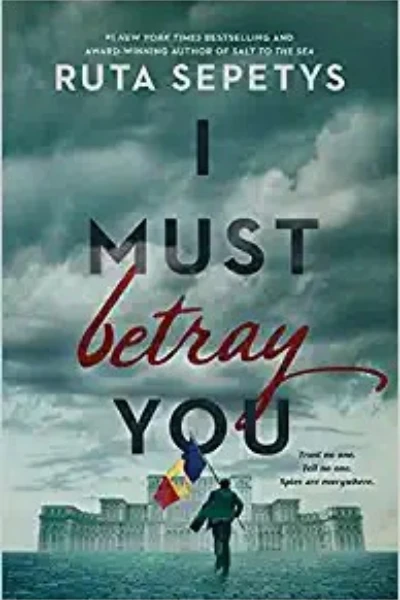
I Must Betray You
I Must Betray You — 56 (Cincizeci Şi Șase)
56
CINCIZECI ŞI ȘA SE
stayed awake all night on Bunu’s couch, searching for radio updates.
State radio and television reported nothing. Of course not. Radio FreeI Europe and Voice of America were the only sources of information.
The regime knew that. Would they jam the signal? No, that was too expensive. They hadn’t jammed signals in years and probably lacked the equipment to do so.
The announcer said civilian deaths had been reported.
Timișoara. The heart. The courage. We had to help them. I pulled the faded map from the cabinet drawer. It was 550 kilometers from Bucharest to Timișoara, a seven-hour drive, longer with our precarious roads. Could groups or buses be arranged? Perhaps we could build a chain of protests across the country. Together, we could close in on Ceauşescu. Trap him.
Overthrow him.
Right here in Bucharest.
“It’s happening, Bunu,” I whispered.
Poland.
Hungary.
East Germany.
Czechoslovakia.
Bulgaria.
Their communist regimes had all fallen in nonviolent, bloodless transfers of power. But Romania remained, the last flap of the Iron Curtain.
For decades, Ceauşescu had tied a strangling noose of national communism
around our necks. If we wanted our freedom, we’d have to fight for it. And our ruthless dictator, he would fight back. He’d mobilize his death squads of blue-eyed boys from beneath the belly of the capital to kill his own people.
And he’d do it without a second thought.