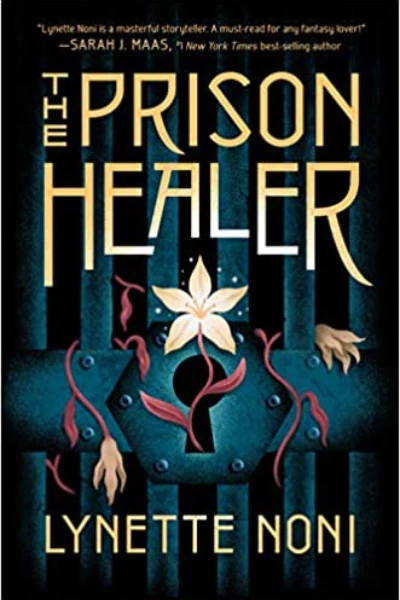
The Prison Healer
The Prison Healer — Chapter no 25
C H A P T E R T W E N T Y- F I V E
“If you d-don’t go, I’ll push you out the d-d-door myself.”
Kiva pulled a face at Tipp, the young boy standing with his hands on his hips beside the rat pen, staring at her like a disgruntled puppy.
It was three days since she’d found him passed out in the garden. The first day had been hell, with her certain he would soon be heading to the morgue. But after his fever broke late that night, he’d improved dramatically, and it had been a struggle to keep him resting as what remained of the short- term bug he’d caught left his body. The only way she’d managed to keep him in bed was by promising to test the samples she’d collected the day he’d fallen ill, having put them aside to care for him.
She’d completed her tests yesterday under his watchful eye, the two of them alone in the infirmary, with Jaren having gone back to the tunnels and Naari accompanying him to smooth out any wrinkles caused by his absence. Kiva was beyond the point of questioning the guard’s motives, and was now just grateful for the unexpected ally she’d become—for all of them.
But today . . . since the most recent tests had failed yet again, Naari had arrived at the infirmary early that morning, reminding Kiva that she still had more samples to collect. And despite Kiva’s protests that she needed to remain with Tipp in case of a relapse, the young boy refused to allow her to stay behind and coddle him for another day.
“Your n-next Ordeal is tomorrow, Kiva,” Tipp said. “You need to t-test the aquifer and the t- tunnels so that you’re done. I’m fine, so stop w-worrying and just go.” He pointed to the door, as if doing so would help convince her.
“Don’t worry, sweets, I’ll keep an eye on him,” Olisha said, having arrived with Nergal to cover the day shift.
The offer was meant to reassure Kiva, but the last time Olisha had watched over Tipp, he’d collapsed out in the freezing cold, entirely forgotten. As such, Kiva didn’t have much confidence in the woman’s ability to monitor him.
Tipp sighed and said, “I w-won’t leave the infirmary, I promise. Not even if there’s a f-fire.”
Kiva frowned. “Please do leave if there’s a fire.”
“Fine, b-but aside from that, I won’t move. I’ll keep B-Boots away from the rats, and I’ll m-make sure Tilda eats something. I’ll even t-try and get Nergal to d-do some work.”
The man in question made a harrumph sound and proceeded to clean his fingernails, while Olisha sniggered at his side.
“How about you take a nap,” Kiva suggested instead. “Sleep is good for you.”
“I’ve b-been sleeping for days,” Tipp complained. “I’m all b-better, Kiva.” He held his hands out to the sides. “Fit as a f-f-fiddle.”
It was true that Tipp had made an amazing recovery, to the point that it was almost impossible to believe that she’d feared he was on his deathbed only a few days earlier. But that didn’t mean she wasn’t struggling with the all-consuming terror she’d experienced at the thought of losing him.
“If you feel even the slightest bit unwell—”
“I’ll have someone c-come and get you,” Tipp said, rolling his eyes. “I know, I know.”
Kiva ignored the eye roll and stepped closer, pulling him into a tight hug. He froze in her arms, before his hands came around her and he hugged her back.
“This is n-nice,” he said, his words muffled by her tunic. “We should d-do this more often.”
Kiva laughed and pushed him away, pointing a finger toward the bed he’d used since falling ill.
“Rest. I mean it.”
He rolled his eyes a second time, but he trudged obediently to the bed and sat down. How long he’d stay there, Kiva didn’t know, but she trusted that he wouldn’t break his word and leave the infirmary while she was gone.
“I’ll be back as soon as possible,” Kiva told Olisha and Nergal, the former nodding in reply and the latter giving an uncaring lift of his shoulders.
Kiva hurried over to where Naari was waiting at the door, following the guard out into the crisp morning and toward the center of the prison grounds.
“You’re testing the water today?” Naari asked.
“That’s really all that’s left,” Kiva said. “That, and the tunnels.”
“We’re heading there as well?”
Kiva nodded. “Everything left is underground, so we might as well check a few of the passageways straight after the aquifer and the pumping station. Then we’ll be done.”
“Done?” Naari repeated. “As in, done-done?”
“Unless you can think of somewhere else that should be tested,” Kiva said, “then yes, done-done.”
Neither of them said what they were both thinking—that everything was riding on today’s samples.
If the rats didn’t show any symptoms by tomorrow, then her attempt at finding the origin of the illness would have failed.
“Don’t think about it,” Naari said, reading Kiva’s mind. “Water can host all kinds of bacteria. I’m sure you’ll find something today.”
Kiva appreciated her confidence, and was about to say as much, when an angry voice yelled her name. They were halfway across the open space between the infirmary and the domed building at the center of the prison, where the ground was muddy, the grass patchy and mostly dead. There was little else nearby, the closest building being a watchtower, which was why Kiva was surprised to turn and see Cresta marching in their direction, the woman’s hands clenched into fists by her sides.
“Where the hell do you think you’re going?”
Kiva’s brows rose. “Excuse me?”
Cresta came to a stop in front of Kiva, pointing a finger straight at her face. Naari edged closer, but didn’t interfere.
“My friends are sick and dying,” Cresta said, moving her finger back toward the infirmary. “And you’re out here doing—what? What’re you doing, healer? ’Cause you damn well aren’t making them any better.”
At first, Kiva was relieved, having feared Cresta had approached to remind her that Tilda needed to stay alive, and Tipp’s life would be forfeited if Kiva failed tomorrow’s task. Never mind that Kiva’s life would also be forfeited. They were all linked now; Cresta had no need to continue threatening her. But then Kiva processed what the irate woman had said, and a heavy feeling hit her stomach. This wasn’t about protecting the Rebel Queen at all. This was about something beyond one person, beyond any of them, rebels included.
“Cresta . . .”
“Don’t you ‘Cresta’ me,” the young woman spat, her expression so livid that her serpent tattoo looked like it would rise out of her face and strike at Kiva. “You want to know what just happened?
Tykon dropped like a slab of luminium halfway to the quarry, couldn’t get up again. Shaking, puking everywhere. Harlow let me drag him back, but only so he could follow and stare at my ass the whole way, the perverted fu—”
“Where’s Tykon now?” Kiva interrupted, cringing at the thought of the repugnant quarry master.
Cresta pointed toward the infirmary again. “He’s where you should be. But you’re not. Because you’re here.” She slammed her finger toward the earth, silently demanding an answer.
“I’m . . . working to fix it,” Kiva said cautiously.
“To fix what?” Cresta shoved her matted red hair over her shoulder. “This stomach virus?”
“Yes,” Kiva said, not offering any more, and wondering when Naari was going to step in and stop
this.
Cresta’s eyes narrowed. “You’re lying.”
Kiva raised her hands. “I’m not. Why do you think I was at the quarry? I was collecting samples for testing, just like I am today.” She patted the bag on her shoulder.
“That was over a fortnight ago,” Cresta exclaimed. “More and more people are dying every day.
Hell, everyone who comes to see you for the smallest thing ends up getting sick—explain that, healer!
Are you telling me you’re still trying to figure out why? ”
Kiva didn’t have a response, unsure what she was allowed to say, especially to someone as volatile as Cresta. If the rebel leader used this to stir up more dissent among the prisoners, if she tried to create a panic . . . Things were already brewing too close to the surface, with whispers circulating about what had happened nine years earlier, the same spreading sickness, the same mass deaths. The murmurs were growing, the fears deepening. If something didn’t calm the inmates soon . . .
“I think you should be getting back to the quarry now,” Naari said, clearly thinking along the same lines. “Where’s Harlow?”
“Where do you think?” Cresta asked, one hand on her hip. “He’s in the kitchens, stealing from our rations. Like you lot don’t get enough of our food as it is.” Her face darkened. “He’s probably getting handsy with the workers there at the same time, so trust me, he’ll be in no rush to leave.”
Naari’s expression tightened, her eyes blazing as she turned to Kiva. “I’ll meet you at the tunnel entrance. Don’t go down without me.” To Cresta, Naari said, “Come with me.”
And without another word, she strode off in the direction of the kitchens, not waiting to see if Cresta would obey.
“If she weren’t a guard, I think I’d like her,” the angry woman mused. But then she remembered who she was standing with, and she sneered at Kiva. “Fix this, healer whore. Before we all die. Our blood is on your hands.”
With that parting line, she turned and began marching away.
“Wait!” Kiva called.
Cresta paused, glancing back over her shoulder. “What?”
Aware that she had mere seconds before Naari became suspicious of the delay, Kiva closed the distance between them and whispered, “Have you heard anything? About Tilda? About another rescue attempt?”
Cresta’s features were like granite as she forced out a single word. “No.”
Kiva’s shoulders slumped, even if she’d already assumed as much. “What does that mean?”
“It means we wait,” Cresta said. “And you do what you’re supposed to—keep her alive until the time comes.”
With a sharp, warning look, Cresta took off again, leaving Kiva alone.
“That’s easier said than done,” she muttered to herself. Not only did she have to survive tomorrow’s Trial, she also had to keep both herself and Tilda from catching the stomach illness— without knowing how it spread to begin with—and if she somehow managed those, she then would have to face yet another Ordeal in a fortnight.
Kiva sighed and rubbed her temples. As far as confrontations with Cresta went, that one hadn’t been so bad. She felt a niggling of concern in the pit of her stomach, wondering what the rebel leader might do with the information she’d learned about the sickness, limited as it had been. Anyone else, and Kiva wouldn’t have been so worried. But Cresta . . . she was a wildcard. It was possible that she would do nothing, keeping her head down and focusing her energy on what was happening with the rebels both inside and outside the walls. Or she could use what she’d heard to add to the fear spreading among the prisoners, creating a dangerous environment where everyone was even more on edge, guards included.
Sighing again, Kiva knew it was out of her hands, so she hitched her bag further up her shoulder and continued her journey to the tunnel entrance, refocusing on her mission. Both the aquifer and the pumping station were accessed via the same shaft that led down to the tunnels, so once she reached the domed stone building, she stepped inside to wait for Naari. There was nothing to look at, only a set of ladders poking out from the large rectangular hole in the ground.
The guard arrived minutes later, her face stormy. “Please tell me Harlow’s rash is painful as well as itchy.”
Kiva swallowed her laugh and said, “Judging by how he winces when he walks, I’m guessing so.”
“Good,” Naari said, sounding satisfied. She jerked her head toward the ladders descending into the shaft. “Let’s get this over with.”
They headed to the pumping station first, but only for convenience reasons, since it was located nearest to the bottom of the ladder—or ladders, really, since there were a number of them to climb down before reaching the tunnel floor, all connected by platforms narrow enough that Kiva felt her stomach jump to her throat every time she transferred from one to the next.
She’d ventured beneath Zalindov only twice before, both times to test the water in the aquifer for algae and other natural contaminants, and both journeys had been just as harrowing as today’s. Her legs felt like custard when she finally touched the earth at the base of the shaft, perspiration dotting her forehead from both exertion and the humidity that clung to her skin. She’d once believed the tunnels would be much colder than the outside temperature, but she’d learned during her first underground venture that hot air became trapped more easily, keeping the environment almost balmy in winter, and downright uncomfortable in summer. Many of the prisoners who worked belowground suffered from heat-related ailments and dehydration, especially in the warmer months. Not to mention, it was a stink factory, with all those bodies pressed together and laboring side by side with little ventilation.
“I hate it down here,” Naari stated, landing lightly beside Kiva. “I don’t know how anyone can stand it.”
They can’t, Kiva wanted to say. That’s why so many of them die. The prisoners, at least—the guards rotated out every few shifts. Even Naari came and went only sporadically from the tunnels, spending considerably more time topside than she did beneath the earth. Kiva tried not to judge her for it, especially since she herself was so fortunate with her own work allocation. But it was hard, acknowledging that the guard wasn’t forced to remain down here all day, when people like Jaren had no choice.
“Let’s keep moving,” Kiva said, stepping forward.
She spared a glance to the right, where a long passageway had been carved out, luminium beacons affixed to the limestone walls and lighting the space that continued on out of sight. Later, Kiva and Naari would head down that path, eventually hearing the echo of the tunnelers working tirelessly to extend the labyrinth. Some of the passages were dry and could be walked down, but others, the ones the inmates labored to uncover, were partially submerged by water, and required floating paddle boards to maneuver along. It was that water that fed into the aquifer, and, ultimately, kept everyone in Zalindov alive.
No one acknowledged it, but without the tunnelers and the water they found and guided to the aquifer, every single person at the prison, guards included, would be dead within days. That was why it was so important to have a steady flow of laborers underground, despite the poor conditions and high mortality rate. It made Kiva feel sick, and yet, she also understood what would happen if they stopped searching for more water. There was no winning—either a few died, or they all died.
As Kiva led Naari down the narrow passage to the left of the ladder shaft, the sounds of the pumping station met their ears long before they reached their destination. Operated manually with two prisoners to a pump, the continuous up-down-up-down motion drove the water where it needed to go.
Some of the pumps pulled water from the tunnels into the aquifer, but most siphoned water into smaller wells that were then accessed aboveground, like the ones used by prisoners to fetch fresh drinking water. Others fed directly into the shower blocks and bathing chambers, where gravity-fed pipes did the rest of the work. Anywhere water was used, it was only because of the laborers who were pumping day and night to keep a steady supply available topside.
Kiva always struggled when pumpers came into the infirmary, usually for nerve damage to their hands, or for strained backs, necks, and shoulders. There was little she could do for them other than offer painkillers, and after a while, the effect of those began to dull, which was why so many pumpers became addicted to harder drugs, like angeldust. Unlike Kiva’s predecessor, she’d never been willing to supply it for them. She had no idea how it was getting into their hands now, but seeing their glazed eyes as she began to swab the equipment and collect her samples, she knew they were still obtaining it somehow.
Feeling the desolation in the air, Kiva didn’t stay long in the pumping station, quickly taking what she needed while Naari conversed with the guards on duty. They weren’t using their whips, but they didn’t need to. These prisoners were already broken.
“I asked if the pumpers get allocated extra rations,” Naari said as they headed down the next passage, the sounds of moving levers and strained moans fading the further they traveled.
Kiva tried not to reveal her shock at what Naari had just said. “And?”
The guard shook her head and repeated, “I hate it down here.”
It was only a short walk between the pumping station and the aquifer. As the narrow passageway widened and the reservoir came into view, Kiva’s heart began to beat faster in her chest. The luminium beacons were spaced intermittently enough to provide only limited light, but there were still enough spread throughout the underground chasm for Kiva to acknowledge just how far the body of water stretched—further than she could see—with the darkness indicating an equally nightmarish
depth.
“Is something wrong?”
Kiva turned to find Naari studying her closely, so she asked, somewhat nonsensically, “It’s here, isn’t it?”
The luminium beacons cast shadows over Naari’s face, but not enough to hide her puzzled look.
“What’s here? The origin of the sickness? Isn’t that what we’re trying to figure out?”
Kiva shook her head. “No—tomorrow’s Ordeal. Is it being held down here?”
It was still her best guess, enough that she felt queasy as she took in the seemingly endless underground lake.
Naari’s features cleared with understanding, and she glanced out across the aquifer, as if looking at it from a new perspective. “I don’t know.”
Kiva wasn’t sure what her face must have shown, but when Naari looked back at her, the guard was quick to say, “I swear, Kiva. I didn’t know what the last two Trials were beforehand, either. If I knew what tomorrow’s task was, I’d tell you.”
Her tone was so earnest that Kiva believed her. A few weeks ago, she never would have had the courage to even ask, but somehow Naari had become one of the people Kiva trusted most in the world. If the guard said she didn’t know, then she didn’t know.
But that still didn’t help Kiva, at all.
“How long do you think it’d take to swim across?” Kiva asked, crouching beside the nearest edge of the water and scooping some into a flask, careful not to lose her balance.
“Frankly, I don’t want to think about it,” Naari said, a shudder in her normally unwavering voice.
Seeing Kiva’s expression, she hastily added, “But I’m sure it won’t take too long, if that’s what you have to do. And it’s freshwater, so there’s nothing nasty living down here, no sea monsters or crocodilians or any other saltwater beasts.”
That idea hadn’t even crossed Kiva’s mind. She yanked her hand from the water and backed away quickly, half expecting a maw full of teeth to come raging out of the surface.
“At least the water’s drinkable,” Naari tried when she realized she’d only added to Kiva’s distress. “You won’t get thirsty if you have to swim for hours.”
“You think you’re helping, but you’re not,” Kiva said flatly.
Naari remained blessedly quiet as Kiva collected the rest of her samples, after which they retraced their steps along the narrow passageway. Both were lost in their own thoughts, with Kiva’s lingering back at the aquifer and worrying about what she’d have to do the next day. Obsessing over it failed to provide her with any answers as they passed the pumping station and headed back to the entrance shaft.
Their intent had been to venture down the larger passageway into the tunnel labyrinth next so that Kiva could collect the last of her samples, but that plan changed when they found Olisha waiting for them at the base of the ladders.
“I didn’t know which way you’d gone, so I thought it best if I stayed here until you returned,” the woman explained, wringing her hands.
Kiva couldn’t think past the panic that sprang to life within her, all thoughts of tomorrow’s Trial fleeing her mind. “Is it Tipp? Is he sick again?”
“Oh! No, dear, it’s not Tipp.”
“Is it his stomach?” Kiva asked, not listening, just reaching for the bottom rungs of the ladder and preparing to bolt up them and back to the infirmary. “Did his fever come back?”
“Kiva, sweets,” Olisha said, stopping her with a hand on her arm. “It’s not Tipp. It’s Tilda.”
A wave of relief flooded Kiva, before it was swept away by one of dread. “Did she have another convulsion? Is she— Has she—”
“She’s fine, she’s fine,” Olisha interrupted in a calming voice.
Confused, Kiva released the ladder and looked to Naari, who appeared equally perplexed. Turning back to Olisha, Kiva asked, “Then why are you here?”
“Because she’s awake. Tilda’s awake.”
Even more confused, Kiva said, “She wakes up a few times every day.” She paused, then added, “See if you can feed her some broth before she goes back to sleep. We need to keep up her fluids.”
“No, dear, you don’t understand,” Olisha said impatiently. She held Kiva’s eyes as she explained, “Tilda’s awake—and she’s lucid.”