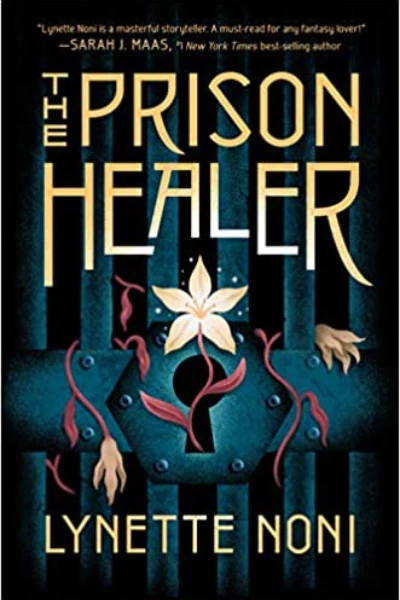
The Prison Healer
The Prison Healer — Chapter no 19
C H A P T E R N I N E T E E N
After sharing her father’s tale with Tilda, Kiva ventured out to the medicinal garden, a place where she always felt closest to him. Olisha and Nergal had arrived early for their shift, so she knew there was someone watching over the sick woman, ready to call out at the first sign of trouble. But Kiva felt confident that Tilda was stable again, at least for the moment.
Walking along the gravel path, Kiva ran her fingers through the gabbergrass that rose taller than she did, obscuring much of the trail ahead. The long green shoots were technically weeds, but the stems could be milked and used to soothe earaches, and Kiva liked the privacy they afforded, the illusion that this was a little slice of paradise tucked away in the middle of the prison, just for her.
This can be our place, little mouse, her father had told her. Whenever we need to get away from it all, we can come here. Our very own sanctuary.
Kiva closed her eyes as his voice washed over her, her fingers still weaving through the grass. She only opened them again when she came to a bend in the path, following it around in a loop. To her right were the flower beds—marigold, calendula, lavender, and poppy flowers, alongside the snowblossoms and buttercress. Opposite them were the berries, then the sprouts, then the herbs, then the nettles . . . and on it went, the garden organized into sections by the types of plants, and also by their medicinal qualities, with the most dangerous specimens at the furthest end of the looping path, in their own separate bed to lessen the risk of accidental spreading.
Glancing around, Kiva recalled the first time she’d set foot in the garden, her father having led her by the hand along the path at sunset.
It’s our secret, he’d told her with a wink. As long as I’m the prison healer, you can sneak back
here anytime you want.
But what about the guards, Papa?
We’ll make it a game, Faran had replied. Hide-and-seek, just like you used to play with Zulee and Tor and— He’d broken off then, before mentioning Kerrin’s name. Never mentioning Kerrin’s name.
Kiva swallowed as the memory came to her.
Her father, the prison healer.
It was only logical that he’d been allocated the position upon arriving at Zalindov. He’d been sent straight to the infirmary on his first day, working under the head medic, a bitter woman named Thessa.
Faran was much more qualified, but Thessa had been in charge for years, and refused to listen to him, let alone learn from him—or yield to him.
Kiva hadn’t thought about Thessa in a long time. As she knelt down to pluck some thistles choking the bed of goldenroot, she cast her mind back to those early days filled with fear and sadness, but also holding moments of joy, like when her father had brought her into this garden for the first time.
Promise me that no matter what happens, you’ll never lose hope, he’d whispered to her in this very spot, kneeling before the goldenroot. Your brother and sister, your mother—his voice had cracked then—they will come for you, one day.
Don’t you mean us, Papa? They’ll come for us?
Faran had reached out and brushed his fingers along her cheekbone. Of course, sweetheart. That’s what I meant.
Only a few short weeks after that, Thessa had died from a stomach sickness, and Faran had stepped into her position as the head medic, leaving Kiva alone much of the time, especially when his hours were soon taken up by— Kiva’s body froze, her fingers spasming in the soil.
Thessa had died from a stomach sickness.
Her father had become the head medic.
And then . . .
And then . . .
Kiva strained her memory, trying to recall everything she could about that first year. She’d only been seven. Too young to fully understand. Too young to remember.
And yet, there were some things she would never forget.
Even if she had forgotten.
Until now.
The stomach sickness—it had happened before.
Nine years ago.
Dozens dead.
Hundreds. . . . Including, eventually, her father.
Tears sprang to Kiva’s eyes, her fingers still frozen in the earth, her gaze unfocused as the memories played out.
Faran had given everything to his patients; Kiva had barely seen him in those last few weeks as prisoner after prisoner fell to the illness. Her father had told her not to worry, that she was young and healthy and had nothing to fear, but she’d seen the pallor of his skin, the bags under his eyes, the concern bunching his forehead, even as he’d tried to reassure her, day after day.
He’d promised she was safe, and she’d trusted him.
He’d never promised that he was safe.
And she’d never thought to ask.
Then one day, he didn’t return to their cell block.
Even when he’d stayed back late with the quarantined patients, he’d always returned to their cell block. Every night, no matter how exhausted he was, he always found the energy to teach Kiva everything he knew about healing, reminding her how important it was to learn, to understand. Night after night, he would share his years of knowledge, testing her with imaginary patients and their ailments. Only when they were too tired to continue would he tuck her into bed and tell her a story, usually the same one about how he met her mother, knowing how much it soothed her.
They were some of the worst memories Kiva had.
They were also some of the best.
But that night, when he didn’t return, Kiva knew.
He would never again teach her his craft, never again tell her a story.
Wiping her hand across her eyes, Kiva racked her brain for anything he might have told her back then, anything that could offer a hint as to whether the sickness now plaguing the prison was the same as the one from nine years ago. Had her father tried to find the source, like she was? Had he figured out what had caused it, or how to treat it? Or had he merely sought to keep his patients as comfortable as possible until they met their ends? Until he met his end?
Kiva couldn’t remember how long the sickness had lasted. She’d been so lost in her grief after his death that time had ceased to mean anything. But . . . she remembered her eighth birthday, because it was the first time she’d stepped back inside the infirmary after her father had died, after he’d left her.
There was a new prison healer in charge—Kiva’s predecessor, whom she started working under two years later, and whose position she adopted another two years after that.
No one had been sick by the time her birthday arrived, Kiva remembered, the stomach illness having passed. She knew, because she’d had to hunt down the healer in the empty quarantine room, where she’d found him mixing an illicit batch of angeldust in the far corner. He’d jumped upon her arrival, and demanded to know why she was there. She’d told him—one of the prisoners in the workroom had been beaten by a guard and was close to death.
The healer hadn’t cared. He’d pulled a vial of poppymilk from his tunic and said to give it to the victim, then told Kiva to leave him alone.
On her way out of the infirmary, she’d visited the garden.
With tears pouring down her face as she’d said her silent, final goodbye, she’d made her decision, plucking up some aloeweed, then pilfering some ballico sap and spare linens from the infirmary on her way out.
She’d treated the beaten prisoner herself, just as her father would have done.
From that moment on, Kiva had resolved to continue his legacy, knowing he was gone, but that he was still with her—and he always would be.
More tears leaked from Kiva’s eyes now, and she rose to her feet, breathing in the fresh, earthy
scents of the garden.
Her father’s sanctuary.
Her sanctuary.
Their sanctuary.
Faran Meridan had died because of a stomach sickness—perhaps the very same one that Zalindov’s prisoners were again suffering from.
It had been nine years, but Kiva would not let his death be in vain. He’d given everything— including his life—to try and save the sick back then. Kiva was determined to finish what he’d started. She was determined to find a cure this time, to stop the illness in its tracks. She didn’t know if it had been done before, or if last time, it had just faded out organically. But she wasn’t willing to wait out the weeks, perhaps months, that could take.
She didn’t have that long, anyway.
After her Trial tomorrow, she would have only another four weeks left to carry out her tests, and that was if she survived all of the remaining Ordeals—and if her family and the rebels didn’t help her escape before then. That didn’t leave her much time to come up with a cure, but Kiva would still do what she could, for as long as she could.
Nodding to herself, Kiva brushed her hands on her pants, dislodging the soil, and made her way back along the path. The garden had offered her peace, just as it always did, but it had also lit a fire in her, a desperation that she felt honor-bound to act on.
She would make her father proud; she would succeed where he had failed.
That night, Kiva left the infirmary, her eyes bleary from spending the late afternoon hours writing down everything she could think of about the illness. Her hand ached, her fingers still twitching from how vigorously she’d worked them, but she was satisfied that if she were to suddenly leave Zalindov —or die—then someone would be able to take up her research. She wished her father had thought to
document his findings, or even Thessa before him, but there was nothing. Kiva had checked every inch of the infirmary, and the only parchment she’d found was her predecessor’s secret recipe for a more potent version of angeldust. Fury had simmered within her at the discovery, since his job had been to help prisoners, not turn them into addicts. She hoped he was rotting in the everworld, reaping what he’d sowed.
Muttering under her breath about the abysmal nature of humankind, Kiva entered the refectory, a large building filled with long wooden tables, most of which were currently populated by hungry, tired prisoners being served by other hungry, tired prisoners.
Lately, Tipp had been bringing her rations directly to the infirmary, but tonight she wanted to be among the other inmates, partly to remember what it was like to be around living, breathing people, but also to get a read on the prison atmosphere and a sense of whether they were at risk of another riot breaking out. Usually it was Cresta and her rebels who incited the violence, but not always.
Sometimes it was something small that built into something larger; other times there was no reason at all. Without a proven formula, Kiva was apprehensive about the coming days, especially with the Trials throwing in a new, unknown element that could cause further unrest—or ease it.
Most of Zalindov’s inmates had no stake in whether Tilda lived or died. Only a small percentage of prisoners were rebels, and they alone would care whether Kiva survived the Ordeals, if only for the sake of their queen. But the rest of the populace . . . Were they excited for tomorrow’s Trial, or were they frustrated by the interruption to their routines? Were they jealous that they didn’t have their own chance at freedom? Were they resentful toward Kiva for volunteering in Tilda’s place? Did they want her to succeed, or did they want her to fail? Did they even care? And if they did—or didn’t— care, was that enough to stir them into a frenzy that could turn deadly? Because that was what happened in the riots: people died.
Kiva didn’t have any of the answers, but she hoped that by being around some of her fellow prisoners, she might be afforded some insight.
She’d barely walked halfway along one of the long tables before the hushed conversations made her realize things were worse than she’d feared—but not because of the Trials.
“. . . more and more friends gettin’ sick . . .”
“. . . heard the Rebel Queen is shacking up with the Warden . . .”
“. . . dozens dyin’ every day . . .”
“. . . Corentine bitch will get what’s coming to her . . .”
“. . . hasn’t come out of quarantine . . .”
“. . . snuff out that so-called queen in her sleep . . .”
“. . . a tickle in my throat, do you think it could be . . .”
“. . . healer whore’s doin’ nothin’ . . .”
The last made Kiva’s feet slow, and she couldn’t help but listen closer. While alarmed by the anger she sensed toward Tilda, she was also unsurprised. If what the Warden and Jaren had said was true, the rebels had caused a lot of damage in their quest to reclaim Evalon, and hurt a number of people along the way. It was almost a boon that the Rebel Queen was so ill, since at least she was safe within the bounds of the infirmary, protected from the wrath of her enemies inside the prison. With her being watched around the clock, any anti-rebels eager to hasten her demise would only be courting their own deaths.
For now, Kiva was more concerned by the whispers about the sickness—and the newest conversation she was overhearing, specifically about her.
“Why would she do somethin’?” replied another man, with only the back of his bald head visible.
“She’s too busy spreadin’ her legs for the guards, ain’t she? Havin’ too much fun to be bothered keepin’ the rest of us alive, am I right?”
A guffaw came from his companion as flames spread across Kiva’s cheeks. Neither of them was aware of her presence, and she hurried onward before they realized, but not before hearing the original speaker say, “I’d be up for a bit of fun with ’er, you know what I’m sayin’? What cell block’s she in again? Or maybe I’ll just pay a visit to the infirmary, tell ’er I’m sick and need some good quality nursin’.”
Kiva’s stomach lurched as both men laughed, and she stopped moving forward, instead spinning on her heel, having heard enough. It was just as she’d feared—the prisoners were angry, afraid, uncertain. Word about the sickness was spreading, and there was plenty of unrest because of Tilda.
And what those two disgusting men had said— “. . . they doubled the guards at the outer perimeter. Rumor has it that the rebels tried to come for their queen . . .”
All thoughts of the two men fled Kiva’s mind, and she came to a dead halt, whirling around to find a trio of prisoners whispering together, two women and a man. It was one of the women who had spoken, her words all but stopping Kiva’s heart.
“What did you just say?” she breathed, forcing her way into their conversation.
The second woman and the man both sneered at Kiva, but the first woman only eyed her warily, before sharing, “Some of the lumbersmiths said there was a disturbance where the forest meets the perimeter fence, said it was a group of rebels trying to break in.” She tilted her head to the side and added, “You’d better watch your back, healer. If they get in and you’re in their way, they’ll slit your throat to get to their queen.”
Kiva’s mouth was so dry that she struggled to speak. “Did they— Did they make it through the fence?”
The second woman scoffed and said, “Of course not. No one makes it.”
Kiva’s vision began to blacken, fearing the worst, until the man jumped in and said, “The guards are furious that they didn’t catch any of ’em. That’s why they’ve doubled the watch, in case they try again. They won’t, though. The rebels aren’t fools.”
Kiva couldn’t listen to any more. On shaking legs, she retraced her steps and hastened out of the
refectory, her appetite gone.
The rebels had come.
The rebels had come.
And they had failed.
Had her family been among those who had risked their lives? If the guards had caught them . . .
Before the man had spoken, Kiva had feared they’d been captured—or killed. Her relief in knowing they’d fled to safety was overwhelming. And yet . . .
That’s why they’ve doubled the watch, in case they try again. They won’t, though. The rebels aren’t fools.
The man was right. The rebels weren’t fools. But . . . what did that mean for Kiva?
We are coming.
They had come. Would they do so again? Did they have another plan to get to Tilda, to free both her and Kiva?
For the first time ever, Kiva contemplated seeking out Cresta in the hope of gleaning more information. But the risk—it wasn’t worth it. The prison rebels were unpredictable, especially their
leader. If Cresta decided to take her anger out on Kiva, it was Tipp who would suffer, Tipp who could die if Cresta lost control. No, for now, Kiva had to wait.
Anxiety churned within her as she walked along the path between the refectory and the cell blocks.
More than ever, she longed for an easier way to communicate with the outside world. Surely the rebels had other plans; surely they would try again. Perhaps even now they were searching for a different entry point, a weakness in the perimeter, a means to slip in and out again. Their queen was imprisoned—they would come for Tilda, no matter what.
And Kiva’s family would come for her.
No matter what.
Feeling slightly more confident, Kiva was nearing the first of the cell blocks when someone called
out to her.
“You, healer!”
Sucking in a sharp breath, Kiva halted on the path. She turned slowly, having already recognized the voice, dreading what it could mean.
Bones was striding toward her, his long legs eating up the distance, his crossbow draped casually over his shoulder, his black eyes like death.
“We need you at the barracks,” he said, a clear order.
Kiva swallowed and nodded, then trailed quickly after him when he beckoned her to follow.
Bones was like a wild animal. Sometimes he was temperate. Sometimes he was not. Every week, she treated prisoners who had suffered his wrath—broken fingers, wrists, ribs. Anything that made a hearty snap sound, that was his preference. Kiva had long since trained herself not to feel sick in his presence, though there were times when she still had to force down bile.
She feared that, whatever he was leading her into tonight, it might be one of those times.
Kiva couldn’t stop thinking about Naari’s warnings of late, how she’d been deliberate in staying back at the infirmary with Kiva, or making sure Kiva knew not to leave on her own. It was winter.
The guards were agitated. It happened every year, and every year, Kiva managed to survive the worst
of it.
Just as she would survive tonight.
“In,” barked Bones once they reached the entrance to the barracks.
Kiva stepped through the wooden doorway into the stone building, even as everything within her wanted to run screaming in the other direction. She couldn’t risk Bones seeing her reluctance, or what he might do to her because of it. If he caught so much as a whiff of rebellion from her, he would revel in making her pay. His black eyes told her as much, the anticipation gleaming in them as he watched her like a hawk eyeing its prey.
“This way,” he said, moving past her close enough that their bodies brushed.
Kiva stopped breathing, dread rising within her, before she forced her heartbeat to settle. Nothing had been done to her yet. There was no reason to believe anything would be done to her. The guards needed her alive—not just as their entertainment in the Ordeals, but as their prison healer. Especially with this sickness spreading. She was their best hope, and they knew it. They would not risk breaking her, physically or mentally.
Bolstered, Kiva followed Bones down a hallway, past closed doors that she knew led into private quarters, and toward a large communal room at the end of the long corridor. Someone was playing music, which Kiva rarely heard at Zalindov, and while she couldn’t pinpoint the source, she recognized the song as an old lament her mother used to sing when she was a child.
Nostalgia washed over her with the force of a wave, but as her eyes scanned the room, the comfort of the memory was swept away in an instant.
The guards were having a party—or the Zalindov equivalent of one.
Opened bottles of spirits lined the wooden tables, food piled up beside them, mostly untouched despite the drink being almost all gone. Guards were at ease around the room, all of them men. Curled up in their laps were prisoners in various states of undress, all with glossy, fevered eyes and rosy cheeks.
Kiva had an inkling of why she had been brought here. She wasn’t sure if she was relieved or not, her initial fear being that she was to become a plaything, but now . . .
“That one had a bit too much fun,” Bones said, pointing to the far corner where the Butcher sat leaning back in an armchair, a half-naked prisoner draped across his legs.
Kiva didn’t know the prisoner, but she could see that the woman was unconscious. Just as she could see that the Butcher didn’t care—or perhaps didn’t realize, his own eyes out of focus, his head lolling to the side, a watery smile on his lips as he nuzzled the woman’s hair, his hands— This time, Kiva did have to swallow back bile.
Mustering her courage, she walked over to the two of them, aware that Bones was shadowing her.
The other guards barely glanced their way, too distracted by their own prisoners to care what was happening in the corner.
Upon reaching the Butcher, Kiva took stock of the situation. She’d thought it was just spirits in the room, that the guards and prisoners alike were inebriated, but up close, she saw the golden powder glittering on the woman’s fingers, under her nose, on her lips. She saw the same on the Butcher, his eyes half lidded, his hands still roaming, unaware that the prisoner he held wasn’t responding.
Because she couldn’t.
Kiva didn’t need to check her pulse. It was obvious.
The woman was dead.
Overdosed.
On angeldust.
Rage rose in Kiva, strong and true. These guards, they didn’t care—they just wanted their playthings, their entertainment, and then they would discard them again. The prisoners meant nothing to them, even their favored ones. Live or die, it was all the same to people like Bones and the Butcher.
“Well, healer?” Bones prompted. “Can you wake her up? We’re not done with her yet. It’s time for
round two.”
“You mean three!” called another guard.
“Four!” came a different voice.
Bones chuckled, and this time Kiva feared she wouldn’t be able to swallow back all she was feeling. Fisting her hands tightly enough for her nails to pierce skin, she used the pain to ground herself. Only when she was certain she could open her mouth without risk did she answer, “I can’t wake her. She’s dead.”
The song of lament was still playing, the chorus echoing in the wake of Kiva’s declaration.
“My love, my love, I’ll wait for you, until we meet at last in the everworld.”
“What do you mean, dead?” Bones demanded.
Kiva’s voice was flat as she replied, “Dead, as in lifeless.”
“I know what dead means, you little—”
“What’s going on in here?”
Kiva could have fainted with relief at the sound of Naari’s voice, and she turned to find her standing at the entrance to the room, her eyes narrowed as she took in the space.
“What’s it look like?” slurred an unknown guard in the back, stroking the arm of the giggling woman wrapped around him. “We’re having a party. You should join us, Arell. Let down your hair.”
He hiccuped a laugh and pointed to Naari’s cropped locks. “Oh, wait, you don’t have enough.”
There was nothing even remotely funny about what the slurring guard had said. Or what he was doing.
“Healer, you’re needed in the infirmary,” Naari said, her eyes flashing with anger, though Kiva knew it wasn’t directed at her.
“Now, wait a minute,” Bones said, reaching out and grabbing Kiva’s forearm. His grip was so tight that she winced, aware that it would take only a little more pressure for him to snap her wrist.
A bead of sweat trickled down her neck, and she froze to the spot, barely breathing.
“We’ve just lost one of our girls,” Bones told Naari, jerking his chin to the overdose victim. “We
need someone to replace her.”
Kiva’s insides plummeted to her knees.
“The healer is needed in the infirmary,” Naari repeated, her voice firm. She didn’t move from the entrance, but the air in the room changed, a charged feeling emanating from where she stood. A warning, a threat, and a promise.
“The healer can go to the infirmary,” Bones said. He tightened his grip enough that Kiva felt her bones grind together and had to hold back a whimper. “But she can go after.”
“Then you can explain to the Warden why he has to wait.”
It was as if Naari had performed magic, her words prompting Bones to release Kiva fast enough that she stumbled.
“Why didn’t you say Rooke was waiting for her?” he said, disgruntled. To Kiva, he said, “Get out of here.”
She took one relieved step forward, but he reached for her again, grabbing her wrist and squeezing her already-bruised flesh as he leaned in and whispered, “Tell the Warden about this and, his little pet or not, next time we throw a party, you’ll be right back here. But it won’t be as a healer—you’ll be here for round four. And round five. And round six.” He squeezed harder. “Understood?”
Kiva nodded, all of her energy focused on not letting tears of pain and fear flood her eyes.
“That’s a good little healer,” Bones crooned, finally releasing her and giving her a nudge between her shoulders, propelling her forward. “Enjoy the rest of your night.”
Kiva walked on shaking legs toward Naari, who reached for her but stopped when Kiva visibly recoiled.
Naari’s hand fell in the air, her eyes filled with enough concern that Kiva couldn’t look at her, lest she lose control of everything she was trying desperately to keep from pouring out.
She’s too busy spreadin’ her legs for the guards, ain’t she? Havin’ too much fun to be bothered keepin’ the rest of us alive, am I right?
Zalindov’s Bitch.
The Princess of Death.
The Healer Whore.
Kiva had chosen this life. She’d chosen to be obedient to the Warden, to let the guards order her around and treat her as they saw fit, as long as it meant she would remain alive.
But that didn’t mean she wasn’t affected by what she’d just faced, that she wasn’t traumatized by seeing the overdosed woman . . . by knowing that it just as easily could have been her.
Naari didn’t try to speak to Kiva as she led her not back to the infirmary, but straight to her cell block, and then inside.
Only when they stopped at her pallet did Kiva croak out, “But . . . the Warden?”
“I lied,” Naari said. “Rooke isn’t waiting for you.”
Kiva nearly broke down then and there, but she didn’t. Instead, she nodded, and whispered, “Thank you.”
“We’re not all like that,” Naari whispered back, her voice pained.
“I know,” Kiva said hoarsely.
And she did, because Naari was evidence that some guards were good. But what had just happened, what Kiva had just witnessed, what she’d nearly just experienced . . .
Kiva couldn’t get it out of her head, not even after Naari left and the cell block began to fill with people bunking down for the night.
Hours passed as she lay on her pallet, curled into a tight ball, trembling. The sounds faded as prisoners fell into exhausted sleep on either side of her, and Kiva knew she should join them, the time for her second Ordeal swiftly approaching. She needed her strength for what she might face the next day, especially given what she’d learned about the rebels’ failed rescue attempt. Unless they had another plan already in the works, then Kiva would be completing the Trial by Fire. She needed to rest, but . . . every time she closed her eyes, she saw the overdosed woman, the Butcher’s roaming hands, the angeldust glittering on them both. She heard Bones’s threat on repeat, along with the words from the men in the refectory: She’s too busy spreadin’ her legs for the guards, ain’t she?
The Healer Whore.
That’s what everyone thought she was.
They were wrong.
The Heartless Carver—she wasn’t that, either. Though right now she wished she was, if only it would take away everything she was feeling.
Kiva wasn’t sure how long she lay there shaking beneath her thin blanket and holding her bruised wrist protectively to her chest before she heard the quiet footsteps, before she felt the tender hand on her shoulder followed by the pallet depressing as someone lowered themselves onto it at her back.
She didn’t jump; she knew who it was. The scent of fresh earth and sea spray and something else unique to Jaren, like morning dew mixed with wood smoke, preceded him, wafting soothingly against her nostrils, bringing a comfort she couldn’t begin to fathom.
“Naari told me what happened,” he whispered, knowing she was awake, thanks to the trembles still racking her frame. “Are you all right?”
Kiva shook her head. It was too dark for him to see, only a thin sliver of moonlight creeping in from the small, square windows dotted sporadically along the long walls, but he could feel the movement. His hand moved from her shoulder, trailing down her arm, until he carefully wrapped his fingers around her sore wrist. Kiva didn’t ask how he knew which one it was—it was all she could do not to start sobbing when he cradled it gently, so very gently in his hands.
“I’m sorry, Kiva,” he whispered.
A tear slipped out of her eye. Then another.
“I’m fine,” she made herself say. Her voice was rough, painful to her own ears. “I’m really fine.”
His thumb stroked feather-light against her skin. “It’s all right not to be.”
Kiva swallowed. Then swallowed again. But the lump in her throat wouldn’t dissolve. And the tears in her eyes wouldn’t stop falling.
She didn’t resist when Jaren lay down on the pallet and turned her to face him, pulling her into his arms. She knew she should send him away, but she couldn’t summon the will, instead burrowing deeper into his chest as he held her close, his tunic muffling her sobs and soaking up her tears.
It was only when she’d cried her last that sleep finally found her, and she drifted off wrapped in Jaren’s embrace, feeling safe and protected for the first time in years.