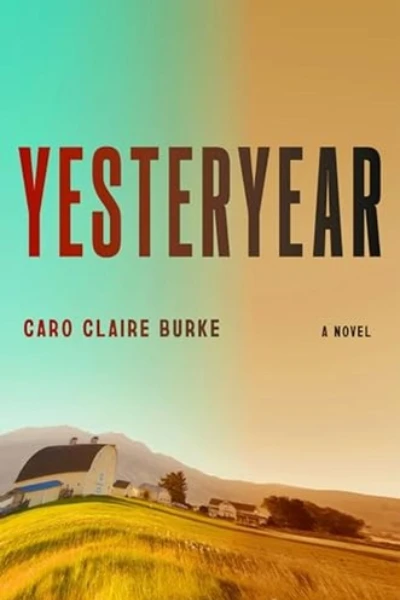
Yesteryear
Yesteryear — Chapter 24
24
ONCE I KNEW what needed to be done, I called my mother and told her the plan, and she called every realtor she knew, and all of them sprang into action. Not exactly surprising, their enthusiasm: we were dream clients. A wealthy young couple interested in finding a lot—and I mean a lot, I said to my mother, and my mother repeated to them—of land.
The listings flooded in. The property we would eventually buy arrived in my inbox on the very first day.
It was an old cattle ranch that had fallen into disrepair. Five hundred acres, set in the rolling hills between two mountain ranges in the southwest region of Idaho. There were old-growth forests and sprawling pastures, a hundred-year-old apple orchard, a series of creeks that crisscrossed through the acreage, and about a thousand feet of frontage to the most trout-plentiful river in the state. The land was veined with old fences and man-made trails, even nineteenth-century stone walls in some sections. It sat at the end of a long dirt road, several miles in length, surrounded by reservation land.
By the time I found the listing, there were already multiple active bids on the property. At the encouragement of my realtor, I called the owner to plead my case. He was an old man who was moving to a retirement home. His only son—a banker who lived in Sun Valley—had planned to take over the property and had accordingly done some major renovations on the main
house in preparation, but had died several months earlier. Pancreatic cancer.
A total shock. This was the information I was given in the first minute of speaking to the man, and already I was desperate to get off the phone. There was nothing that made me more uncomfortable than sudden access to the painful sentiment of a stranger.
“It’s real wilderness out here,” he said. “Gets so quiet at night that your ears start to invent sounds. Crickets and the like. That’s on the nights when the wolves don’t howl.” He paused. “You ever hear a wolf howl?”
“Not personally, no, but—” I was hiding in the darkness of the foyer coat closet. “We’re quiet souls, my husband and me. We spent some time in the city, but it’s not for us.” There was a rustling beyond the door and I froze.
Amelia’s drunken humming carried closer, and then I heard her open the coat closet on the opposite side of the foyer.
“Hello?” the old man said gruffly. “You still there?”
“Yes,” I whispered, covering my mouth with my hand against the receiver. “Just one sec—”
There was a rustling of hangers, a clanging sound, a rattle-clatter, a “whoopsie!” and then the whisper-click of a prescription bottle being picked up off the floor. (“Hello? Did I lose you? Hello?”) Then the humming carried down the hallway until a door shut and it was silent again. I lowered my voice to a whisper. “Yes! Hi! I’m here. Listen, sir: We want to give our children a true American childhood. And my husband is a natural at farming!”
“Well,” the old man said. “That’s nice. My son—well. He was a natural, too.”
The man cleared his throat wetly, giving sudden sound to his grief. A long silence unspooled itself. Anxiety took hold of me. “We have big plans, sir,” I said quickly. “We’re going to revive your cattle farm.”
“That’s nice,” he said again. “But you know, farming’s hard work.”
“Absolutely. Absolutely it is.”
“The margins were never great, and they’re getting worse every year.”
I nodded vigorously to no one. “Such a shame.”
“I don’t mean to make any assumptions, ma’am, I just mean to say—” He paused here. “I know it’s trendy, now, for young people to fancy themselves farmers. And I just—well, I wouldn’t want you to bite off more than you can chew.”
Trendy. I nearly sputtered at the word. “Thank you so much for the concern—but with all due respect, sir: my husband and I are nothing like the young people you know.”
—
Not long after the phone call ended, my realtor texted me. He’s going to go with someone else not to worry, we will find something better!
I texted her back and told her to make one last final offer.
Go over ask by half a million dollars
I imagined the old man sitting in his kitchen, reading the number on his phone. I hoped he felt happy. I also hoped he felt—just a little bit—defeated.
—
Later that evening, my realtor texted me the happy news. I stared at the message on my phone for several minutes, then set my phone down on the counter and walked down the long hallway to Doug’s office. I knocked on the door, and Doug hollered immediately, “Come in.”
Doug’s office was a fever dream of 1950s manhood: the walls were dotted with diplomas and pictures with famous people, there were two leather
chairs positioned in front of a fireplace with a cigar box sitting between them, and he, at this moment, was sitting behind a mahogany desk so large and ornate that it must have taken three or four men to get it in here.
“Have a seat,” he said, gesturing at the chair in front of the desk. As I was lowering myself into the seat, he said, “I just paid a consulting firm a hundred thousand dollars for them to tell me I’m old.” He barked out a laugh. “I’m fifty-five! In the prime of my life! But apparently, according to them, I am, and I’ll quote them here”—he rustled through a loose stack of papers on his desk, pulling out the one he needed—“ ‘rapidly falling out of favor with a number of core demographics.’ ”
I didn’t know what to say to that. I was only vaguely aware of Doug’s politics to begin with. God, family, and beer. A traditional values man! I thought of Reena, who had spent the summer interning as a consultant, and wondered if it was her firm that had done the audit on Doug’s electability.
Surely she would have relished that work. “Is it your—policies?”
Doug’s eyes flashed to me, and I knew I’d overstepped. “It’s never about the policies,” he said sharply. “A good politician doesn’t change his policies.
Only the messaging.”
“Right,” I said immediately. “Of course. Well, you obviously are the expert. I’m just a housewife.” It was the first time I’d said that word aloud in reference to myself, and now I felt a not unpleasant reorganizing sensation in my body, almost like I was face down on a chiropractor’s table, feeling my spine crack gradually into a strange and new, if technically correct, alignment. A pain that promised to give way to relief.
“Well,” Doug said. The housewife comment had clearly mollified him.
“No need to solve the questions of my political career today. What can I help you with, Natalie?”
I took a deep breath, then said exactly what I had rehearsed. “I found a
solution for Caleb. Not just a short-term one, either, but something permanent. Something life-altering.”
Doug said nothing, merely raised his eyebrows.
“Caleb isn’t right for the corporate world. We both know it. You could get him a thousand jobs, and he would quit a thousand times. But this, I think he would enjoy.” I handed Doug a slip of handwritten paper, and he frowned
at it. “This is an address,” he said.
“Look it up online.”
Doug pulled the listing up onto his computer, then whistled slowly. I saw the message in all red (SALE PENDING) and my heart shot into my throat. Doug was still staring at the first picture on the carousel, an aerial shot of the barn and the pastures beyond. “I don’t even know what I’m looking at.”
“You’re looking at a prime piece of Idaho land, which will eventually be your son’s cattle farm.”
Doug didn’t say anything, just clicked through the pictures. Finally he leaned back in his chair and looked at me. “You think my son is capable of running a cattle farm?”
“Of course not. We’ll hire people for that.”
“You’ll hire people.”
“Yes. We’ll start small and then expand. Local meats, fresh eggs, raw milk. Did you know how much people love raw milk?”
“I did, actually,” he said absently. “One of my interns wrote up a report on it.” He was tapping his finger absentmindedly on the desk, in a rhythm that matched my heartbeat. Tap tap tap tap—“I have to say,” he said suddenly, “I have half a mind to encourage this just to watch it all fall apart.”
For a moment I forgot to breathe. I could practically see his little horror- show daydream playing out in the air between us in real time: Drop the dumbest son and his bitchy little wife out into the heartland and watch them
as they claw and scratch and struggle to survive. If there was popcorn on the desk, he would’ve reached for a handful.
“It won’t go wrong,” I said. “It’s going to work.”
“And you want me to pay for it.”
“Yes. I do.”
“And if my eyesight isn’t failing me, you already put an offer on it that was accepted.”
My blood went cold. I tried to nod. My chin just barely moved.
“How much do you need?”
“Five million dollars. That covers the purchase amount and the first three years of operation.” My heart was a cricket in my throat. It felt breathtakingly unhinged to say that number aloud. My mother had never handed me more than a crisp twenty-dollar bill. But I knew that this was how men like Doug operated: you couldn’t blink. And anyways, that was how much it would cost to get the ranch up and running, according to a small handful of websites I’d scrolled through earlier that day.
“All right,” Doug said briskly. “I’ll give you the money.”
A strange liquid cocktail of euphoria and disappointment dripped through me. I’d done it, I’d secured the funds, but also—it seemed like I could maybe have asked for more.
“But in return, Natalie, you need to give me something else.”
There was a stilling in the room. My father-in-law was smiling at me in a strange way. It was a transparent look; the kind of look my husband hadn’t given me since our wedding day. The look a man gives a woman when he’s imagining her naked body. Considering what he will do with it. The warmth of it, the softness. Fingers molding skin like clay.
A hotness pooled in my stomach, spreading down my legs. “What do you want from me?”
What I had known from the very first moment I met him: Doug was a real man. Effortlessly masculine. He didn’t ask for power, or respect, or submission. He demanded it. He was the kind of man to climb up a mountain of dead bodies in the name of touching the sky. I hated him, I wanted him dead, and also: I sometimes imagined what it would feel like for a man like that to have me. Biblically, I mean. Which is another way of saying: If Doug had asked me what I thought he was going to ask me, I might have given it to him. I might even have liked it. Might even have asked, when everything was said and done, for more.
“I want you to have more babies with my son.”
The warm, liquid feeling in my stomach hardened and froze.
Doug was still looking at me, but his gaze had dropped from my face to my stomach. As if the force of his own imagination might be enough to impregnate me on its own. None of this felt erotic anymore. It felt cold and mechanical. Impossibly sterile. The only way this man wanted to enter me was through a scheduled procedure. Frigid silver tongs and a long bovine syringe.
“Amelia says you’re still breastfeeding,” he said. “It’s harder to get pregnant if you’re breastfeeding. You know that, right?”
Close your eyes, Natalie. Relax. You’re going to feel a small pinch in three, two, one…There we go. Nice and easy. Now, hold still— “That’s the deal. I’ll pay for this little farm fantasy, and in return you’ll give my son a big American family.”
A terrifying thought: Did Doug know how cold my marital bed was? Did he know that his son preferred to stare with pained focus at some point in the distance over my head whenever he found himself in the disappointing position of having to thrust over me? Did he know that even that poor attempt at a performance happened so infrequently as to feel like a revelation
whenever it finally did?
“I will!” I said, as brightly as I could. “That was always the plan.”
“Well,” Doug said, and reached for his phone. “Just wanted to make sure.
I’ll make the call to the accountant today.” He was looking at a paper on his desk now, trying to make sense of his own handwriting. “Thanks for coming in, sweetheart,” he said without looking up. And with that, I was dismissed.
—
I left Doug’s office and walked down the long hallway to the foyer in a daze.
It was just after five, a time of day that usually reminded me of my mother.
She hated that strange dusky hour when one could be sitting and reading a book with none of the lights on, only to look up and realize she was sitting in the pitch-black. There was nothing my mother found more disturbing than a sudden wash of darkness. But from now on, I knew, this time of day when the light left the world would remind me exclusively of Doug.
I reached the foot of the stairs. Across the hallway through the kitchen, Amelia was standing at the counter, humming “Für Elise” softly to herself, a large pork loin defrosting on a baking tray behind her. I watched as she crushed one of her small white pills with the back of a spoon against the countertop, then swept the powder into her palm and sprinkled it into a small cup of fat-free pudding. She took a big bite, closing her eyes in rapture.
—
Upstairs, Clementine was still in her crib, napping, and Caleb was at his desk, watching some YouTube video where a man with an absurdly gelled goatee was gesticulating wildly, the volume on low.
“Caleb, I told you that you have to wake her up by four.” I crossed the
room and reached over into the crib, patting Clementine’s bum softly. “Now
she’s going to go to sleep late.”
“Sorry,” he said. “My bad.”
I glanced over my shoulder as Clementine started to squeak awake. “Are you even listening to me? Or are you just used to saying ‘sorry’?”
“Yeah,” he said absentmindedly. “Hey. Did you know that there are teachers who vaccinate kids at school? Like, without even telling the parents?”
I picked Clementine up from her crib, then turned back to him. “I’ve never heard of that, no.”
“Unbelievable, right? And apparently, there’s this one school in Southern California that makes the kids crawl around on their hands and knees all day to make them feel like insignificant little worms.”
I sighed. The conversation with Doug had left me drained, almost physically sore. It felt like my father-in-law had handled me roughly— squeezing me, rolling me around in his palm—and now my brain and my uterus felt equally tender, like a pair of bruised fruits. “Don’t be ridiculous.”
“It’s true! I was doing research on what you said to me the other day, about what schools do to kids? And you were right, Nattie—only it’s worse, so much worse.”
I crossed the room and peered down at the paused screen while Clementine drowsily patted my cheek with her tiny fingers. The title read, in all caps, THE HIDDEN TRUTH OF AMERICA’S PUBLIC SCHOOL SYSTEM!!!!
“This guy looks like a whacko,” I said finally.
“He’s a doctor, Natalie. Show him some respect. And anyways: he’s the one who helped me realize how ridiculous it was for me to want to be a kindergarten teacher. Do you know, Natalie, why I’ve been struggling so much lately? Why I can’t seem to find my purpose? It’s not my fault,
actually. It’s the people in charge of this country who are trying to feminize men.”
“Isn’t your father one of the people in charge of this country?”
Caleb sighed. “Yeah, but like, only in an institutional way.”
“And he’s trying to…feminize you?”
“No.” He seemed frustrated that I wasn’t understanding. “Everyone is.
Think about it: in the olden days, I’d have been a soldier by now. Or a blacksmith.”
“Since when do you want to be a blacksmith?”
“I don’t. My point is just—I wasn’t meant to live this way.”
I had no idea what he was talking about. If there was one thing I knew for sure, it’s that Caleb would’ve been the worst soldier on the planet. It was ironic: we were close to alignment—I couldn’t agree more that my husband had been behaving, as of late, like a silly little girl—and yet also I’d never felt more lost in a conversation. Clearly it had been a mistake to send him down a public-school-curriculum rabbit hole. I made a mental note to circle back on that soon. But now was not the moment for that. Now was showtime; the single biggest presentation of my life.
“Listen,” I said, “speaking of your purpose. I found something that might interest you.”
I showed him the listing. Clementine played with my hair while I stood by his chair, watching as he flipped through the slideshow, each picture reflected neatly in the whites of his eyes. Rolling fields. Click. Big red barn.
Click. House buffeted by distant mountains. Click. When Caleb finished the slideshow, he looked at me with a gaping, almost lustful expression.
Checkmate. “You’ll do this?” he asked. “For me?”
“I will do this for you, with one condition. We need to have sex more often.”
Caleb looked pained. “Natalie, I—”
“I don’t need you to say anything,” I said. “I just need you to agree. Once a week, minimum, and at least three times in my fertile window.” I paused, then said meaningfully, “For Clementine.”
A basic tenet of Christian life: to deny your child the gift of siblings was the cruelest act of child abuse imaginable. “For Clementine,” he repeated.
“And we can homeschool them out there on our farm. Keep them away from the pedophiles in the school system.”
I hadn’t planned on homeschooling the kids. At first, a flare of panic lit up in me at the thought of another role to fail at—mother, wife, homemaker, teacher—but then I remembered the money and relaxed. Teachers were cheap. We’d find room for one in the budget.
“Fine,” I said. “We can hire a teacher. I’m sure there’s some sort of curriculum package online that we can order.”
He considered this. “Can I choose the curriculum package?”
“Sure. You can choose the curriculum package.” So this was how it felt: marital compromise in action.
“Oh,” Caleb added, “And also: no cattle.”
“But it’s a cattle farm.”
He shook his head firmly. “We’ll grow vegetables.”
“Vegetables?”
“Do you know how cows feel when they die, Nattie? Terrified. So what do you think you’re eating when you eat beef?” Meaningful pause. “Terror.
You’re eating terror.”
I stared at my husband. I couldn’t even begin to think of a coherent yet gentle rebuttal to that claim; I wasn’t even sure if I needed one. Wasn’t this the man who had happily eaten a hamburger three days ago? How many videos had he watched today, anyways?
Caleb nodded decisively. “That’s what we’ll be known for. Nutritious, organic, non-terrified sustenance. And also, all good ranches have some sort of name. We’ll have to think about what we name ours.”
“Actually,” I said sweetly, “I already have a name in mind.”