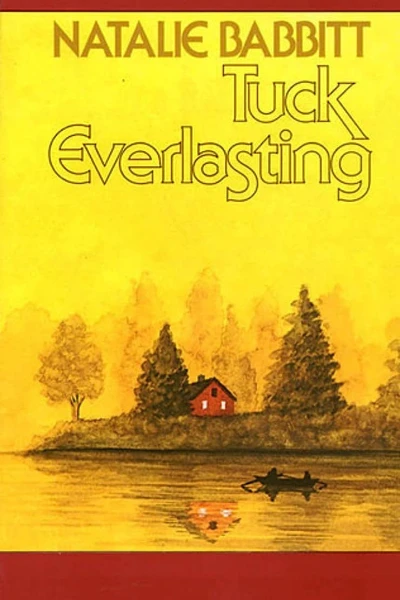
Tuck Everlasting
Tuck Everlasting — Chapter 21
21
Winnie pulled her little rocking chair up to her bedroom window and sat down. The rocking chair had been given to her when she was very small, but she still squeezed into it sometimes, when no one was looking, because the rocking made her almost remember something pleasant, something soothing, that would never quite come up to the surface of her mind. And tonight she wanted to be soothed.
The constable had brought her home. They had seized her at once, flinging the gate open and swooping down on her, her mother weeping, her father speechless, hugging her to him, her grandmother babbling with excitement. There was a painful pause when the constable told them she had gone away of her own free will, but it only lasted for a moment. They did not, would not believe it, and her grandmother said, “It was the elves.
We heard them. They must have bewitched her.”
And so they had borne her into the house, and after she had taken the bath they insisted upon, they fed and petted her and refused, with little laughs and murmurs, to accept her answers to their questions: She had gone away with the Tucks because—well, she just wanted to. The Tucks had been very kind to her, had given her flapjacks, taken her fishing. The Tucks were good and gentle people. All this would have been swept away in any case, however, this good impression of her friends which she was trying to create, when she told them what had happened to the man in the yellow suit. Had they really given him the wood in exchange for finding her? They had. Well, perhaps he wouldn’t want it now. Mae had hit him with the shotgun. He was very sick. They received this news with mingled hope and horror, and her father said, “I suppose the wood will be ours again if that man should…that is, if he doesn’t…”
“You mean, if he dies,” Winnie had said, flatly, and they had sat back, shocked. Soon after, they put her to bed, with many kisses. But they peered
at her anxiously over their shoulders as they tiptoed out of her bedroom, as if they sensed that she was different now from what she had been before. As if some part of her had slipped away.
Well, thought Winnie, crossing her arms on the windowsill, she was different. Things had happened to her that were hers alone, and had nothing to do with them. It was the first time. And no amount of telling about it could help them understand or share what she felt. It was satisfying and lonely, both at once. She rocked, gazing out at the twilight, and the soothing feeling came reliably into her bones. That feeling—it tied her to them, to her mother, her father, her grandmother, with strong threads too ancient and precious to be broken. But there were new threads now, tugging and insistent, which tied her just as firmly to the Tucks.
Winnie watched the sky slide into blackness over the wood outside her window. There was not the least hint of a breeze to soften the heavy August night. And then, over the treetops, on the faraway horizon, there was a flash of white. Heat lightning. Again and again it throbbed, without a sound. It was like pain, she thought. And suddenly she longed for a thunderstorm.
She cradled her head in her arms and closed her eyes. At once the image of the man in the yellow suit rose up. She could see him again, sprawled motionless on the sun-blanched grass. “He can’t die,” she whispered, thinking of Mae. “He mustn’t.” And then she considered his plans for the water in the spring, and Tuck’s voice saying, “They’d all come running like pigs to slops.” And she found herself thinking, “If it’s true about the spring, then he has to die. He must. And that’s why she did it.”
Then she heard hoofbeats on the road below, a horse hurrying into the village, and not long after, there were footsteps and a knocking on the door.
Winnie crept out of her room and crouched in the shadows at the top of the stairs. It was the constable. She heard him saying, “So that’s that, Mr.
Foster. We can’t press no kidnapping charges, since your little girl claims there wasn’t no kidnapping. But it don’t matter now, anyway. The doc just got back a few minutes ago. That feller—the one you sold your land to?
He’s dead.” There was a pause, and the murmur of other voices; then a match striking, the acrid smell of fresh cigar smoke. “Yep, she got him a good one, all right. He never even come to. So it’s an open-and-shut case, since I seen her do it. Eyewitness. No question about it. They’ll hang her for sure.”
Winnie went back to her room and climbed into bed. She lay in the dark, propped up on the pillows, and stared at the lighter square of her window, at the heat lightning throbbing. It was like pain, she thought again, a dull pain on the fringes of the sky. Mae had killed the man in the yellow suit. And she had meant to kill him.
Winnie had killed a wasp once, in fear and anger, just in time to spare herself a stinging. She had slammed at the wasp with a heavy book, and killed it. And then, seeing its body broken, the thin wings stilled, she had wished it were alive again. She had wept for that wasp. Was Mae weeping now for the man in the yellow suit? In spite of her wish to spare the world, did she wish he were alive again? There was no way of knowing. But Mae had done what she thought she had to do. Winnie closed her eyes to shut out the silent pulsing of the lightning. Now she would have to do something.
She had no idea what, but something. Mae Tuck must not go to the gallows.