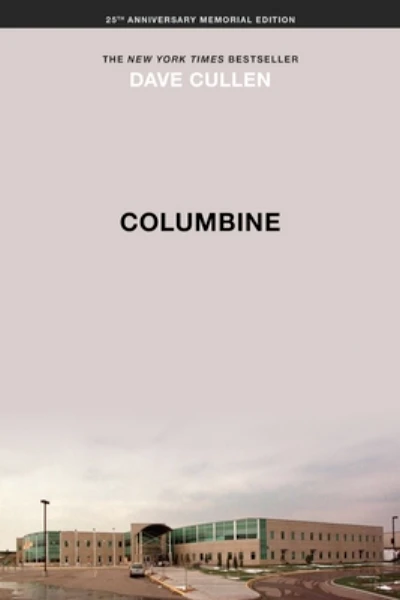
Columbine
Columbine — Chapter no 12
12. The Perimeter
The story took twenty-eight minutes to hit local television. The networks quickly followed. Something awful was happening at a high school near Denver. Coverage began with confused reports about a shooting in the outlying suburbs: no confirmation on injuries, but multiple shots–as many as nine–and possible explosions. Automatic weapons might be involved, possibly even grenades. A fire had been reported. SWAT teams were mobilizing.
CNN was locked in on Kosovo. NATO had gone to war over the genocide there. Night had just fallen in Belgrade, and American warplanes were massing on the horizon, about to pulverize fresh targets across the Serb capital. At 11:54 A.M. Denver time, CNN cut to Jeffco and stayed there nonstop, all afternoon. The broadcast networks began interrupting the soaps. Columbine quickly overshadowed the war. No one seemed to know what had actually happened. Was it still happening? Apparently. As the networks went live with the story, gunfire and explosions were erupting somewhere inside that school. Outside, it was mayhem: choppers circled, and police, firefighters, parents, and journalists had descended on the campus. Nobody was going inside. Fresh waves of support troops were arriving by the minute, but they just crowded around the building.
Occasionally, students would scurry out.
Local stations kept surveying the area hospitals. "There are no patients yet," a journalist reported from one. "But they are expecting one victim with an ankle wound."
Jeffco 911 operators were overwhelmed. Hundreds of students were still inside the building. Many had cell phones and were calling with conflicting reports. Thousands of parents from all around the area were dialing the same center, demanding information. Many students gave up on 911 and
called the TV stations. Local anchors began interviewing them live on the air, and the cable networks picked up their feeds.
Witnesses confirmed injuries. A girl said she watched "like three people" get shot.
"Did it look like they were shooting at specific people?" a reporter asked.
"They were just shooting. They were–they didn't care who they shot at; they were just shooting and then they threw a grenade or they threw something that blew up."
There seemed to be no end of "witnesses," though most had seen chaos but no one causing it. A senior described the first moments of awareness: "OK, I was sitting in math class, and all of a sudden we look out and there's people that are sprinting down the math hall and we open the door, we hear a shot, a loud bang, and then we hear some guy go 'holy crap, there's a guy with a gun!' So everybody starts freaking out, one of my friends goes up to the door and says there's a guy standing there. We evacuate to the corner of our classroom and my teacher just doesn't know what to do because she's so freaked."
There appeared to be several shooters–all boys, all white, all Columbine students. Some were shooting in the parking lot, some in the cafeteria, some upstairs while roaming the halls. Somebody was positioned on the roof.
Some of the assault team wore T-shirts; others advanced in long black trench coats. One pair included one of each. Some had hats, and one or two were hiding behind ski masks.
Some of this mix-up was standard crime-scene confusion. Contrary to popular conception, eyewitness testimony is notoriously unreliable, especially when witnesses were under duress. Memories get jumbled and witnesses imagine missing details without realizing they're doing it. But much of this misunderstanding was due to specific factors. Eric discarded his trench coat at the top of the stairs almost as soon as he began shooting.
Dylan kept his on until he got to the library. Each costume change created another shooter. The school's location on a hill, with nearby entrances on both floors, allowed Eric and Dylan to be seen upstairs and downstairs almost simultaneously. The long-range weapons scattered gunfire over a shooting radius hundreds of yards wide. Distant witnesses had no idea where the shooters were; they only knew they were under attack. Some witnesses listened carefully and correctly located the source of the turbulence—-but the bomb blasts often led them astray, particularly when
bombs landed on the roof. Several kids were sure something was coming from up there. They spotted a frightened air-conditioner repairman and instantly identified him as the rooftop gunman.
____
Word whipped through the Columbine community. Kids called home on their cell phones the minute they got to safety–or someplace they hoped would remain safe. About five hundred students were off campus, either for lunch or sick or cutting class. Their first sign of a problem came when they hit police barricades as they tried to return. Cops were everywhere. More cops than they had ever seen.
Nate Dykeman was one of the kids heading back in. He was stunned by the stories he heard. Nate had gone home for lunch, same as he did every day. But on the way out, he had seen something peculiar: Eric walking into the building from the wrong parking lot at the wrong time. He should have been walking out. Eric and Dylan had both been missing that morning.
They were up to something, obviously. Odd that they hadn't included him, or called, at least. Maybe not Eric, he wasn't the most thoughtful friend, but Dylan was. Dylan would have called.
There had been some weird shit going on between those two lately. Pipe bombs and guns. When Nate heard about the shooting, he got nervous.
When someone mentioned the trench coats, that sealed it.
This isn't happening, Nate thought. This can't be happening.
He ran into his girlfriend, who was stopped at an intersection. She was also a good friend of Eric's. She followed Nate home. Then Nate did the same thing nearly everyone was doing: he started dialing friends, checking in to make sure they were all safe. He wanted to call Dylan's house, but that was just way too scary. Soon. He would call soon. He checked on some other friends first.
____
While Deputy Gardner was firing at Eric, he knew help was on the way.
"Female down" at a high school unleashed a frenzy of police radio traffic.
Jeffco issued a metro-wide mutual-aid request, prompting police officers, firefighters, and paramedics from around the city to begin racing toward the foothills. The police band got so congested so quickly that Gardner couldn't alert dispatch that he'd arrived. After engaging Eric, Gardner got back in his car and radioed for backup. This time he got through. Gardner followed protocol and did not pursue Eric inside.
Deputy Paul Smoker was a motorcycle cop, writing a speeding ticket on the edge of Clement Park when the first dispatch came in. He radioed that he was responding and gunned his motorcycle into the grass. He tore through soccer fields and baseball diamonds and arrived at the north side of the building just moments after Gardner's gunplay. He parked behind an equipment shed, where a bleeding boy had taken shelter. Another patrol car pulled up right behind him, then another. They all wound around the corner from Gardner, just out of sight. The boy told them he had been shot by "Ned Harris." Nobody had any paper, so a deputy wrote the name on the hood of his patrol car.
They ran forward to help another bleeding student lying in the grass. As they approached, they passed into Deputy Gardner's sight line, around the corner. It had been two minutes since Gardner's gun battle with Eric, and he was out of his car with his pistol drawn. Smoker and Gardner spotted each other as Eric reappeared inside the west exit doorway.
"There he is!" Gardner yelled. He opened fire again.
Eric ducked back behind the door frame. He poked his rifle through the shattered pane and returned fire. A couple of students were on the move again, and Eric tried to nail them, too. Smoker could see where Gardner was firing, but the doorway was blocked from view. He maneuvered down to where he could see Eric and got off three shots. Eric retreated. Smoker heard gunfire inside. More students ran out of the building. He did not pursue.
Deputies continued arriving. They attended to the scared and wounded and struggled to determine what they were up against. Witnesses came to them. Kids saw their police cars at the top of the hill and came running.
Some were bleeding. All were desperate. They lined up behind the cars and crouched near the officers for protection.
They provided lots of accurate information. Reports on the police radio conflicted wildly, but any one group in one location tended to offer remarkably consistent accounts. These kids described two gunmen in black trench coats shooting Uzis or shotguns and throwing hand grenades. At least one appeared to be high school age, and some victims knew them.
Kids kept arriving. The cars were feeble protection, and the crowd was likely to draw attention. The deputies decided it was paramount to evacuate them. They directed some of the boys to tear their shirts into strips and treat one another's wounds while they devised an escape plan. They decided to line several patrol cars up as a defensive wall and shuttle the students to safer ground behind them.
Every cop had been trained for events like this. Protocol called for containment. The deputies broke into watch teams. They could cover a handful of the twenty-five exits and protect those students who were already out. "Setting up a perimeter," they called it. They would repeat the "perimeter" phrase endlessly that afternoon. Paramedics were establishing triage areas away from the school, and the deputies worked on getting the kids there. Cops would lay down suppressive fire to protect evacuations and scare off opportunistic attacks. They had no idea whether the gunmen were still present, or interested. The officers did not observe or engage the gunmen for some time.
Newly arriving officers covered additional exits. Gunfire was audible to the first officers and continued through the arrival of hundreds more.
Deafening explosions kept erupting inside the school. The exterior walls along the cafeteria and the library rumbled from some of the blasts. Deputy Smoker could see the green windows buckling. Half a dozen students ran out the cafeteria doors after one shock wave. They made it to another deputy, who was guarding the south exits.
"Are we going to die?" one of the girls asked him. No. She asked again.
No. She kept asking.
The deputy thought the shooters might flee the building, cross the field, and hop a chain-link fence separating the school grounds from the first subdivision.
"We didn't know who the bad guy was, but we soon realized the sophistication of their weapons," Deputy Smoker said later. "These were big bombs. Big guns. We didn't have a clue who 'they' were. But they were hurting kids."
When the networks went live around noon, hundreds of uniformed responders were present. Thirty-five law enforcement agencies were soon represented. They had gathered an assortment of vehicles, including a Loomis Fargo armored truck whose driver had been working in the area.
One student counted thirty-five police cars speeding past him on his one- mile ride home from school: "Ambulances and police cars barging over medians and motorcycle cops weaving through opposite traffic almost killing themselves," he said.
Half a dozen cops arrived every minute. Nobody seemed to be in charge.
Some cops wanted to assault the building, but that was not the plan. Whose
plan was this? Where had it come from?
They reinforced the perimeter.
Eric had exchanged fire with two deputies, at 11:24 and 11:26 A.M.–lfive and seven minutes into the attack. Law enforcement would not fire on the killers again or advance on the building until shortly after noon.