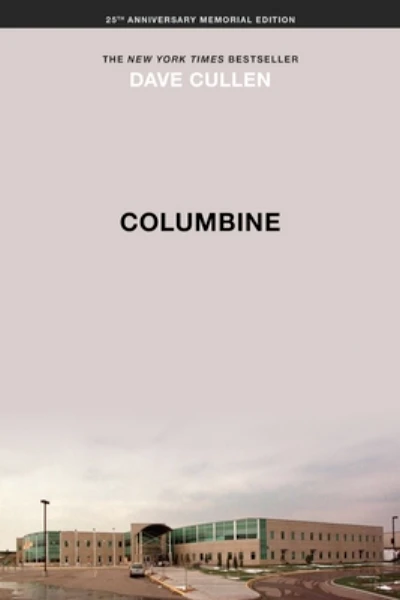
Columbine
Columbine — Chapter no 10
10. Judgment
On Tuesday morning, the boys rose early, as usual. It was dark but warm already, set to soar into the eighties, with blue skies, perfect for their fires. It was going to be a beautiful day.
Dylan was out of the house by 5:30. His parents were still in bed. He called out "Bye," and shut the door behind himself.
They skipped bowling class and went straight to work. Dylan scrawled the schedule into Eric's day planner under the heading "make TODAY count." Eric illustrated it with a blazing gun barrel.
First stop was the grocery store, where they met up to acquire the last of the propane tanks: two for the cafeteria, two for each car, and two for the decoy. The big bombs were the heart of the attack. Eric had designed them months before but had left acquisition to the final morning. The boys had stashed most of the arsenal in Eric's bedroom closet, and he had faced a couple of close calls with his parents already. Hiding a cluster of twenty- pound tanks in there was out of the question.
They returned to Eric's house at 7:00 and then split up: Eric filled the propane tanks, Dylan got the gasoline. They allotted half an hour to assemble the big bombs and set up the cars, and an hour for one last round of gear-up, practice, and "chill." They got something to eat. Dylan apparently had potato skins.
____
Several friends noticed peculiarities. Robyn Anderson was surprised to see Dylan a no-show for calculus. He had sounded fine on the phone the previous night. Then a friend told her Eric had been missing from third
hour. The boys cut an occasional class together, but never an entire morning. Robyn hoped Dylan wasn't sick; she made a mental note to call once she got home.
Their friend Brooks Brown had a stronger reaction. Eric had missed a test in psychology class. What kind of stunt was that?
____
Chill time was over. It had gone on too long, perilously over schedule.
Shortly before 11:00 A.M., Eric and Dylan set off with the arsenal. Dylan wore cargo pants, a black T-shirt printed with WRATH, and his Red Sox cap turned backward, as usual. His cargo pockets were deep enough to conceal most of the sawed-off shotgun before he pulled on the duster. Eric's T-shirt said natural selection. They both wore black combat boots and shared a single pair of black gloves–the right on Eric, the left on Dylan. They left two pipe bombs behind at Eric's house, six at Dylan's. Eric laid a microcassette on the kitchen counter with some final thoughts. They also left the Basement Tapes, with a final good-bye recorded that morning.
They drove separate cars to a park near Eric's house, dumped the decoy bomb in a field, and set the timers for 11:14. Combat operations were under way.
They hopped back in their cars and headed for the school. They had to hustle now. The last few minutes were critical. They couldn't plant the big bombs until "A" lunch began. Fourth period ended at 11:10. Once the bell rang, they had seven minutes to carry the bombs in, navigate the turbulent lunch crowd, stash the bombs by the designated pillars, get back to their cars, gear up, take cover, and prepare to attack.
Eric pulled into the parking lot at 11:10, several minutes behind schedule.
A couple of girls spotted his car as they headed out for lunch. They honked and waved. They liked him. Eric waved back and smiled. Dylan followed him in. No waves.
Dylan drove to his normal spot in the senior lot and parked his BMW directly in front of the cafeteria. When the attack began, this would afford him a clear sweep of the southwest side of the building: the long, wide arc of green-tinted windows that wrapped the commons on the first floor and the library above.
Eric continued on to the small junior lot, about a hundred yards to Dylan's right. Eric had the choice spot, directly facing the student entrance, where the bulk of the survivors would presumably flee. He could also cover the full southeast side of the building and interlock his fire with Dylan's to his left.
Brooks Brown walked out for a cigarette and spotted Eric parking in the wrong lot. Brooks charged up to confront him about the test; by the time he got there, Eric had stepped out and was pulling out a big hulking duffel bag.
"What's the matter with you?" Brooks yelled. "We had a test in psychology!"
Eric was calm but insistent. "It doesn't matter anymore," he said.
"Brooks, I like you now. Get out of here. Go home."
Brooks thought that was strange. But he shook his head and walked on, away from the school.
Eric's friend Nate Dykeman also caught sight of him arriving, and also found the circumstances strange.
Eric headed in with his duffel. By 11:12, they were scheduled to be back at their cars, arming up. A surveillance tape time-stamped 11:14 indicates they had still not entered the commons. They had less than three minutes– the timers were set for 11:17. There was only a modest chance that they could make it to safety in time. And they could hardly have hoped to be locked and loaded when the bombs blew.
They could have reset the timers and sacrificed a few casualties. That would have required coordination, as they had parked across the lot from each other and it would be risky to expose the bombs inside the cafeteria.
They could have abandoned the plan, but the decoy bombs might already be exploding.
Shortly after 11:14, they entered the commons. They moved inconspicuously enough to go unnoticed. Not one of the five hundred witnesses noticed them or the big, bulky bags. One of the bags would be found inches from two tables strewn with food.
They made it out, and armed quickly. It was just like the drill, except this time each was alone–close enough for hand signals, too far to hear. They strapped on their arsenals, covered them with the dusters. Time was tight and they broke with their drill, leaving the shotguns in the duffel bags. Each boy had a semiautomatic against his body, a shotgun in his bag, and a backpack full of pipe bombs and crickets. This is probably the moment they
set the timers on their car bombs. It would just be a matter of seconds now.
Hundreds of kids dead. As far as they knew, they had instigated mass murder already. The timers were winding down. Nothing to do but wait.
Surveillance cameras should have caught the killers placing the bombs.
They would have, if either the bombers or the custodian had been on time.
Every morning, the custodian followed the same routine: a few minutes before "A" lunch, he pulled out the prelunch tape and set it aside for later viewing. He popped an old, used tape into the machine, rewound it, and hit Record. Rewinding took up to five minutes, meaning a brief pause in taping. Kids could leave all the garbage they wanted during that window, but hardly anyone was around to do so.
The custodian was running late on Tuesday. He hit the stop button at 11:14, and no bombs were visible; neither was Eric or Dylan. While waiting out the rewind, the custodian got a phone call. He talked, and the tape sat a little longer. He got the new tape in and hit Record at 11:22, leaving an eight-minute gap. The first frame shows the bombs visible and students near the windows beginning to react. Something peculiar outside has caught their attention.
____
Columbine ran on a bell schedule, and most of its inhabitants followed a strict routine. Several of them had broken it Tuesday morning. Patrick Ireland, the junior afraid to ask Laura to the prom, liked variety. Some days he spent "A" lunch in the library, others in the cafeteria. He had stayed up late talking to Laura on the phone again, and still had to finish his stats homework. So he headed to the library with four of his buddies as Eric and Dylan positioned the duffel bags. Patrick sat down at a table just above one of the bombs.
Cassie Bernall, the Evangelical junior who had transferred to Columbine to enlighten nonbelievers, pulled up a chair near the window. It was unusual to find her in the library at this hour. She was also behind on her homework, trying to complete an English assignment on Macbeth. But she was happy she had finished the presentation she would be making to her youth group that night.
Mr. D was oddly absent from the cafeteria. His secretary had booked an interview, delaying his rounds. He sat in his office at the opposite end of the main corridor, waiting for a young teacher to arrive. Mr. D. was about to offer him a permanent position.
Deputy Neil Gardner, the community resource officer, worked for the sheriff's department but was assigned full-time to Columbine. He normally ate with the kids, and "A" lunch was his optimal chance for bonding, a key element of his job. He wore the same security uniform with the bright yellow shirt every day, so he was easy to spot. Tuesday, Gardner took a break from his normal routine. He didn't care for the teriyaki on the menu, so he went for takeout from Subway with his campus boss– an unarmed civilian security guard. It was a beautiful day, lots of kids were outside, so they decided to check out the smokers. They ate their sandwiches in Gardner's squad car, in the faculty lot beside the smokers' pit on the opposite side of the school.
Robyn Anderson sat in her car nearby. She had driven out of the senior lot just about the time Eric and Dylan were hauling the bombs in, but had missed them. She'd swung around the building to pick up two friends. She got antsy–lunchtime was slipping away. Five minutes passed, maybe ten.
Finally, the girls appeared. Robyn snarled at them, and they drove off. On the opposite end of the school, shots had already been fired.
A freshman named Danny Rohrbough went to the commons to meet up with two buddies. After a few minutes, they decided to head out for a smoke. If the bombs had worked, that choice might have saved him. He might have gotten out just in time. They headed out a side exit at the worst moment, directly alongside the senior parking lot.
The bombers spent a minute or two by their cars. They knew the diversionary bomb should have already blown three miles to the south. In fact, it had fizzled. A surveyor working in the area had moved it, and then the pipe bombs and one of the spray cans had detonated, producing a loud bang and a grass fire. But the propane tanks–the main explosive force–lay undisturbed in the burning field. The decoy was Eric's only big bomb to ignite at all, but one of his dumber ideas. Officials learned of it just as the shooting started, four minutes before the first call from the school. The chief effect was to alert authorities that something was amiss in the area.
Nothing of consequence was diverted.
Eric and Dylan had to proceed on faith.
As far as Eric and Dylan knew, cops were already speeding south. They would see the commons disintegrate, though. Each car was positioned for a perfect view. The cafeteria would explode in front of them; they would watch their classmates be torn apart and incinerated, and their high school burning to the ground.