
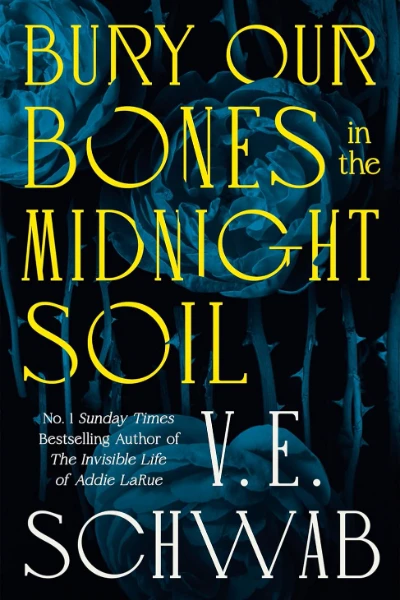
Bury Our Bones in the Midnight Soil
Bury Our Bones in the Midnight Soil — Chapter no 29
II
Alice plunges out into the harsh light.
She flinches as she puts the stolen sunglasses on, shielding her eyes, resisting the urge to beeline back toward the Yard and the dorm and the safety of the curtained dark, only because it will not solve the clawing problem of her current hunger—thirst? She doesn’t know which to call it (because it feels like both). Her mouth is dry, and her stomach is empty, and her whole body feels like it’s ringing like an empty chamber.
A glass, waiting to be filled.
She could keep pretending that maybe there’s a food or drink that will ease the hollow feeling, but so far, only one thing seems to help—one point in the column of common lore that might as well rig the rest of the game,
because it’s the one that matters most.
Alice needs blood.
The thought alone is enough to make her throat go dry, and she’s suddenly aware of how many students are drifting up and down the path she’s on, their heartbeats heavy in her head—but last night was a mistake, one she just nearly made again with Hannah, and this is her new life. She’s not
about to ruin it.
So Alice turns, and heads off campus.
She puts as much distance as she can between herself and the storied buildings and the tree-lined streets and the faces she is just starting to know well enough to recognize. And to be recognized.
She walks, hugging the shadowed side of the road until she reaches the river, and then keeps going, along the tree-lined banks, walks until with every single stride, she can feel the strain spreading through her body, her ligaments tight, her bones stiff, tries to think of where to go, a movie theater, maybe, somewhere dark, if not exactly private; it’s not perfect, but right now nothing is.
Alice sinks onto a bench in the shade, puts her head in her hands.
Maybe if she knew what—or who—she’s looking for.
She remembers a popular serial killer show about a guy (it’s always a guy) who targeted bad people, found a moral way to feed the urge to hurt, to kill, and as Alice gets back to her feet, she tries to figure out what makes a person bad enough to deserve that kind of thing. And then she passes a construction site, and hears the rise and fall of a whistle pointed her way.
Sees three men, perched round the wheels of a machine, one with his fingers still in his mouth, and for once instead of making herself smaller, hunching in, hurrying on, Alice slows and straightens, turns to meets their gaze. She doesn’t smile, doesn’t say anything, just stares, and they must see something there, because they draw back, duck their heads and shrink away, and it feels good, or it would if she weren’t so fucking hungry.
If there were one of them instead of three.
But it gives her an idea.
Alice looks down at herself, in her T-shirt and black jeans, her high-top sneakers, wishing she’d picked something more suggestive, even though she knows it doesn’t really matter. That the simple act of having a teenage body, no matter how it’s dressed, has always been enough to justify a man’s attention.
She tugs her hair out of its ponytail and slows her stride, unpicks a decade’s worth of warnings as she lowers her guard, thinks Look at me, see me, want me. Part of her feels like a fool, but the rest is too hungry to care.
She walks to the end of the block, then lingers, fingers looped in the straps of her backpack. The sun slips behind a cloud, and she shivers in relief.
She turns and starts back down the same stretch of road.
And halfway down the block, she sees him.
Feels him, really. A middle-aged guy in a decent suit, rolling a set of car keys round his index finger as he ambles toward a sleek sedan. And here’s the thing—Alice probably wouldn’t have noticed him if he hadn’t been looking at her first. Staring, really, that way some men do, as if looking is fair game, because in their minds, all girls are just asking to be looked at.
So yeah, he’s staring at her, with a canted head and a crooked smile, eyes tracking in a way that makes her stomach twist, that old familiar fear welling up, the warning pressed into every inch of a girl’s skin until it lives there. She forces herself to smile back, tucks the borrowed shades up in her hair (even though the light is brutal) and bites her bottom lip just a little as she walks over to him.
“Excuse me, sir?”
Flirting with other girls is a long game, a drawn-out con of longing, and guessing, toeing the edge of a pool before finally, sometimes, in a moment of weakness or exasperation, flinging yourself in.
But Catty always said that guys were easier.
Just let them think they’re in control.
There’s a moment, as Alice gets right next to him, when she’s worried that he’ll look at her and see what those construction workers did. That he’ll pull back, hurry away. But the only thing rolling off this man is confidence.
He is so sure which of them is predator, and which is prey.
“Yes, honey?” he says, and all the old parts of Alice say No, say Wrong, say Get away, but the new part says, “Think you could give me a ride?”
The air around him tastes like sugar burning, and she makes a mental note, that acrid scent seems to go with arrogance, and appetite.
“Sure thing,” he says as his gaze wanders up and down, slow as brushstrokes. “Where to?”
Alice swallows, feels her old self welling up, like sabotage, but she bites the inside of her cheek until it bleeds, and reminds her what she wants.
What she needs.
“Well,” she says, trying to make her voice soft, a secret in the space between them. “Where can you take me?” And even as the words leave her lips, she has to fight the urge to roll her eyes, because this will never work, she should have made another go at compulsion instead—but his smile just splits into a grin, as if God has handed him a treat. As if it’s all too easy.
“Hop in,” he says, holding the car door open for her, and as she slides onto the leather seat, the door swings closed, the steel shell and tinted glass blocking out the worst of the sunlight. Her head clears and her vision steadies, and for a moment Alice sighs in pure relief.
Then the man gets in, and the car starts, and the locks click, and she stiffens, fingers twitching toward the door on instinct, and Alice has to remind herself, over and over, that it’s going to be okay. That she doesn’t need to be afraid, because nothing bad is going to happen.
At least, not to her.
She leans back into the leather as the engine growls, and the car pulls into traffic, and the man’s hand finds her knee, and she tells herself to go
somewhere else.
And she does.
Piece by piece—
Until the car is gone—
And the man is gone— And his hand is gone, and—
She is flying on her bicycle, pebbles crunching beneath the tires.
Up ahead, Catty’s hair sways as she runs, gold hair hacked short to the shoulders with a pair of kitchen shears, the ends dyed stoplight red.
She’s fourteen now, and fast, a runner on the school’s track team—the only sport she was keen to play, because it didn’t involve any teamwork or chat—but that’s not why she’s running now.
Alice pedals faster, trying to close the gap.
She’s eleven, a head shorter than Catty and still waiting for that spurt of growth everyone keeps promising, the one that will unfold her into something more, but it hasn’t shown up yet, so when her sister took off, she had the sense to grab her bike, the only way to catch up now.
And she has to catch up.
Because for once, Catty is running from her.
She’s not heading up the hill behind their house, but down the road out of town. Away. Away. And it’s Alice’s fault.
Even though it’s not, not entirely, some of it has to fall on Dad, and El — (El, who Catty still insists on calling Eloise, even though it’s been three years, Eloise, as if she’s a visitor, an unwelcome guest, or worse, an intruder, an imposter, a usurper, a gas leak, a slow poison.) —but Alice is the one who smiled, and threw her arms around El’s shoulders when she heard the news that she was pregnant. Alice is the one who made the mistake of saying Congrats and That’s wonderful and then made the unforgivable error of adding the word Mum to the end, and even though it felt right she knew it was a mistake, as soon as it was out, tried to suck the word back behind her teeth, but it was too late, Catty flinched back as if struck, and took off.
Alice catches up on the bike, slows to pace Catty, says “Please,” says, “I didn’t mean it,” but her sister only speeds up, trainers pounding and blue eyes red from winter cold and rage. (Catty only ever cries when she is angry.) “Go home, Bones,” she snaps, and that word—home—comes out
sharp enough to hurt. Alice flinches.
“I’m sorry,” she says, and she is, and she isn’t, and it’s all a mess in her head. Because Eloise is a kind of mum, the only one she remembers, the one who leaves notes in her pockets and packs her lunch and holds
her when she’s sad, or sick, or scared.
And Catty is the one who leaves.
Who runs.
They reach the edge of town and Catty keeps going, Alice trailing in her wake, till Hoxburn is behind them, out of sight, and Alice is just starting to worry that her sister won’t stop, when something inside Catty finally seems to break. She draws up short, sinks into a crouch, and digs
her hands into her hair— And screams.
A banshee wail that rolls through the hills, snagging on the gorse and moss. A violent, visceral sound that would have brought neighbors spilling from their homes if they were still in town. If this weren’t the kind of countryside that dampens everything.
Catty screams until there’s no air left inside her lungs, and then her body just kind of deflates, slumps back onto the grass, knees drawn into her chest. Alice ditches the bike, but doesn’t go up to her, not yet, can practically feel the anger wicking off her sister in waves, like gas fumes waiting for a match.
That week, in chemistry, they’d learned how to douse a flame, not with water but the shiny fireproof blanket behind the teacher’s desk, watched as he unfurled the sheet and let it fall, tamping it down over the blaze, and Alice wishes she could do the same to Catty’s temper, wishes she could fall on her sister and smother the heat. But she can’t, so she just sinks into the grass a few feet from Catty as she glares into the distance. “Pregnant.”
She spits the word between her teeth like a watermelon seed.
Alice chews her lip and wonders what bothers Catty more, the idea of being outnumbered, her father moving on, or the fact someone in the house will finally have a reason to call Eloise Mum. (A small, traitorous part of her thinks it could be nice, having a little brother.) But of course Alice can’t say that so she says nothing, just sinks her fingers into the frigid earth instead, imagines she is growing roots, tendrils reaching down and out until she can touch Catty without touching her.
The silence stretches heavy, settles cold, until Catty says, “We have a
mum,” and Alice says, “I know.”
“We don’t need her.”
And Alice says, again, “I know,” trying not to think about Eloise wrapping a fresh towel around her shoulders last week, after they got caught in the rain.
Catty digs a cigarette out of her hoodie, nicked from Dad’s stash even though he told Eloise he quit when she moved in. She’s got a book of matches, too, swiped from Granddad’s pub, and it takes her three tries to get a light, but then the matchstick catches with a hiss. Catty lifts the flame to the tip, inhales, and doesn’t even cough, just holds the smoke inside and then lets it come spilling through her teeth.
Alice wrinkles up her nose, but then Catty holds it out, and it might as well be a sacred offering. As good as saying I forgive you but also It’s us and them and Alice is so relieved to still be us that she takes the cigarette and drags in until the tip flares red, and a whole fireplace kicks off in her lungs. She coughs, and coughs, and when she finally stops, she feels dizzy, and doesn’t know if it’s the smoke or the nicotine or the lack of air, and Catty just pats her on the back and puts the end between her lips again, looks up at the cloud-strewn sky.
“You remember her, right?”
There’s a tremor in her voice, and Alice realizes she’s not angry, she’s afraid, of being the only one who does.
Alice nods, but here’s the thing: she doesn’t.
She knows Mum was a journalist, the kind that went all around the world. There are photos tacked on Catty’s wall—Mum reading on a beach in San Diego, sipping tea in a pastry shop in Tokyo, smiling, eyes closed, beneath a turning maple in Boston. (That last one has always been her favorite, because of the leaves; she didn’t know they could turn that shade of yellow, a crown so bright it blurred.) She knows these things, but there are no memories to go with them, and the few she has are like tea bags used too many times, all the flavor fading till it’s just tinted water. Alice wishes she remembered the cadence of her mother’s laugh, the scent of her shampoo, what she said when she tucked her into bed.
A plane slips overhead, leaving a tiny chalk trail. Catty watches it go.
“Remember when she told us about her trip to New Zealand?”
Alice nods. “Yeah,” she lies. “But tell me again.”
And Catty looks at her— A sad smile playing on her lips as she takes a breath and—
The man’s hand tightens on Alice’s knee.
A playful little squeeze that flings her back into her body.
Makes her want to crawl out of her skin.
He smiles, and Alice wonders if he can feel her fear the way she tastes his want, if it is a predatory gift.
They’ve crossed the bridge, and the Boston streets are whizzing by, and she just wants this to be over, wonders where they’re headed, and as if he can read her mind, his dry mouth twitches and he says, “You’re awfully far from home.”
Alice shivers, thinking he somehow knows where she goes to school, until he ventures, “Scotland?” And of course, he’s just referring to her accent.
Alice nods. “Needed a fresh start.”
Before and after. Then and now.
“Is that so?”
She hates this strained attempt at small talk. Every word feels like it’s pulling too much weight. But soon enough he pulls into a high-rise’s resident garage. He parks, and unbuckles his seat belt, and she expects him to unlock the car, open the door for her again, lead her up to some minimalist loft with harbor views.
But instead, he just turns toward her, waiting, as if she’s supposed to know what happens next, only she doesn’t, which he seems to like even more. He takes her hand and guides it toward his crotch, and she can’t stomach the thought of that, the recoil strong enough to spur her into motion.
Alice swallows, and then climbs over the center console, and onto his lap, and up close, he smells like money on display. Expensive metal and too much cologne, and beneath it, want, and need, and blood. She can feel the hardness of him through the too-thin layers of his suit, and he starts murmuring a breathy stream of “Good girl” and “There you go” and “You
like that?”
And she doesn’t.
The only thing she likes is that he’s there beneath her, his head lolling
back as she shifts her weight against his lap, exposing the pale column of his throat, the only throbbing part of him she cares about, met by the only part of her that answers—teeth going sharp inside her mouth, denting and then pricking into her bottom lip.
She leans forward, but before she can reach his neck, his head drops down again, his face level with hers, as his left hand vises around her thigh, and the other reaches between their bodies for the button of his slacks.
He starts to unzip, but her hand clamps down on his.
“Wait,” she says, and the panic in her voice makes his eyes narrow, annoyance flickering across his face.
“Don’t get shy on me now,” he warns, knocking her hand away. “What, you need a little coaxing?”
He grabs her waistband, pulling her flush against him, fingers worming down the front of her jeans as he frees himself with his other hand, and the car is too small, the space too tight, and Alice can’t get back, so she goes forward, falls against him and hits the recline lever on the side of the seat. It gives, and they tumble backward, and in that off-kilter moment, she sinks her teeth into his throat.
Blood sprays into her mouth, like a gulp of air after too long below water, and this time there is no moment when the world drops out, no lapse in time, just Alice, and the blood spilling across her tongue, and down her throat, lining the inside of her skin as the man beneath her fights, rakes at her face, kicks the car horn, and he is twice her size, and strong, but she is stronger, and as she drinks, his pulse becomes her own, a heavy beat, and it’s like the lights come on inside her, and she feels right again, good again, as his heart pounds inside her chest.
He grabs her by the shoulders, tries to force her off, and there, at last, is his terror (like a grace note on her tongue). Her fangs sink deeper, jaw clenching until she feels the give of cartilage, hears the scream through his vocal cords, teeth humming like a tuning fork.
Alice doesn’t let go.
She drinks until her body loosens, every twisted cable in her going slack, drinks until the man’s pulse stops sprinting and begins to limp. A song hitting the last chorus. She drinks until at last he slumps, lifeless, in the seat beneath her, teeth sliding free as if on instinct, jaw loosening the moment the pulse drags its feet to a stop.
And even then, the stolen heartbeat lingers in her chest, so long she thinks
that maybe it will stay, beating behind her ribs.
But finally, it trails off, too.
And she is plunged back into stillness.
Alice looks down at the body beneath hers, his eyes open and empty, his mouth ajar, and waits for the shock of what she’s done to pass, waits for the swell of horror to come rushing in its wake.
The revulsion. The guilt.
But the truth is, the only thing she feels now is relief. Because the thirst is finally gone. The headache is gone. And even though the heartbeat is gone, too, she feels alive again. Revived.
As the seconds tick by, Alice understands that she is not okay.
This isn’t something that will pass, like a sickness or a storm.
That whatever’s happened to her, there is no going back.
She climbs off the body, and into the passenger seat, the scratches on her face already healed. Beside her, the man’s throat is a bloody mess, a ragged seam. But as she watches, the skin there begins to knit, and close, leaving nothing but a few wayward drops of blood along the collar of his shirt.
She forces herself to reach back toward him, freeing the leather wallet from the pocket of his slacks, takes three twenties, and gets out, careful not to leave any prints on the billfold or the handle (she’s seen enough detective shows).
As the door swings shut, she catches her reflection in the tinted window.
And for the first time, she sees the change.
There’s no sudden beauty. No clear skin, or shining curls.
But the Alice who looks back is undeniably new.
OceanofPDF.com



















