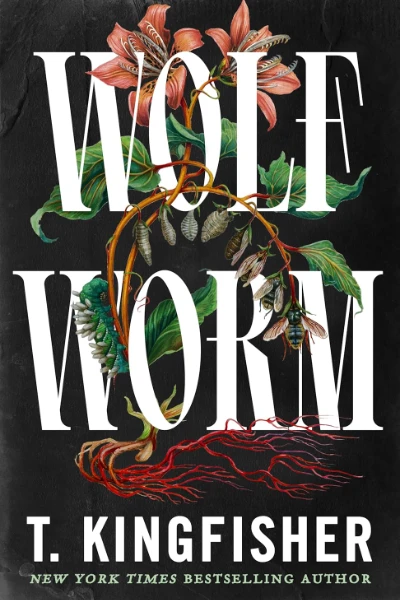
Wolf Worm
Wolf Worm — Chapter 12
CHAPTER 12
It doesn’t mean anything, I told myself on the long walk home. It’s not as if it’s the same shed. Jackson had said that the two responsible for those strange murders had been caught and killed over near Bynum, which I was pretty sure was thirty-odd miles as the crow flies. Just a coincidence. Hell, not even as much as a coincidence. There are lots of reasons people have sheds. Some of them aren’t even particularly nefarious.
Anyway, the story was absurd. Or, not absurd exactly, but there were obvious explanations. The children Ma Kersey delivered doubtless had some deformity. It’s tragic, but it happens. And she’d said herself that the culprits caught in Bynum had seemed much older than the children she’d delivered would have been. She’d probably conflated the two out of guilt for not following up on those babies during the war, particularly if it turned out that their grandfather had been mistreating them. Which is also tragic and also happens.
This was depressing. I tried to turn my thoughts to other things, which wasn’t hard. There was enough to turn my mind into a perfect froth of anxiety.
I couldn’t imagine how Mrs. Kent must feel. Trapped in a situation she must hate, with a man she’d watched shoot her friend’s lover … God. I wondered if there was anything I could do to help, but my mind was a perfect blank. I couldn’t even help myself.
I exhaled slowly as I turned up the rutted drive to the doctor’s house. The doctor, who’d shot a man in … if not cold blood, at least something like it.
And here I’d been stalking him through the woods, thinking that at most he’d fire me.
Lord, maybe I should leave. Now would be a perfect time. Halder was gone to Raleigh. I could leave without explaining myself to anyone but the
Kents.
Leave and go where?
It had been nearly two months. Surely my position at the school had been filled already. Respectable but penniless young women were in near- endless supply, as the daughters of war widows sought employment.
Headmistress Silverton only needed someone with enough skill to teach the basics of watercolor to her students. I had been almost absurdly overqualified for my post.
I had enough money to take the train … somewhere. Perhaps a town where a friend of my father’s had lived. I knew a few who would likely put me up for the night. Perhaps if I stayed with one of them, made myself useful in small ways, they would keep me on.
Which was exactly what I had tried to do after my father’s death. It had landed me in Wilmington, with a man who studied seashells. His wife had been in a family way, and I had seen a future as an unpaid nursemaid stretching ahead of me, a fate which she desired no more than I did. She had found me the spot at Silverton’s school, for which I was grateful. I was unlikely to be as lucky a second time.
Halder had not offered me violence. Indeed, it seemed that his violence had been reserved for Louisa’s lover. I could not forgive that, but I also did not imagine for a moment that he felt any jealous passion for me.
In another year though, I could save enough of my wages to travel for several months. I could write to Father’s friends and perhaps this time some of them would remember to write back. Or if I could see the project through, if Halder’s book did well, perhaps I might even make enough of a name for myself as an illustrator that I would not be dependent on their
charity. (another year working for a murderer) I don’t like it, I told myself, but not working for him won’t bring back the dead either. And wondered if Mrs. Kent had said the same thing to herself a year ago.
I was glad to reach the house, to take a long drink of water still cold from the well. I handed off the jar of tonic to Mrs. Kent, who took it with a
smile. I studied her form as she turned to put it away, feeling the guilt lodged in my skin like a parasite.
You’re trapped here too. And it’s worse for you. And I didn’t know.
“You all right?” she asked. “That old woman didn’t tear any strips off you, did she? She’s got a tongue on her, but you shouldn’t take it too serious.” She frowned. “You look a bit flushed.”
“I’m fine,” I said, ducking my head. “Just tired from the walk, that’s all.”
I could hear Ma Kersey as I climbed the stairs. It ain’t easy to swallow some things down. Makes you feel like maybe you aren’t who you thought you were.
I stared at my paints for half a minute, then went outside to find Jackson and ask him what his wife’s favorite flower was.
I entered the kitchen the next morning to find two men sitting at the table, and that was sufficiently odd that I paused in the doorway. The tension in the room was so thick that you could have sliced it and fried it up like bacon. Mrs. Kent was pressed back against the stove in a way that put me in mind of an animal at bay—still dangerous, perhaps even more dangerous,
but, for the moment, cornered.
What on earth is going on here?
“Good morning,” I said cautiously, half afraid that the phrase was going to precipitate a hail of gunfire. It was that kind of tension.
Mrs. Kent looked up and met my eyes, and relief flashed so clearly and unexpectedly across her face that it got me moving again.
“Morning, Miss Wilson,” said Jackson heartily. He met my gaze as well, but instead of relief, there was something sharp and worried around his eyes.
Then the other man turned—his back had been to me—and Asa Phelps said, “Morning, Miss Wilson.”
“Mr. Phelps,” I said. “How unexpected.” I stepped around the table to take the chair next to Jackson. Somehow it seemed important to range myself on the side of the Kents against the intruder, although I wasn’t quite sure why.
Mrs. Kent brought a plate of bacon to the table. She put one hand on my shoulder as she leaned over to set it down, and gave two quick, sharp squeezes. Clearly a warning, but of what?
Phelps, either oblivious to the tension or unconcerned by it, helped himself to the bacon. I tried to eat a biscuit, but my mouth had gone dry and it stuck in my throat like heavy clay.
“So what brings you by, Mr. Phelps?” I asked, when I had drunk enough coffee to dislodge the biscuit.
He shrugged. “The doctor asked me to keep an eye on a few things while he was gone.”
I felt myself bristling at the implied insult. “I’m sure Jackson’s more than capable of keeping an eye on things.”
“I don’t doubt it,” said Phelps in his dolorous voice. “But the doctor insisted.” He met my eyes squarely and held them uncomfortably long, until I looked down at my plate. “How are you settling in, Miss Wilson?”
None of your damn business, I thought, feeling unaccountably hostile. I gave him a shrug of my own. “It’s been nearly two months,” I said. “I figure I’m pretty well settled by now.”
Phelps nodded solemnly and pushed his chair back. “Fine cooking, as always, Mrs. Kent.”
She gave him a bare nod. He tapped a finger to his brow in my direction and went out. I heard the side door slam a moment later.
Both of the Kents sagged in clear relief.
“What was that all about?” I asked, taking another slice of bacon.
“Didn’t have time to warn you,” said Jackson. “Phelps don’t know we’re married, and we ain’t looking to tell him.”
“Ohhhh…” It was amazing how people who’d turn a blind eye to a mixed couple living in sin would become outraged if they got a church sanction on it. I could just hear Phelps holding forth about miscegenation and the curse of Ham. He was practically the type specimen for that species.
Still, that didn’t quite explain the relief that I’d seen from Mrs. Kent when I walked in. “He sure won’t hear from me,” I promised. “But what’s he doing here, anyway?”
“No idea,” said Jackson. “The doctor didn’t say a thing to me about it.”
“Mmm.” I remembered meeting Phelps out by the gunpowder shed. Had the doctor hired Phelps to tend to his mysterious animals?
“He asked about you,” said Mrs. Kent unexpectedly. She wiped off the chair Phelps had vacated, as if he might have left some residue behind, then sat down.
“Me?” I paused with my coffee cup halfway to my lips. “What about me?”
“Where you came from. Who your people were. That sorta thing.
Normal enough.” Jackson frowned. “Course, when he does it, it sounds like he’s getting ready to accuse a body of witchcraft.”
“And whether you were a ‘moral and upright woman,’” said Mrs. Kent, lip curling.
I set the coffee cup down with a thump. “A what? What business is it—I mean—what?”
“Mayhap he’s sweet on you,” said Jackson. “And just bad at showing it.”
He considered. “Very, very bad.”
“Gah! I’d sooner wed a toad. No, I actually rather like toads.” I tried to think of a creature I didn’t like. “A botfly. Or a hookworm.”
“Jackson’s a romantic,” said Mrs. Kent tartly. “Me, I think Phelps was
just being nosy, or worse.”
“Worse?”
Her lips turned down at the corners. “Don’t know. I don’t like him and I don’t trust him. I was glad you showed up when you did. He could just as well ask you to your face, but did he?”
I stared into my coffee, wondering if Phelps somehow knew that I’d followed Halder to the shed those times. No, that makes no sense. He wasn’t there. When you’ve got a secret, you worry everybody else knows about it, that’s all.
“Told him you were so moral and upright that you didn’t even drink,” said Jackson, patting his flask. He winked at me.
I groaned, thinking of the horrible possibility that Phelps was looking for a wife. “I’d almost rather you told him that I was a degenerate,” I muttered.
“Oh, well. If he asks again, I’ll tell him I found you smoking, cursing, and playing cards.”
I rolled my eyes, took my plate to the scullery, and went to fetch my sketchbook, hoping that time spent outside would shake the dread that followed me like a shadow.
Mrs. Kent’s favorite flower, according to Jackson, was sweet shrub. I knew it well. Calycanthus floridus, also called Carolina allspice. It’s a big, suckering shrub that likes to send out runners and form thickets, and there’s not all that much to recommend it, except for a month or so in late spring when it flowers. The flowers are deep, dark burgundy and they smell like nothing else in the world. If you’ve smelled them, then you know exactly what I mean. If you haven’t, then the best that I can say is that they smell like how berries and cream tastes.
I wanted to paint something for Mrs. Kent, in gratitude for all the meals and what was, in her rather brisk way, a great deal of kindness. Her favorite flower seemed like a good choice.
It was coming on toward May and there was a thicket of sweet shrub down by the stream that probably still had some flowers. I could have used the illustration in the Botanica for reference, but I never quite felt that particular image did justice to the flower. I took my sketchbook and a little knife to cut a branch, and tromped down to find some reference material.
I don’t know if I believe in fate. I don’t think I do. Things just happen sometimes, and you can drive yourself mad thinking of all the ways that they might have happened differently. If you’d turned left instead of right. If you’d said yes instead of no. If you’d gone to visit your father’s friends in Richmond instead of Wilmington. But even below the level of conscious choice, there’s another level, where dramatic things happen because of facts that should be utterly insignificant.
If Mrs. Kent’s favorite flower had been marigolds or wake-robin or wild violets, I would not have gone to the stream, and everything that happened after would have happened differently or not at all. But she loved a shrub that smelled like berries and cream, so off I went.
I spent about two hours at the stream, drawing. By the time I set back toward the house, I had three pages of sketches and a cut branch emitting the spicy halfway-cinnamon smell of sweet shrub bark.
The woods were dense with new growth, much of it still pale green. I gave a wide berth to a stand of poison ivy that straggled up a chestnut tree, the thick stem covered in hairy rootlets like a millipede’s legs. The swamp
jessamine had stopped blooming by now, but the cross vine was still putting out blazing coral trumpets. Coral is a marvelous color in nature and a damnably difficult one to render on the page. You need red and pink and orange in the right proportions, all in washes thin enough for the white of the page to shine through and keep it bright.
My mind was running through the paints back in the studio, wondering if there was anything that might make a good coral, while my feet took the most familiar path through the woods. I saw the shed up ahead, just as Phelps stepped out of it.
If I hadn’t spied on Halder, if I hadn’t been nursing a nervous guilt, I would have said nothing. Probably I’d have turned back and hoped he didn’t see me at all. But it seemed imperative that he not think that I was suspicious, so I called out “Mr. Phelps!” in hearty tones the moment I saw him.
He jumped a foot in the air. I can’t tell you the satisfaction that gave me.
Moral and upright woman, my aunt Fanny.
“Miss Wilson! You—err—startled me.” Phelps hastily pulled the door closed and fumbled with the lock.
“I was just cutting some sweet shrub,” I said gaily, waving my branch in his direction. A touch of malice led me to add, “But don’t worry, Mr.
Phelps. I took your warning very much to heart.”
He blinked at me. “My warning?”
“About the gunpowder.”
“Oh … err … that warning.” Phelps glanced back at the shed, as if it might rise up and declare him a liar on the spot.
“And the other one too. I never go out in the woods at night.”
“Very wise.” He moved hastily away from the shed. “Please allow me to walk you back to the house.”
“Certainly.” A thrill of adrenaline shot through me. Had I heard what I thought I had? I was nearly certain of it, but I couldn’t stop to check now.
Phelps walked beside me, his shoulders slightly hunched, like a shabby vulture. I glanced over at him. “Jackson told me about what happened in the woods three years ago,” I said. “The murders.”
“Oh.” His voice, never particularly expressive, became as flat as paint.
“Yes.”
“It must have been quite horrible.”
Phelps grunted.
“I’m so glad that you all were able to put an end to it.”
His shoulders hunched even deeper. The house appeared through the trees before us, and Phelps made for it, stretching his legs slightly so that I had to hurry to keep up.
At the edge of the woods, he paused and turned to me.
“It is the duty of good men to kill monsters, Miss Wilson,” he said, in his flat, solemn voice. Then he tapped the brim of his hat and stalked toward the stable. A few minutes later, I heard the sound of his horse trotting away.
That sound, however, was not nearly so important to me as the one that I hadn’t heard.
When Phelps had shut the door to the shed, in his haste, he had closed the lock without looking. And I hadn’t heard a click.
OceanofPDF.com