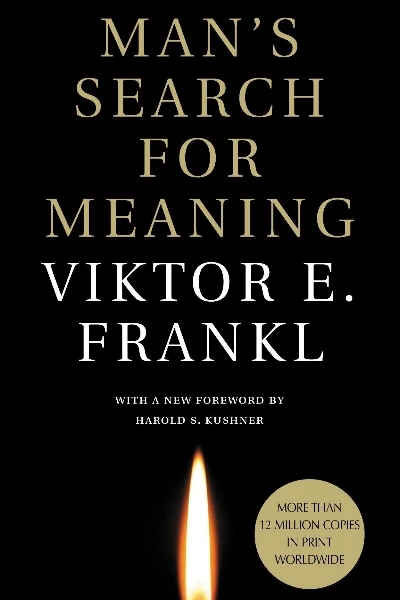
SELECTED WRITINGS
Letter to Wilhelm and Setpha Börner1
September 14, 1945
My dears!
I’ve been in Vienna for four weeks now. Finally there is an opportunity to write you. But I have only sad news to communicate: shortly before my departure from Munich, I learned that my mother was sent to Auschwitz a week after me. What that means, you know all too well. And I had scarcely arrived in Vienna when I was told that my wife is also dead. She was sent from Auschwitz to work in the trenches at Trachtenberg in Breslau, and then on to the infamous concentration camp of Bergen-Belsen. There, the women endured “terrible, indescribable suffering,” as it was put in a letter from a 2 former colleague of Tilly’s,in which Tilly’s name is listed as one of those who died of typhus (the letter comes from the only survivor of the former hospital nurses, such as they were, in Bergen-Belsen). I have had the “indescribable” depicted to me by a survivor of Bergen- Belsen. I cannot repeat it.
So now I’m all alone. Whoever has not shared a similar fate cannot understand me. I am terribly tired, terribly sad, terribly lonely.
I have nothing more to hope for and nothing more to fear. I have no pleasure in life, only duties, and I live out of conscience. . . . And so I have re-established myself, and now I’m re-dictating my manuscript, both for publication and for my own rehabilitation. A couple of well-
placed old friends have taken on my cause in the most touching way.
But no success can make me happy, everything is weightless, void, vain in my eyes, I feel distant from everything. It all says nothing to me, means nothing. The best have not returned (also, my best friend [Hubert Gsur] was beheaded) and they have left me alone. In the camp, we believed that we had reached the lowest point—and then, when we returned, we saw that nothing has survived, that that which had kept us standing has been destroyed, that at the same time as we were becoming human again it was possible to fall deeper, into an even more boundless suffering. There remains perhaps nothing more to do than cry a little and browse a little through the Psalms.
Perhaps you will smile at me, maybe you will be angry with me, but I do not contradict myself in the slightest, I take nothing away from my former affirmation of life, when I experience the things I have described. On the contrary, if I had not had this rock-solid, positive view of life—what would have become of me in these last weeks, in those months in the camp? But I now see things in a larger dimension. I see increasingly that life is so very meaningful, that in suffering and even in failure there must still be meaning. And my only consolation lies in the fact that I can say in all good conscience, that I realized the opportunities that presented themselves to me, I mean to say: that I turned them into reality. This is the case with respect to my short marriage to Tilly. What we have experienced cannot be undone, it has been, but this Having-been is perhaps the most certain form of being.
To finish, some happy news: Vally Laufer is alive and well in Vienna, stayed here in hiding as a “U-Boat” (an illegal)! I leave it to you to let Stella and my father-in-law, as well as my brother-in-law Gustav D. Grosser, gradually know the truth. Sadly Walter also probably died at Auschwitz. And Tilly’s aunt, Hertha Weiser, lost her husband in a shootout in the final days of fighting in Vienna. Are you in contact with Eugen Hofmann, Elsie Kupferberg, Thea Kissmann?
Have you received my second letter via Berman? Forgive these disjointed scribblings but I have to write bit by bit during my surgery hours.
With warmest greetings!
Your Viktor
1. Wilhelm Börner (1882–1951), philosopher and educator, and lifelong friend of Viktor Frankl’s, headed the “ethical community” in Vienna. In this capacity, Börner founded the world’s first suicide-counseling body in Vienna. Börner’s initiative was also an important impetus for Frankl in the foundation of youth-counseling centers, in which Börner was also involved as a volunteer counselor.
2. Tilly Grosser, Frankl’s first wife.
Memorial Speech on the Fortieth Anniversary of the Liberation of the Türkheim Concentration Camp, Bavaria
April 27, 1985
Honored guests, First, I thank you for the honor you have shown me in inviting me.
You have given me the power to speak, and so I may also speak on behalf of the dead. The city of my birth is Vienna, but Türkheim is the place of my rebirth. Rebirth after the first half of my life. A short while ago I turned eighty, and my fortieth birthday was spent in the concentration camp at Türkheim. My birthday gift then was that after weeks of typhus fever, I became free of the fever for the first time.
So my first greeting is to my dead companions. My first thanks, however, go to the high school students who had the memorial stone made. And I also thank them in the name of the dead, to whom it is dedicated. But I must also say thank you to those who liberated us, who saved the lives of us survivors, and I want to tell you a little story. When a couple of years ago I was in the capital of Texas, giving a lecture at its university on the psychotherapy I founded, logotherapy as it is called, the mayor made me an honorary citizen. I replied that rather than make me an honorary citizen of his town, I should really name him an honorary logotherapist. For if young men from Texas had not risked their lives and some of them also sacrificed their life to liberate us, then as of 27 April 1945 there
would have been no Viktor Frankl, to say nothing of any logotherapy.
Tears came to the mayor’s eyes.
Now I also have to thank the people of Türkheim! Whenever I gave the last lecture of the semester at the United States International University in California, I would show, at the request of the students, a series of slides: photos [of the camps] I had taken after the war. And at the end I always showed them a slide that I had taken on the other side of the railway embankment there showing the front of a large farmhouse, in front of which I had gathered the large extended family that lived there. These were the people who during the last days of the war risked their lives by hiding Hungarian Jewish girls who had escaped from the camp! With this slide I wanted to show what my deepest conviction is—and has been from the very first day after the war: namely, that there is no collective guilt! Let alone—if I may so call it—a retroactive collective guilt, in which someone is held responsible for what their parents’ or even grandparents’ generation may once have done.
Guilt can only be personal guilt—guilt for what one has done oneself or even not done, neglected to do. But even then we must have some understanding of the fears of those concerned—fear for their freedom, even their lives, and not least fear for the fate of their families. Certainly, there have been those that have nonetheless preferred to let themselves be put in a concentration camp, rather than be unfaithful to their convictions. But actually one may only demand heroism of one person, and that person is oneself. At the very least, a person is only really justified in asking heroism of others if that person has proved that they preferred to go into a concentration camp rather than conform or make compromises. But those who sat safely abroad, they cannot ask of others that they should prefer to go to their deaths rather than pursue opportunism.
And consider this: those who were in the camps judge in general much more mildly than, say, the émigrés who were able to secure their freedom, or those who were not even born until decades later.
Finally, I cannot help but also thank a man who unfortunately could not attend this thanksgiving. I mean the commandant of the Türkheim camp, Herr Hofmann. I can still see him standing in front of me, as we arrived from the camp of Kaufering III, in ragged clothes,
freezing, without blankets, and hear as he began to curse most heartily because he was so appalled that we had been sent there in this state. It was also he who secretly, as we later found out, bought medicines from his own pocket—for his Jewish prisoners.
A few years ago I invited some Türkheim citizens who had helped camp inmates to a get-together at a local inn; I wanted Herr Hofmann to come too, but as it turned out he had died shortly before.
From a certain local spiritual advisor whom you all surely know (he too has died in the meantime) I now know that Herr Hofmann himself, he who should have had the very least need, was until the end of his life plagued by self-reproach. How willingly, and with what conviction, would I have eased his mind.
Now you will surely object: that’s all well and good, but people like Herr Hofmann are exceptions. Maybe. But they are what counts. At least when it comes to understanding, forgiveness, reconciliation!
And I feel it legitimate to say this, for it was no lesser person than the famous, late Rabbi Leo Baeck, who back in 1945—just imagine, 1945!—wrote a “Prayer for Reconciliation,” in which he explicitly says: “Only goodness shall count!”
And if you point out to me that there was in fact so little goodness, then I can only answer with the words of another great Jewish thinker, namely the philosopher Benedictus de Spinoza, whose main work, Ethics, concludes with the words: sed omnia praeclara tam difficilia, quam rara sunt. Everything that is great is as rare to find as it is difficult to do. In fact, I myself believe that decent people are in the minority, have always been and always will be. But that’s nothing new. There is an ancient Jewish legend, according to which the existence of the world depends on there always being thirty-six—no more than thirty-six!—righteous people in the world. Well, I cannot tell you exactly how many there are, but I am convinced that in Türkheim there were, and certainly still are, a couple of righteous people. And when we now remember the dead of the Türkheim camp, I would like also to thank in the name of these dead the righteous people of the town of Türkheim.
Memorial Speech to Mark the Fiftieth Anniversary of Hitler’s Invasion
March 10, 1988, Rathausplatz, Vienna
Ladies and gentlemen, I hope for your understanding when I ask you in this hour of remembrance to join me in thinking of my father—he perished in the Theresienstadt camp; my brother—he died in Auschwitz; my mother —she was killed in the gas chamber at Auschwitz; and my first wife —she lost her life in Bergen-Belsen. And yet I must ask you to expect no words of hatred from me. Whom should I hate? I know only the victims, not the perpetrators, at least I do not know them personally—and I refuse to call people collectively guilty. There is no collective guilt, it does not exist, and I say this not only today, but I’ve said so from day one when I was liberated from my last concentration camp—and at that time it was definitely not a way to make oneself popular to dare publicly to oppose the idea of collective guilt.
Guilt can in any case only be personal guilt—the guilt for something I myself have done—or may have failed to do! But I cannot be guilty of something that other people have done, even if it is my parents or grandparents. And to try to persuade today’s Austrians between the ages of nought and fifty of a sort of “retroactive collective guilt,” I consider to be a crime and an insanity —or, to put it in a psychiatrist’s terms, it would be a crime, were it not a case of insanity. And a return to the so-called “kin liability” of the
Nazis! And I think that the victims of former collective persecution should be the first to agree with me. Otherwise it would be as if they set great store by driving young people into the arms of the old Nazis or the neo-Nazis! I shall now come back to my liberation from the concentration camp: I then took the first possible lift I could get (even if only illegally possible) on a truck back to Vienna. In the intervening years, I have been to America sixty-three times; but every time I returned to Austria. Not because the Austrians loved me especially, but rather, the other way round, because I love Austria so much, and we know that love is not always based on reciprocity. Well, whenever I’m in America, the Americans ask me: “Mr. Frankl, why didn’t you come to us before the war? You could have spared yourself a great deal.” And I then have to explain to them that I had to wait for years to get a visa, and how when it finally arrived, it was already too late, because I simply could not bring myself, in the middle of the war, to leave my elderly parents to their fate. And then the Americans ask me: “Well, why didn’t you at least come to us after the war? Hadn’t the Viennese done enough to you—you and yours?”
“Well,” I then say to these people, “in Vienna there was, for example, a Catholic baroness, who at the risk of her own life hid a cousin of mine as a ‘U-boat’ and thus saved my cousin’s life. And then in Vienna there was a certain socialist lawyer who at great personal risk secretly gave me food whenever he could.” Do you know who that was? Bruno Pittermann, subsequently vice chancellor of Austria. Now, I go on to ask the Americans, why should I not return to such a city, where there are such people?
Ladies and gentlemen, I hear you say: That’s all well and good, but those were only exceptions—exceptions to the rule, and as a rule people were just opportunists—they should have shown resistance. Ladies and gentlemen, you are right, but consider: resistance presupposes heroism, and in my opinion one may demand heroism only of a single person and that is . . . oneself! And whoever then says that someone should have preferred to be locked up rather than get on with the Nazis, then that person can only actually say this if they themselves have proved that they preferred to let themselves be put in a concentration camp, and consider this: those who were in concentration camps do in general judge the
opportunists far more lightly—more lightly than those who stayed abroad for the duration. Not to mention the younger generation— how can they imagine how afraid people were and how they trembled for their freedom, for their very lives and for the fate of their families, for whom they were always responsible? We can only admire all the more those who dared to join the resistance movement. I am thinking here of my friend Hubert Gsur, who was sentenced to death for undermining the military and executed by the guillotine.
National Socialism nurtured racism. In reality there are only two races, namely the “race” of decent people and the “race” of people who are not decent. And “segregation” runs straight through all nations and within every single nation straight through all parties.
Even in the concentration camps one came across halfway decent fellows here and there among the SS men—just as one came across the odd scoundrel or two among the prisoners. Not to mention the Capos. That decent people are in the minority, that they have always been a minority and are likely to remain so is something we must come to terms with. Danger only threatens when a political system sends those not-decent people, i.e., the negative element of a nation, to the top. And no nation is immune from doing this, and in this respect every nation is in principle capable of a Holocaust! In support of this we have the sensational results of scientific experiments in the field of social psychology, for which we owe thanks to an American; they are known as the Milgram Experiment.
If we want to extract the political consequences from all this, we should assume that there are basically only two styles of politics, or perhaps better said, only two types of politicians: the first are those who believe that the end justifies the means, and that could be any means . . . While the other type of politician knows very well that there are means that could desecrate the holiest end. And it is this type of politician whom I trust, despite the clamor around the year 1988, and the demands of the day, not to mention of the anniversary, trust to hear the voice of reason and to ensure that all who are of goodwill, stretch out their hands to each other, across all the graves
and across all divisions.
Thank you for your attention.