AFTERWORD
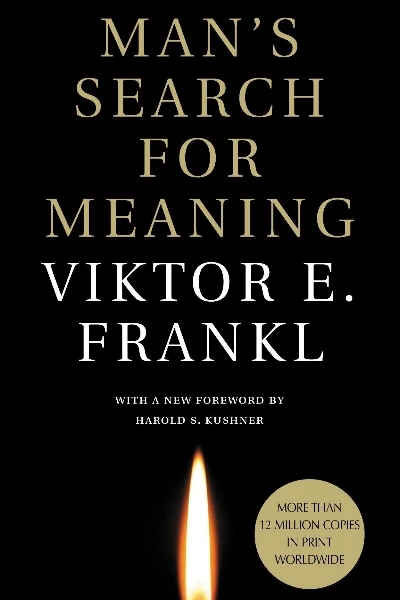
On January 27, 2006, the sixty-first anniversary of the liberation of the Auschwitz death camp, where 1.5 million people died, nations around the world observed the first International Holocaust Remembrance Day. A few months later, they might well have celebrated the anniversary of one of the most abiding pieces of writing from that horrendous time. First published in German in 1946 as A Psychologist Experiences the Concentration Camp and later called Say Yes to Life in Spite of Everything, subsequent editions were supplemented by an introduction to logotherapy and a postscript on tragic optimism, or how to remain optimistic in the face of pain, guilt, and death. The English translation, first published in 1959, was called Man’s Search for Meaning.
Viktor Frankl’s book has now sold more than 12 million copies in a total of twenty-four languages. A 1991 Library of Congress/Book-of- the-Month-Club survey asking readers to name a “book that made a difference in your life” found Man’s Search for Meaning among the ten most influential books in America. It has inspired religious and philosophical thinkers, mental health professionals, teachers, students, and general readers from all walks of life. It is routinely assigned to college, graduate, and high school students in
psychology, philosophy, history, literature, Holocaust studies, religion, and theology. What accounts for its pervasive influence and enduring value?
Viktor Frankl’s life spanned nearly all of the twentieth century, from his birth in 1905 to his death in 1997. At the age of three he decided to become a physician. In his autobiographical reflections, he recalls that as a youth he would “think for some minutes about the meaning of life. Particularly about the meaning of the coming day and its meaning for me.”
As a teenager Frankl was fascinated by philosophy, experimental psychology, and psychoanalysis. To supplement his high school classes, he attended adult-education classes and began a correspondence with Sigmund Freud that led Freud to submit a manuscript of Frankl’s to the International Journal of Psychoanalysis.
The article was accepted and later published. That same year, at age sixteen, Frankl attended an adult-education workshop on philosophy. The instructor, recognizing Frankl’s precocious intellect, invited him to give a lecture on the meaning of life. Frankl told the audience that “It is we ourselves who must answer the questions that life asks of us, and to these questions we can respond only by being responsible for our existence.” This belief became the cornerstone of Frankl’s personal life and professional identity.
Under the influence of Freud’s ideas, Frankl decided while he was still in high school to become a psychiatrist. Inspired in part by a fellow student who told him he had a gift for helping others, Frankl had begun to realize that he had a talent not only for diagnosing psychological problems, but also for discovering what motivates people.
Frankl’s first counseling job was entirely his own—he founded Vienna’s first private youth counseling program and worked with troubled youths. From 1930 to 1937 he worked as a psychiatrist at the University Clinic in Vienna, caring for suicidal patients. He sought to help his patients find a way to make their lives meaningful even in the face of depression or mental illness. By 1939 he was head of the
department of neurology at Rothschild Hospital, the only Jewish hospital in Vienna.
In the early years of the war, Frankl’s work at Rothschild gave him and his family some degree of protection from the threat of deportation. When the hospital was closed down by the National Socialist government, however, Frankl realized that they were at grave risk of being sent to a concentration camp. In 1942 the American consulate in Vienna informed him that he was eligible for a U.S. immigration visa. Although an escape from Austria would have enabled him to complete his book on logotherapy, he decided to let his visa lapse: he felt he should stay in Vienna for the sake of his aging parents. In September 1942, Frankl and his family were arrested and deported. Frankl spent the next three years at four different concentration camps—Theresienstadt, Auschwitz-Birkenau, Kaufering, and Türkheim, part of the Dachau complex.
It is important to note that Frankl’s imprisonment was not the only impetus for Man’s Search for Meaning. Before his deportation, he had already begun to formulate an argument that the quest for meaning is the key to mental health and human flourishing. As a prisoner, he was suddenly forced to assess whether his own life still had any meaning. His survival was a combined result of his will to live, his instinct for self-preservation, some generous acts of human decency, and shrewdness; of course, it also depended on blind luck, such as where he happened to be imprisoned, the whims of the guards, and arbitrary decisions about where to line up and who to trust or believe. However, something more was needed to overcome the deprivations and degradations of the camps. Frankl drew constantly upon uniquely human capacities such as inborn optimism, humor, psychological detachment, brief moments of solitude, inner freedom, and a steely resolve not to give up or commit suicide. He realized that he must try to live for the future, and he drew strength from loving thoughts of his wife and his deep desire to finish his book on logotherapy. He also found meaning in glimpses of beauty in nature and art. Most important, he realized that, no matter what happened, he retained the freedom to choose how to respond to his suffering. He saw this not merely as an option but as his and every
person’s responsibility to choose “the way in which he bears his burden.”
Sometimes Frankl’s ideas are inspirational, as when he explains how dying patients and quadriplegics come to terms with their fate.
Others are aspirational, as when he asserts that a person finds meaning by “striving and struggling for a worthwhile goal, a freely chosen task.” He shows how existential frustration provoked and motivated an unhappy diplomat to seek a new, more satisfying career. Frankl also uses moral exhortation, however, to call attention to “the gap between what one is and what one should become” and the idea that “man is responsible and must actualize the potential meaning of his life.” He sees freedom and responsibility as two sides of the same coin. When he spoke to American audiences, Frankl was fond of saying, “I recommend that the Statue of Liberty on the East Coast be supplemented by a Statue of Responsibility on the West Coast.” To achieve personal meaning, he says, one must transcend subjective pleasures by doing something that “points, and is directed, to something, or someone, other than oneself . . . by giving himself to a cause to serve or another person to love.” Frankl himself chose to focus on his parents by staying in Vienna when he could have had safe passage to America. While he was in the same concentration camp as his father, Frankl managed to obtain morphine to ease his father’s pain and stayed by his side during his dying days.
Even when confronted by loss and sadness, Frankl’s optimism, his constant affirmation of and exuberance about life, led him to insist that hope and positive energy can turn challenges into triumphs. In Man’s Search for Meaning, he hastens to add that suffering is not necessary to find meaning, only that “meaning is possible in spite of suffering.” Indeed, he goes on to say that “to suffer unnecessarily is masochistic rather than heroic.”
I first read Man’s Search for Meaning as a philosophy professor in the mid-1960s. The book was brought to my attention by a Norwegian philosopher who had himself been incarcerated in a Nazi concentration camp. My colleague remarked how strongly he agreed with Frankl about the importance of nourishing one’s inner freedom, embracing the value of beauty in nature, art, poetry, and literature,
and feeling love for family and friends. But other personal choices, activities, relationships, hobbies, and even simple pleasures can also give meaning to life. Why, then, do some people find themselves feeling so empty? Frankl’s wisdom here is worth emphasizing: it is a question of the attitude one takes toward life’s challenges and opportunities, both large and small. A positive attitude enables a person to endure suffering and disappointment as well as enhance enjoyment and satisfaction. A negative attitude intensifies pain and deepens disappointments; it undermines and diminishes pleasure, happiness, and satisfaction; it may even lead to depression or physical illness.
My friend and former colleague Norman Cousins was a tireless advocate for the value of positive emotions in promoting health, and he warned of the danger that negative emotions may jeopardize it.
Although some critics attacked Cousins’s views as simplistic, subsequent research in psychoneuroimmunology has supported the ways in which positive emotions, expectations, and attitudes enhance our immune system. This research also reinforces Frankl’s belief that one’s approach to everything from life-threatening challenges to everyday situations helps to shape the meaning of our lives. The simple truth that Frankl so ardently promoted has profound significance for anyone who listens.
The choices humans make should be active rather than passive.
In making personal choices we affirm our autonomy. “A human being is not one thing among others; things determine each other,” Frankl writes, “but man is ultimately self determining. What he becomes— within the limits of endowment and environment—he has made out of himself.” For example, the darkness of despair threatened to overwhelm a young Israeli soldier who had lost both his legs in the Yom Kippur War. He was drowning in depression and contemplating suicide. One day a friend noticed that his outlook had changed to hopeful serenity. The soldier attributed his transformation to reading Man’s Search for Meaning. When he was told about the soldier, Frankl wondered whether “there may be such a thing as autobibliotherapy—healing through reading.”
Frankl’s comment hints at the reasons why Man’s Search for Meaning has such a powerful impact on many readers. Persons
facing existential challenges or crises may seek advice or guidance from family, friends, therapists, or religious counselors. Sometimes such advice is helpful; sometimes it is not. Persons facing difficult choices may not fully appreciate how much their own attitude interferes with the decision they need to make or the action they need to take. Frankl offers readers who are searching for answers to life’s dilemmas a critical mandate: he does not tell people what to do, but why they must do it.
After his liberation in 1945 from the Türkheim camp, where he had nearly died of typhus, Frankl discovered that he was utterly alone.
On the first day of his return to Vienna in August 1945, Frankl learned that his pregnant wife, Tilly, had died of sickness or starvation in the Bergen-Belsen concentration camp. Sadly, his parents and brother had all died in the camps. Overcoming his losses and inevitable depression, he remained in Vienna to resume his career as a psychiatrist—an unusual choice when so many others, especially Jewish psychoanalysts and psychiatrists, had emigrated to other countries. Several factors may have contributed to this decision: Frankl felt an intense connection to Vienna, especially to psychiatric patients who needed his help in the postwar period. He also believed strongly in reconciliation rather than revenge; he once remarked, “I do not forget any good deed done to me, and I do not carry a grudge for a bad one.” Notably, he renounced the idea of collective guilt. Frankl was able to accept that his Viennese colleagues and neighbors may have known about or even participated in his persecution, and he did not condemn them for failing to join the resistance or die heroic deaths. Instead, he was deeply committed to the idea that even a vile Nazi criminal or a seemingly hopeless madman has the potential to transcend evil or insanity by making responsible choices.
He threw himself passionately into his work. In 1946 he reconstructed and revised the book that was destroyed when he was first deported (The Doctor and the Soul), and that same year—in only nine days—he wrote Man’s Search for Meaning. He hoped to cure through his writings the personal alienation and cultural malaise that plagued many individuals who felt an “inner emptiness” or a
“void within themselves.” Perhaps this flurry of professional activity helped Frankl to restore meaning to his own life.
Two years later he married Eleonore Schwindt, who, like his first wife, was a nurse. Unlike Tilly, who was Jewish, Elly was Catholic.
Although this may have been mere coincidence, it was characteristic of Viktor Frankl to accept individuals regardless of their religious beliefs or secular convictions. His deep commitment to the uniqueness and dignity of each individual was illustrated by his admiration for Freud and Adler even though he disagreed with their philosophical and psychological theories. He also valued his personal relationships with philosophers as radically different as Martin Heidegger, a reformed Nazi sympathizer, Karl Jaspers, an advocate of collective guilt, and Gabriel Marcel, a Catholic philosopher and writer. As a psychiatrist, Frankl avoided direct reference to his personal religious beliefs. He was fond of saying that the aim of psychiatry was the healing of the soul, leaving to religion the salvation of the soul.
He remained head of the neurology department at the Vienna Policlinic Hospital for twenty-five years and wrote more than thirty books for both professionals and general readers. He lectured widely in Europe, the Americas, Australia, Asia, and Africa; held professorships at Harvard, Stanford, and the University of Pittsburgh; and was Distinguished Professor of Logotherapy at the U.S.
International University in San Diego. He met with politicians, world leaders such as Pope Paul VI, philosophers, students, teachers, and numerous individuals who had read and been inspired by his books.
Even in his nineties, Frankl continued to engage in dialogue with visitors from all over the world and to respond personally to some of the hundreds of letters he received every week. Twenty-nine universities awarded him honorary degrees, and the American Psychiatric Association honored him with the Oskar Pfister Award.
Frankl is credited with establishing logotherapy as a psychiatric technique that uses existential analysis to help patients resolve their emotional conflicts. He stimulated many therapists to look beyond
patients’ past or present problems to help them choose productive futures by making personal choices and taking responsibility for them. Several generations of therapists were inspired by his humanistic insights, which gained influence as a result of Frankl’s prolific writing, provocative lectures, and engaging personality. He encouraged others to use existential analysis creatively rather than to establish an official doctrine. He argued that therapists should focus on the specific needs of individual patients rather than extrapolate from abstract theories.
Despite a demanding schedule, Frankl also found time to take flying lessons and pursue his lifelong passion for mountain climbing.
He joked that in contrast to Freud’s and Adler’s “depth psychology,” which emphasizes delving into an individual’s past and his or her unconscious instincts and desires, he practiced “height psychology,” which focuses on a person’s future and his or her conscious decisions and actions. His approach to psychotherapy stressed the importance of helping people to reach new heights of personal meaning through self transcendence: the application of positive effort, technique, acceptance of limitations, and wise decisions. His goal was to provoke people into realizing that they could and should exercise their capacity for choice to achieve their own goals. Writing about tragic optimism, he cautioned us that “the world is in a bad state, but everything will become still worse unless each of us does his best.”
Frankl was once asked to express in one sentence the meaning of his own life. He wrote the response on paper and asked his students to guess what he had written. After some moments of quiet reflection, a student surprised Frankl by saying, “The meaning of your life is to help others find the meaning of theirs.”
“That was it, exactly,” Frankl said. “Those are the very words I had written.”
—William J. Winslade
William J. Winslade is a philosopher, lawyer, and psychoanalyst who teaches psychiatry, medical ethics, and medical jurisprudence at the University of Texas Medical Branch in Galveston and the University of Houston Law Center.