A C L A S S I C S T O R Y
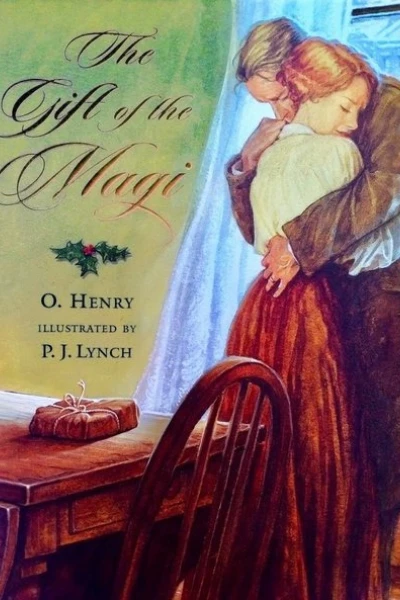
GIFT OF
THE
MAGI
A tale about love and how the real present IS the present.
T h e G i f t o f t h e M a g i üJǻ+ÄÚü
0NE DOLLAR AND EIGHTY-SEVEN CENTS.
That was all. She had put it aside, one cent and then another and then
another, in her careful buying of meat and other food. Della counted
it three times. One dollar and eighty-seven cents. And the next day
would be Christmas.
There was nothing to do but fall on the bed and cry. So Della did it.
While the lady of the home is slowly growing quieter, we can
look at the home. Furnished rooms at a cost of $8 a week. There is lit-
tle more to say about it.
In the hall below was a letter-box too small to hold a letter. There
was an electric bell, but it could not make a sound. Also there was a
name beside the door: “Mr. James Dillingham Young.”
1
O . H e n r y
When the name was placed there, Mr. James Dillingham Young was being paid $30 a week. Now, when he was being paid only $20 a week, the name seemed too long and important. It should perhaps have been “Mr. James D. Young.” But when Mr. James Dillingham Young entered the furnished rooms, his name became very short indeed. Mrs.
James Dillingham Young put her arms warmly about him and called him “Jim.” You have already met her. She is Della.
Della finished her crying and cleaned the marks of it from her face.
She stood by the window and looked out with no interest. Tomorrow would be Christmas Day, and she had only $1.87 with which to buy Jim a gift. She had put aside as much as she could for months, with this result. Twenty dollars a week is not much. Everything had cost more than she had expected. It always happened like that.
Only $ 1.87 to buy a gift for Jim. Her Jim. She had had many happy hours planning something nice for him. Something nearly good enough.
Something almost worth the honor of belonging to Jim.
There was a looking-glass between the windows of the room. Per- haps you have seen the kind of looking-glass that is placed in $8 fur- nished rooms. It was very narrow. A person could see only a little of himself at a time. However, if he was very thin and moved very quickly, he might be able to get a good view of himself. Della, being quite thin, had mastered this art.
Suddenly she turned from the window and stood before the glass.
Her eyes were shining brightly, but her face had lost its color. Quickly she pulled down her hair and let it fall to its complete length.
The James Dillingham Youngs were very proud of two things which they owned. One thing was Jim’s gold watch. It had once belonged to his father. And, long ago, it had belonged to his father’s father. The other thing was Della’s hair.
If a queen had lived in the rooms near theirs, Della would have washed and dried her hair where the queen could see it. Della knew her hair was more beautiful than any queen’s jewels and gifts.
If a king had lived in the same house, with all his riches, Jim would have looked at his watch every time they met. Jim knew that no king
2
T h e G i f t o f t h e M a g i
had anything so valuable.
So now Della’s beautiful hair fell about her, shining like a falling stream of brown water. It reached below her knee. It almost made itself into a dress for her.
And then she put it up on her head again, nervously and quickly.
Once she stopped for a moment and stood still while a tear or two ran down her face.
She put on her old brown coat. She put on her old brown hat.
With the bright light still in her eyes, she moved quickly out the door and down to the street.
Where she stopped, the sign said: “Mrs. Sofronie. Hair Articles of all Kinds.”
Up to the second floor Della ran, and stopped to get her breath.
Mrs. Sofronie, large, too white, cold-eyed, looked at her.
“Will you buy my hair?” asked Della.
“I buy hair,” said Mrs. Sofronie. “Take your hat off and let me look
at it.”
Down fell the brown waterfall.
“Twenty dollars,” said Mrs. Sofronie, lifting the hair to feel its
weight.
“Give it to me quick,” said Della.
Oh, and the next two hours seemed to fly. She was going from one shop to another, to find a gift for Jim.
She found it at last. It surely had been made for Jim and no one else. There was no other like it in any of the shops, and she had looked in every shop in the city.
It was a gold watch chain, very simply made. Its value was in its rich and pure material. Because it was so plain and simple, you knew that it was very valuable. All good things are like this.
It was good enough for The Watch.
As soon as she saw it, she knew that Jim must have it. It was like him. Quietness and value—Jim and the chain both had quietness and value. She paid twenty-one dollars for it. And she hurried home with the chain and eighty-seven cents.
3
O . H e n r y
With that chain on his watch, Jim could look at his watch and learn the time anywhere he might be. Though the watch was so fine, it had never had a fine chain. He sometimes took it out and looked at it only when no one could see him do it.
When Della arrived home, her mind quieted a little. She began to think more reasonably. She started to try to cover the sad marks of what she had done. Love and large-hearted giving, when added together, can leave deep marks. It is never easy to cover these marks, dear friends— never easy.
Within forty minutes her head looked a little better. With her short hair, she looked wonderfully like a schoolboy. She stood at the looking-glass for a long time.
“If Jim doesn’t kill me,” she said to herself, “before he looks at me a second time, he’ll say I look like a girl who sings and dances for money.
But what could I do—oh! What could I do with a dollar and eighty- seven cents?”
At seven, Jim’s dinner was ready for him.
Jim was never late. Della held the watch chain in her hand and sat near the door where he always entered. Then she heard his step in the hall and her face lost color for a moment. She often said little prayers quietly, about simple everyday things. And now she said: “Please God, make him think I’m still pretty.”
The door opened and Jim stepped in. He looked very thin and he was not smiling. Poor fellow, he was only twenty-two—and with a fam- ily to take care of! He needed a new coat and he had nothing to cover his cold hands.
Jim stopped inside the door. He was as quiet as a hunting dog when it is near a bird. His eyes looked strangely at Della, and there was an expression in them that she could not understand. It filled her with fear.
It was not anger, nor surprise, nor anything she had been ready for. He simply looked at her with that strange expression on his face.
Della went to him.
“Jim, dear,” she cried, “don’t look at me like that. I had my hair cut off and sold it. I couldn’t live through Christmas without giving you a
4
T h e G i f t o f t h e M a g i
gift. My hair will grow again. You won’t care, will you? My hair grows very fast. It’s Christmas, Jim. Let’s be happy. You don’t know what a nice—what a beautiful nice gift I got for you.”
“You’ve cut off your hair?” asked Jim slowly. He seemed to labor to understand what had happened. He seemed not to feel sure he knew.
“Cut it off and sold it,” said Della. “Don’t you like me now? I’m
me, Jim. I’m the same without my hair.”
Jim looked around the room.
“You say your hair is gone?” he said.
“You don’t have to look for it,” said Della. “It’s sold, I tell you— sold and gone, too. It’s the night before Christmas, boy. Be good to me, because I sold it for you. Maybe the hairs of my head could be counted,” she said, “but no one could ever count my love for you. Shall we eat dinner, Jim?”
Jim put his arms around his Della. For ten seconds let us look in another direction. Eight dollars a week or a million dollars a year— how different are they? Someone may give you an answer, but it will be wrong. The magi brought valuable gifts, but that was not among them. My meaning will be explained soon.
From inside the coat, Jim took something tied in paper. He threw it upon the table.
“I want you to understand me, Dell,” he said. “Nothing like a haircut could make me love you any less. But if you’ll open that, you may know what I felt when I came in.”
White fingers pulled off the paper. And then a cry of joy; and then a change to tears.
For there lay The Combs—the combs that Della had seen in a shop window and loved for a long time. Beautiful combs, with jewels, perfect for her beautiful hair. She had known they cost too much for her to buy them. She had looked at them without the least hope of owning them. And now they were hers, but her hair was gone.
But she held them to her heart, and at last was able to look up and say: “My hair grows so fast, Jim!”
5
O . H e n r y
And then she jumped up and cried, “Oh, oh!”
Jim had not yet seen his beautiful gift. She held it out to him in her open hand. The gold seemed to shine softly as if with her own warm and loving spirit.
“Isn’t it perfect, Jim? I hunted all over town to find it. You’ll have to look at your watch a hundred times a day now. Give me your watch.
I want to see how they look together.”
Jim sat down and smiled.
“Della,” said he, “let’s put our Christmas gifts away and keep them a while. They’re too nice to use now. I sold the watch to get the money to buy the combs. And now I think we should have our dinner.”
The magi, as you know, were wise men—wonderfully wise men— who brought gifts to the newborn Christ-child. They were the first to give Christmas gifts. Being wise, their gifts were doubtless wise ones.
And here I have told you the story of two children who were not wise.
Each sold the most valuable thing he owned in order to buy a gift for the other. But let me speak a last word to the wise of these days: Of all who give gifts, these two were the most wise. Of all who give and receive gifts, such as they are the most wise. Everywhere they are the wise ones.
They are the magi.
.]g]]DZ ƨǷs©ü¬½½êæ©Ú©¬ÚǸ ƩǷ+Ëö¬9¬Ã£½æ£¬ÚÞæDzö©Ä©¤Ë橬Þ×ÚÞÄæ£ÚËý½Ǹ
ƪǷs©æ¬9¬ÃËÞË©Ëê½êü½½¤¬£æǸ ƫǷs©æ¬Þæ©æÚêÃĬĤˣ橬ÞÞæËÚüȗ¬ÄüËêÚËöÄöËÚÞǸ ƬǷËüËê橬ĺ©Ú¬ÞæÃÞ¬ÞËõÚȗËÃÃÚ¬½¬āǸs©üǸs©üÄËæǸ ƭǷ+õüËêõÚ©©Ú¬ÞæÃÞö©ÚüËê¬Äǻæêü×ÚÞÄæÞ£ËÚõÚüËÄǸ
6
The Gift of the Magi
by O’Henry
Discussion Questions:
1. During what holiday season is the story set?
2. What is this story “really” about? What is its major theme?
3. What are Jim and Della’s most valuable possessions?
4. In your opinion, what makes a gift valuable?
5. What did Della do to get more money to buy a gift? Would you have done the same?
6. Why was Della worried about having short hair?
7. What did Jim do to get extra money to buy a gift?
8. Did things work out the way both Jim and Della had planned?
9. What does the title of the story mean and refer to?
10. If you didn’t have enough money to buy a gift for someone dear, what would you do?
11. Do you think Christmas and many holidays are over-commercialized? Why? Why not?
Your opinion
The best part of this story was _____________________________
This story taught me that _________________________________
RETELLthe story
Read or listen to the story. After, retell the story with these notes.
Who:Where:
Problem:Solution:
My Favorite Part:
ESL / EFL VersionTHE GIFT OF THE MAGI
AudioVideo by O Henry
One dollar and eighty-seven cents. That was all. And sixty cents of it in the smallest pieces of money - pennies. Pennies saved one and two at a time by negotiating with the men at the market who sold vegetables and meat.
Negotiating until one's face burned with the silent knowledge of being poor.
Three times Della counted it. One dollar and eighty-seven cents. And the next day would be Christmas.
There was clearly nothing to do but sit down and cry. So Della cried. Which led to the thought that life is made up of little cries and smiles, with more little cries than smiles.
Della finished her crying and dried her face. She stood by the window and looked out unhappily at a gray cat walking along a gray fence in a gray back yard. Tomorrow would be Christmas Day, and she had only one dollar and eighty-seven cents to buy her husband Jim a gift. She had been saving every penny she could for months, with this result.
Jim earned twenty dollars a week, which does not go far. Expenses had been greater than she had expected. They always are. Many a happy hour she had spent planning to buy something nice for him. Something fine and rare -- something close to being worthy of the honor of belonging to Jim.
There was a tall glass mirror between the windows of the room. Suddenly Della turned from the window and stood before the glass mirror and looked at herself. Her eyes were shining, but her face had lost its color within twenty seconds. Quickly she pulled down her hair and let it fall to its full length.
Now, Mister and Missus James Dillingham Young had two possessions which they valued. One was Jim's gold time piece, the watch that had been his father's and his grandfather's. The other was Della's hair.
Had the Queen of Sheba lived in their building, Della would have let her hair hang out the window to dry just to reduce the value of the queen's jewels.
So now Della's beautiful hair fell about her, shining like a brown waterfall. It reached below her knees and made itself almost like a covering for her. And then quickly she put it up again. She stood still while a few tears fell on the floor.
She put on her coat and her old brown hat. With a quick motion and brightness still in her eyes, she danced out the door and down the street.
Where she stopped the sign read: "Madame Sofronie. Hair Goods of All Kinds." Della ran up the steps to the shop, out of breath.
"Will you buy my hair?" asked Della.
"I buy hair," said Madame. "Take your hat off and let us have a look at it."
Down came the beautiful brown waterfall of hair.
"Twenty dollars," said Madame, lifting the hair with an experienced hand.
"Give it to me quick," said Della.
The next two hours went by as if they had wings. Della looked in all the stores to choose a gift for Jim.
She found it at last. It surely had been made for Jim and no one else. It was a chain -- simple round rings of silver. It was perfect for Jim's gold watch. As
soon as she saw it she knew that it must be for him. It was like him. Quiet and with great value. She gave the shopkeeper twenty-one dollars and she hurried home with the eighty-seven cents that was left.
When Della arrived home she began to repair what was left of her hair. The hair had been ruined by her love and her desire to give a special gift. Repairing the damage was a very big job.
Within forty minutes her head was covered with tiny round curls of hair that made her look wonderfully like a schoolboy. She looked at herself in the glass mirror long and carefully.
"If Jim does not kill me before he takes a second look at me," she said to herself, "he'll say I look like a song girl. But what could I do--oh! what could I do with a dollar and eighty-seven cents?"
At seven o'clock that night the coffee was made and the pan on the back of the stove was hot and ready to cook the meat.
Jim was never late coming home from work. Della held the silver chain in her hand and sat near the door. Then she heard his step and she turned white for just a minute. She had a way of saying a little silent prayer about the simplest everyday things, and now she whispered: "Please God, make him think I am still pretty."
The door opened and Jim stepped in. He looked thin and very serious. Poor man, he was only twenty-two and he had to care for a wife. He needed a new coat and gloves to keep his hands warm.
Jim stopped inside the door, as immovable as a dog smelling a bird. His eyes were fixed upon Della. There was an expression in them that she could not read, and it frightened her. It was not anger, nor surprise, nor fear, nor any of the feelings that she had been prepared for. He simply looked at her with a strange expression on his face. Della went to him.
"Jim, my love," she cried, "do not look at me that way. I had my hair cut and sold because I could not have lived through Christmas without giving you a gift. My hair will grow out again. I just had to do it. My hair grows very fast.
Say 'Merry Christmas!' Jim, and let us be happy. You do not know what a nice- - what a beautiful, nice gift I have for you."
"You have cut off your hair?" asked Jim, slowly, as if he had not accepted the information even after his mind worked very hard.
"Cut it off and sold it," said Della. "Do you not like me just as well? I am the same person without my hair, right?
Jim looked about the room as if he were looking for something.
"You say your hair is gone?" he asked.
"You need not look for it," said Della. "It is sold, I tell you--sold and gone, too.
It is Christmas Eve, boy. Be good to me, for it was cut for you. Maybe the hairs of my head were numbered," she went on with sudden serious sweetness, "but nobody could ever count my love for you. Shall I put the meat on, Jim?"
Jim seemed to awaken quickly and put his arms around Della. Then he took a package from his coat and threw it on the table.
"Do not make any mistake about me, Dell," he said. "I do not think there is any haircut that could make me like my girl any less. But if you will open that package you may see why you had me frightened at first."
White fingers quickly tore at the string and paper. There was a scream of joy; and then, alas! a change to tears and cries, requiring the man of the house to use all his skill to calm his wife.
For there were the combs -- the special set of objects to hold her hair that Della had wanted ever since she saw them in a shop window. Beautiful combs, made of shells, with jewels at the edge --just the color to wear in the beautiful
hair that was no longer hers. They cost a lot of money, she knew, and her heart had wanted them without ever hoping to have them. And now, the beautiful combs were hers, but the hair that should have touched them was gone.
But she held the combs to herself, and soon she was able to look up with a smile and say, "My hair grows so fast, Jim!"
Then Della jumped up like a little burned cat and cried, "Oh, oh!"
Jim had not yet seen his beautiful gift. She happily held it out to him in her open hands. The silver chain seemed so bright.
"Isn't it wonderful, Jim? I looked all over town to find it. You will have to look at the time a hundred times a day now. Give me your watch. I want to see how it looks on it."
Instead of obeying, Jim fell on the couch and put his hands under the back of his head and smiled.
"Dell," said he, "let us put our Christmas gifts away and keep them a while.
They are too nice to use just right now. I sold my gold watch to get the money to buy the set of combs for your hair. And now, why not put the meat on."
The magi were wise men--wonderfully wise men--who brought gifts to the Baby Jesus. They invented the art of giving Christmas gifts. Being wise, their gifts were wise ones. And here I have told you the story of two young people who most unwisely gave for each other the greatest treasures of their house.
But in a last word to the wise of these days, let it be said that of all who give gifts, these two were the wisest. Everywhere they are wisest. They are the magi.
SHIRLEY GRIFFITH: You have heard the American story "The Gift of the Magi." This story was written by O. Henry and adapted into Special English by Karen Leggett. Your storyteller was Shep O'Neal. The producer was Lawan Davis. I'm Shirley Griffith.
The Gift of the Magi
by O’Henry
Discussion Questions:
1. During what holiday season is the story set?
2. What is this story “really” about? What is its major theme?
3. What are Jim and Della’s most valuable possessions?
4. In your opinion, what makes a gift valuable?
5. What did Della do to get more money to buy a gift? Would you have done the same?
6. Why was Della worried about having short hair?
7. What did Jim do to get extra money to buy a gift?
8. Did things work out the way both Jim and Della had planned?
9. What does the title of the story mean and refer to?
10. If you didn’t have enough money to buy a gift for someone dear, what would you do?
11. Do you think Christmas and many holidays are over-commercialized? Why? Why not?
Your opinion
The best part of this story was _____________________________
This story taught me that _________________________________
the gift of the magi A modern Christmas story.
This is Jim and Della. They are in love. But they are broke.
They don't have any money. There is no food in their refrigerator.
They live in a small one bedroom apartment. Rent and food eat up almost all of their salaries.
Tomorrow is Christmas. Della wonders how she can buy her Jim a Christmas present?
Della was surfing the internet that afternoon. She saw an ad and had a brilliant idea!
She would sell her ipad for money. Then she would be able to buy her Jim a Christmas present!
She put her iPad up for sale on eBay. It sold in minutes! She cried when she got the message and agreed to the sale. She wrapped it up and delivered it immediately in person to save money.
Now Della had money to buy Jim a nice Christmas present. She took the bus back home and went shopping online for Jim's present.
That night after a long day at work, Jim came home. After dinner Della said, "Merry Christmas Jim!" Here is your Christmas present. I bought you a year unlimited data plan, so you can share video and call your family, speak as long as you want.
Jim was surprised. "Oh Della!" "I sold my phone!" "I was broke. I needed money to buy you a present." I bought you a whole year of Disney plus so you could enjoy your favorite programs.
Della held Jim's arm and gave him a kiss. She said, "Jim, I sold my ipad to buy you your present." "It doesn't matter. Merry Christmas. We have each other. Let's enjoy each other." "The present IS our present."
And that's how Della and Jim discovered the true meaning of Christmas. The gift of the Magi.
Please visit us!
The largest and most complete lesson library on the web.