Note on the Translation
The troublesome question ‘Why retranslate the classics?’ has perhaps only one satisfactory answer: because the translator hopes to offer a closer approximation to his or her experience of the original than is otherwise available. A new interpretation of a famous symphony or play is valuable simply for being itself, for being unique; the argument is less convincing when applied to a retranslation, if only because most readers cannot be expected to read long novels in multiple versions. For this reason it seems appropriate to set out what I have tried to achieve that I found lacking in previous translations – for all their other, non-replicable virtues. Only the reader, of course, can judge the result.
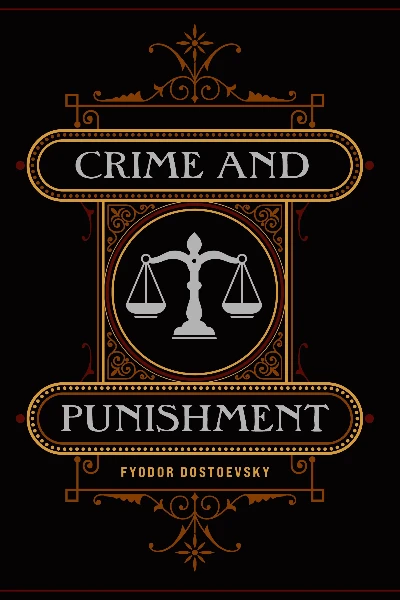
The most widely read translations ofCrime and Punishment have tended, in my view, towards a polish, and therefore tameness, absent from Dostoyevsky’s text (effects gained in large part by judicious trimming or padding); or else they have clung so closely to the Russian that the spell cast by the original is periodically broken by jarring literalism, and the author’s peculiarities of style, smoothed over in other translations, are made odder still. In my rendering I have sought to preserve both the novel’s spell and the expressive, jagged concision palpable from the very first sentence.
Observations made fifty years ago by George Steiner about Dostoyevsky’s method helped set me on my way: ‘all superfluity of narrative is stripped away in order to render the conflict of personages naked and exemplary; the law of composition is one of maximum energy, released over the
smallest possible extent of space and time’ (Tolstoy or Dostoevsky). These comments are especially pertinent to the constricted setting and style ofCrime and Punishment, where Dostoyevsky largely eschews the verbosity that is a feature and a concern of several of his earlier, and later, works. In fact, the narrative passages are notable for the narrowness of their lexical range, using verbal repetition to help evoke the psychological experience of Raskolnikov, who repeats actions almost as often as he repeats words.
Lexical and thematic clusters – to do with memory or family relations or time – prove inseparable. Sometimes, idiomatic English has to be forced a little to capture these repetitions; on other occasions a single Russian word gains an accretion of reference that can be recovered in English only in part – by compensating for its untranslatability elsewhere. A salient example is the noundelo (‘deed’, ‘action’, ‘criminal case’, ‘matter’, ‘thing’, ‘business’), which is repeated so often, and in so many contexts, that it comes to mimic the great obsession of Dostoyevsky’s time, and of Raskolnikov himself: when will words finally become deeds?
Another aspect of the ‘maximum energy’ mentioned by Steiner has to do with the vitality and variety of the spoken word in Dostoyevsky’s fiction. The characters ofCrime and Punishment are defined by their language, irony and humour. To recapture their speech patterns – especially those of Porfiry Petrovich, the detective – a considerably greater licence seemed appropriate than in the compressed passages of pure narrative. Dostoyevsky’s characters would, furthermore, have sounded very modern to his readers, except where they consciously invest their speech with archaism (to recall, in many cases, the fading Russia of fixed social hierarchies). The narrator’s language would also have sounded fresh and alive. To replicate this vividness, while reserving scope for archaism elsewhere, I
have aimed for an idiom that still sounds modern today, but is not exclusively of our time.
A related point is the translation of biblical language.
Part Four ofCrime and Punishment contains extensive extracts and quotations from the Gospels. For these, I have used the mid-twentieth-century Revised Standard Version, to reflect the fact that the Russian translation cited in the novel sounded (and still sounds) modern, in stark contrast to the much older translation done into Old Church Slavonic, strong traces of which can be heard, for example, in Part One, Chapter II, where, correspondingly, I have used the seventeenth-century King James Version.
NOTE ON THE TEXT
This translation is based on the text found in F. M.
Dostoyevsky,Polnoe sobranie sochinenii v tridtsati tomakh (Leningrad: Nauka, 1972–90), vol. 6 (1973). Since this celebrated edition, a further Collected Works, which claims to adhere more closely to Dostoyevsky’s own preferences for the visual appearance of his text and markers of emphasis, has been published in Moscow (Voskresenye, 2003–5). The differences between the editions have mainly to do with punctuation (modernized to some degree in this translation), and for most scholars of Dostoyevsky the authority of the Soviet ‘Academy’ edition remains unsurpassed.
ACKNOWLEDGEMENTS
As the first new translator ofCrime and Punishment in a generation, I have had the good fortune of benefiting not only from the experience of my predecessors, recent and distant, but also from the copious scholarship that has appeared in the intervening period, both in the digital
wonderland and in more traditional formats (notably, Boris Tikhomirov’s Russian commentary on the novel, listed in Further Reading).
A personal debt is owed to those who have read parts of the draft at various stages: Catriona Kelly, Iain Rogers, Dmitry Shatalov, Richard Short, Adrian Tahourdin, James Womack, Sarah Young. For helping to answer intractable queries I thank Alexander Ilichevskii, Alexander Krasovitsky, Nina Kruglikova, Aleksandr Rodionov and especially Boris Tikhomirov. The Dostoyevsky reading group run in Oxford by Muireann Maguire and attended by the late Diane Oenning Thompson provided vital stimulation. For valuable comments on my Introduction and Notes I thank Malcolm Jones, Andrew Kahn, Eric Naiman and Anna and Thomas Ready. The support of Wolfson College (Oxford), St Antony’s College (Oxford) and the Russkiy Mir Foundation has been essential. Without the editorial confidence of Alexis Kirschbaum, I would never have started, and without the skilled guidance of Rose Goddard, Anna Hervé and Ian Pindar, I might never have finished. Anthony Hippisley and Stephen Ryan spared no effort to improve my text.
Above all, this translation has been a family affair. It was typed up from manuscript by my mother, Marisa, the most responsive first reader one could wish for, reviewed with the greatest discernment by my father, Nigel, willed on from afar by my siblings, Natasha and Tom, graced by the births of two daughters, Isabel and Natalie, and accompanied at every step by my wife, Ania.