Introduction
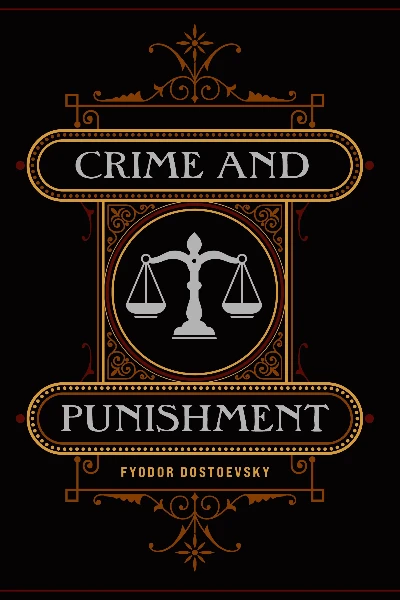
I A ready-made title, ‘Crime and Punishment’ suggests a ready-made plot. A man will commit a crime. He will be caught. He will be punished. His fate will revolve around the conflicts between freedom and conscience, the delinquent individual and the punitive state. Justice, no doubt, will be done.
In January 1866, when the first instalment ofCrime and Punishment appeared inThe Russian Messenger (Russkii Vestnik), prospective readers might have indulged in further well-reasoned speculation. Here was a title steeped in the ferment of its time, an era marked on the one hand by the ambitious reforms of Tsar Alexander II (1818–81), not least to the entire judicial process, and on the other by mounting radicalism and nascent terrorism, prompted in large part by the perceived failure of these same reforms.
Serfdom may have been consigned to history five years earlier, but the harsh terms of the serfs’ ‘emancipation’ had done little to alleviate social injustice. Would this, then, be a novel of political rebellion? Or perhaps, given the increasingly conservative leanings of the ageing Dostoyevsky (and of Mikhail Katkov, editor ofThe Russian Messenger), a satire of these revolutionary tendencies?
Inevitably, the novel would also be rooted in the bitter experience of its famous author. After all, he, too, in his free-thinking youth, had known crime and punishment at first hand. His chief ‘crime’ was to read out, more than once, Vissarion Belinsky’s letter to Nikolai Gogol (1809–
52), in which Russia’s leading critic railed against Russia’s leading author, whose latest book had revealed him to be a ‘proponent of the knout’, of Church, State and serfdom.
Dostoyevsky’s ‘punishment’ – and that of a disparate group of his associates, broadly linked by utopian-socialist sympathies – was to face the firing squad on St Petersburg’s Semyonovsky Square in December 1849. The sentence was commuted by Tsar Nicholas I (1796–1855) at the last possible moment and in the most theatrical manner. Instead, Dostoyevsky endured years of hard labour in Siberia, described upon his return to St Petersburg in the lightly fictionalizedNotes from the Dead House (1860– 2), the first masterpiece of his mature period.
Finally,Crime and Punishment would be imbued with ideas familiar to all readers of Dostoyevsky’s post-Siberian journalism: educated Russia needed to return to its roots, to the soil, to the people. Only thus could the warring tribes of Westernizers and Slavophiles, elites and commoners, be joined; only thus would the country’s ancient wounds be healed.
At one level the novel we go on to read satisfies all of these conventional expectations. At another all of them are unsettled, if not thoroughly undermined. We read of murders committed by a handsome young man whom it would be difficult to identify precisely with the radicals of the 1860s (though some offended young readers contrived to do so) or with its unhandsome author. Disturbingly, this man is unsure that his gruesome acts were crimes at all; unsure at times that they even happened. For much of the book he even seems to forget one of his murders entirely.
The reality of punishment also eludes him for an unreasonably long time, despite his best efforts. In his mind everything begins to merge: past and future, right and wrong, perpetrator and victim, crime and punishment. The opposition stated by the title, so familiar and in its way so comforting, begins to dissolve for the reader, too; a dark
joke, perhaps – like Dostoyevsky’s own ‘execution’? – yet no less serious for that.
Because it was written beforeThe Idiot (1868),Demons (1871–2) andThe Brothers Karamazov (1879–80), and because it is so often described as a version of the murder mystery or as a novel of religious conversion,Crime and Punishment has an entrenched reputation as the most straightforward of Dostoyevsky’s great quartet of late novels. Yet its puzzles and ambiguities, when fully entered into, allow the reader to share the same vertiginous confusion experienced by its protagonist, Rodion Romanovich Raskolnikov. In the words of Virginia Woolf: ‘Against our wills we are drawn in, whirled round, blinded, suffocated, and at the same time filled with a giddy rapture.
1Out of Shakespeare there is no more exciting reading.’
II The sources of the novel’s complexity can be traced to the opening sentences of the first detailed record we have of Dostoyevsky’s plans for the book.
Originally envisioned as a long story,Crime and Punishment was proposed to Katkov in a letter from Wiesbaden, where the recently widowed, forty-three- year-old Dostoyevsky was enduring what his most comprehensive biographer, the late Joseph Frank, 2 aptly calls a ‘period of protracted mortification’.His first wife, with whom he had rarely been happy, had succumbed to tuberculosis the previous year. Mikhail – his brother and soulmate – had also died in 1864, leaving enormous debts. This moral and financial destitution was further compounded by Dostoyevsky’s two uncontrollable manias: one for roulette, another (only marginally weaker) for his ex- mistress Apollinaria Suslova, a femme fatale
eighteen years his junior. To top it all, he had recently signed a contract with the unscrupulous publisher Fyodor Stellovsky, requiring him, on pain of losing all rights to his own works, to complete an additional novel by 1 November 1866.
Yet for all this pressure and turmoil, the proposal for a ‘psychological record of a crime’ which Dostoyevsky submitted to Katkov is notable for its clarity, confidence and precision. It begins: A contemporary setting, this current year [1865]. A young man, excluded from student status at university, of trading class, living in extreme poverty, succumbs, through frivolity and ricketiness of thought, to certain strange, ‘half-baked’ ideas in the air, and makes up his mind to get out of his foul situation in a 3single bound.
A great deal changed between the conception of this story in a German spa town and the eventual birth of the novel in Russia. It expanded not only in size, but also in perspective, which grew from the confessional mode (often favoured by Dostoyevsky in his fiction hitherto) to a third- person viewpoint of virtual omniscience and deliberate ‘naivety’, as Dostoyevsky himself described it in his notebooks. Very little changed, however, about the two 4 sentences quoted above.They contain in embryo the strange mixture of ingredients that will determine Raskolnikov’s half-real, half-theoretical drama: poverty and social exclusion on the one hand, and frivolous, ‘half-baked’ thoughts on the other. Only one element is missing – the element of psychogeography, as it would now be called.
This is memorably supplied by St Petersburg, ‘the most 5 premeditated and abstract city in the world’,built on a northern swamp by Western architects and Russian serfs.
Here, too, we are in the realms of the semi-real and semi- theoretical, of rationalism and delusion – a tradition first
developed in the St Petersburg texts of Alexander Pushkin (1799–1837) and Gogol and now taken in new directions by their pupil, Dostoyevsky.
As we first see him, cooped up in his garret and barely able to rise from his couch, Raskolnikov exists (or thinks he exists) only in his own mind. For much of the novel that will remain the case, a sign of his catastrophic isolation from mankind. Yet at the same time, through a chain of spatial metaphors, Dostoyevsky makes us see how deeply his mental disarray is tied to the city that surrounds him. Such metaphors are characteristic of the novel’s curious artistic achievement: as subtle as the axe that Raskolnikov brings down on the head of his first victim, they are also freighted with the exceptional weight of association that makes us, as readers, share in the protagonist’s experience of suffocation from causes both abstract and real. Thus, Raskolnikov’s mental state finds its external embodiment in his low-ceilinged, cramped garret. This garret, in turn, is a ‘cupboard’, a ‘ship’s cabin’, a ‘cell’, and even, as perceived by his mother, a ‘coffin’.
Raskolnikov’s mind also stands in metaphorical relation to the broader topography in which his fate is to be played out: the overcrowded, shabby area of St Petersburg’s Haymarket district, with its narrow, twisting streets, its fetid canal (or ‘Ditch’) and its filthy stairwells, drinking dens and connecting courtyards, through which tradesmen, girl-prostitutes and criminals ‘hurry and scurry’. Only a stone’s throw from the imperial majesty of the Neva River and Nevsky Prospect (associated with Pushkin and Gogol respectively), this is the shadow St Petersburg, airless and coffin-like in the height of summer, that Dostoyevsky made his own in both literature and life. In place of the sober ‘military capital’ evoked by Pushkin inThe Bronze Horseman (1833) – with its ‘severe, elegant appearance’, its perfection of form – Dostoyevsky’s Haymarket is drunken and unkempt. Here, Baltic Germans shout
atrocious Russian, villagers pour in to sub-rent ‘corners’, and students and officers spout caricatured versions of Bentham and Mill. This, too, is a prison of sorts: not the prison of Pushkin’s military autocracy, nor the bureaucratic nightmare of Gogol, but the false freedom of those torn from their roots, left with nothing but words and borrowed ideas.
The opening pages acquaint us with these borrowed ideas in the recurring themes of Raskolnikov’s wretched soliloquies: how to overcome his cowardice and indecisiveness, how to utter ‘a new word’, to take a ‘new step’; above all, how to stop talking and start doing. Before us is a Hamlet without a clearly identifiable cause, a man- child who fears the frivolity of his own thoughts (mere ‘toys’), which he is unable to arrange in satisfactory order.
A penchant for self-contradiction lends a rebarbative texture to his ruminations, marked by the frequency of ‘but’ and ‘still’ and tapering off in rows of dots. It is the self- lacerating language familiar from the narrator of Dostoyevsky’sNotes from Underground (1864), but spoken now from beneath the eaves, rather than from beneath the floorboards. The masochism of the mouse-man of the 6Underground is replaced by Raskolnikov’s ‘Satanic pride’.
This pride, however, is knowingly misplaced.
Raskolnikov’s thoughts are evidently as stale to him as they would have been to contemporary readers, for whom the anxieties of the ineffectual intellectual had long been familiar from novels set on country estates among gifted young men too weak or too comfortable to address the malign status quo. By 1865 the idle moral torments of the ‘superfluous men’ of Ivan Goncharov (1812–91) and Ivan Turgenev (1818–83) had filtered down to the new breed of déclassé, de-Christianized intellectuals, the most influential of whom, such as the socialist Nikolai Chernyshevsky (1828–89) and the nihilist Dmitry Pisarev (1840–68), were
inspiring a generation of revolutionaries with their heavily ideological fiction and criticism. For both of these men, prison was more than a metaphor.
In this context, Raskolnikov’s vacillations and ruminations are decidedly old-school, and not infrequently derivative. Thus, Pisarev, in response to Bazarov, the anti- hero of Turgenev’sFathers and Sons (1862), had already set out a division between the conformist masses and the select few to whom all is permitted and who may be prevented only by ‘personal taste’ from murder and 7 robbery.Now, three years later, this idea is plagiarized by Raskolnikov. Nor does Dostoyevsky want us to ignore, from the opening page, the belated echoes of the title of Chernyshevsky’s hymn to the emancipatory power of ‘rational egoism’, the novelWhat Is to Be Done? (1863).
Later, Raskolnikov will address the same question verbatim to his good angel, Sonya, and she, in turn, will pose it to him. Raskolnikov’s answer will again be an act of plagiarism: we must break what must be broken – an almost direct quote from Pisarev, recycled many years later by Lenin. But Raskolnikov is an unlikely revolutionary. He is too much a loner to be the ‘political conspirator’ his friend Razumikhin mistakes him for, and he is certainly no leader of men; perhaps he is just a belated Romantic, framing his outdated, somewhat comical delusions in the language of his day?
Dostoyevsky also introduces in the early chapters a further element latent in his pitch to Katkov: the impatience of his protagonist, who ‘makes up his mind to get out of his foul situation in a single bound’. This is brought to the surface by the maid and country girl Nastasya, who, endowed with the intuition that Dostoyevsky often reserves for his less educated characters, divines that Raskolnikov is too lazy to work and wants his fortune ‘right now’. Unimpressed by ‘eggheads’
who never do a stroke of work, she nevertheless feels a rough tenderness towards him as a human being, foreshadowing the much deeper feelings and intuition that will be shown by Sonya, who similarly opposes her own unconscious wisdom (Sonya: Sophia) to the sophistry of Raskolnikov.
In the folkloric context that would have constituted Nastasya’s own education, Raskolnikov might be cast as Ivan the Fool, who sits on the stove all day and waits for a pretty maiden and a crock of gold to fall into his lap.
Raskolnikov, who also hails from the provinces, has himself kept one foot in the cuckoo land of magic tales, as an early, jarring reference to King Pea (Tsar Gorokh, associated with bygone happiness) makes plain. But St Petersburg, he will find, is no place for childish dreams.
Nor is it a place for a ‘player’ (igrok), to give the literal translation of the Russian word for ‘gambler’. For Raskolnikov – like Pushkin’s Hermann in ‘The Queen of Spades’ (1834), and like Dostoyevsky himself – is obsessed by the mirage of a winning formula, and it should be no surprise that the short novel for which Dostoyevsky had to break off work onCrime and Punishment bears the title Igrok (The Gambler). Produced to fulfil his contract with Stellovsky, it was dictated to a young stenographer, Anna Grigoryevna Snitkina, and completed in less than four 8 weeks.But ifThe Gambler is set in a Wiesbaden-esque ‘Roulettenburg’, where rich and poor throw caution to the winds,Crime and Punishment is set in St Petersburg, where numbers are calculated coldly and old pawnbrokers make sure to take their interest in advance. In such a city, murder, too, must be ‘premeditated and abstract’, and Raskolnikov’s first crime, however risky, is both those things; he even counts the steps from his room to the home of his victim. Yet when the crime is actually set in motion he is barely aware of what he is doing: ‘As if a scrap of his
clothing had caught in the wheel of a machine that was now pulling him in.’ This striking contradiction stands at the heart of the novel’s innermost concerns, developed over the five hundred-odd pages that remain after Raskolnikov’s murders.
III The nature of these deepest concerns, however, is far from obvious. The unusual construction ofCrime and Punishment, which gives so much weight to the aftermath of the crime (five parts out of six) and only an epilogue to the punishment itself, has led many to see the novel as less a whodunnit than a whydunnit.
According to Joseph Frank: ‘Crime and Punishment is focused on the solution of an enigma: the mystery 9 of Raskolnikov’s motivation.’We may wonder,
though, whether this ‘enigma’ is not itself a decoy planted by this most devious of writers.
Certainly, there is no shortage of motivating factors.
Raskolnikov is desperately poor and desperately proud, unable to countenance his own humiliating situation; nor can he accept the humiliations endured and imposed by his mother and sister, who send him remittances and sacrifice everything to their ‘priceless Rodya’. His intended victim, the withered pawnbroker, is a ‘noxious louse’ who does nothing but harm; killing her would yield a net gain for humankind (the utilitarian argument). He dreams of being a good man in the future, a benefactor of humanity (the philanthropic argument). He dreams of being a great man, one of the select few, like Lycurgus, Muhammad or Napoleon, ‘criminals to a man’, whose evil deeds in the present will be forgotten by grateful generations in the future (the heroic argument).
All of these motivations are valid; but equally, none of them is. Raskolnikov’s initial crime is both over- and under- motivated; mere ‘casuistry’, as he calls it himself. Not for nothing does he overhear another student telling an officer, over tea after a game of billiards, not only about the self- same pawnbroker, but about why her murder would be morally justified. The student expounds the logic of such a hypothetical crime persuasively and at great length, but the conversation ends in bathos: ‘Here you are speaking and speechifying, but tell me: are you going to kill the old womanyourself, or aren’t you?’ ‘Of course not! I’m talking about justice . . . It’s not about me . . .’ ‘Well, as I see it, if you don’t dare do it yourself, there’s no justice to speak of! Let’s have another game!’
This coincidence – brazen in its technical ‘naivety’ even by Dostoyevsky’s standards (unless, of course, Raskolnikov is imagining the entire conversation) – serves to make a powerful point, just before Raskolnikov finally turns words into deed. A ‘why’ can always be found for a crime; much more difficult to explain is the ‘how’: how an intention becomes reality, how theory is enfleshed, how abstract reasoning ends in a sensitive, compassionate man slipping in ‘sticky, warm blood’. What state of mind is needed for this to happen?
Leo Tolstoy (1828–1910) responded to this quandary in his late essay ‘Why Do People Stupefy Themselves?’ (1890), where he sought to explain the state of mental automatism in which Raskolnikov carried out his crime. But Tolstoy, an aggressive teetotaller by this stage in his life, was surely exaggerating when he implies that the glass of beer Raskolnikov consumes at the end of the first chapter ‘silences the voice of conscience’. Raskolnikov’s utter passivity, which makes him succumb to ‘ideas in the air’ and to gamble everything on one desperate act, reaches back far further than the glass of beer, deeper even than
the question of ‘conscience’. Nor can it be reduced to the verdict of insanity, as Raskolnikov himself is aware (even when others are not). This passivity is a state of spiritual death and it is this that enables the crime. Dostoyevsky shows how a man who feels as if he is not alive and not truly capable of affecting reality will affect it for precisely that reason – and with catastrophic results. In his own estranged perception, not only is his sense of his own reality attenuated, so too is his sense of the reality of his fellow human beings, of the boundaries between separate lives. The eerie astonishment that overcomes Raskolnikov throughout his crime is the eeriness of a dead man meeting and muffling life.
Where does this state of spiritual death come from, and why is this wretched man-child, Raskolnikov, buried alive in his youth? Here, perhaps, is the true ‘enigma’ to which Dostoyevsky applies himself inCrime and Punishment, both before and after the murders. In so doing, he scatters clues and red herrings to enlighten and confound us. Family pressures, societal pressures, illness, loss of faith: all of these possible explanations are deepened in the course of the novel, but also, at various times, ironized and presented as somehow dishonest. Psychoanalytic, religious, sociological and other interpretations all have much to offer us, but all are also limited, in the final analysis, by Dostoyevsky’s strategy of ambivalence in both literature and life. Here was a talented actor who could ask his interrogators what proof they had that he was on the side of the critic and not the author, when he read out Belinsky’s letter to Gogol, and who infused the words of his fictional characters with an exceptional ambiguity of meaning and intonation, employing humour less to lighten their arguments than to complicate them. The regrettable division of much Dostoyevsky scholarship (Soviet and post- Soviet) into secular and religious camps ignores the fact that in his fiction Dostoyevsky always thought in terms of
pro andcontra – not just in his final masterpieceThe Brothers Karamazov, with its legendary dramatization of atheism versus Orthodoxy, but equally inCrime and Punishment. The vector of Dostoyevsky’s intentions – to judge from his notebooks, letters and (arguably) the final pages of this novel – may have tended towards faith and self-abnegation, but the reality of his artistic achievement is very different. Some will be moved by Sonya’s selflessness, forgiveness and acceptance of God’s world, whatever its injustices, but many readers will be even more struck by the defiance shown by another woman, Katerina Ivanovna – a drunkard’s widow with three children on her hands, consumption and no money – towards the priest summoned against her will at her dying hour. The fire of self-abnegating faith and the fire of injured pride blaze with equal strength from the first chapter of the novel to the last, sometimes within the same hearts, and there is no guarantee which will burn the reader more fiercely.
There is, perhaps, only one chain of clues whose validity seems beyond question in helping us approach the enigma mentioned above: the determinative role of literature itself in shaping Raskolnikov’s plight. Incongruous though it may sound in the context of a novel about murder, such a claim will come as less of a surprise to readers of Dostoyevsky’s earlier works, which are filled with writers or would-be writers, or of his journalism of the early 1860s, with its recurrent concern with the effects ofknizhnost’ (or 10bookishness) on Russian society.
IV
Though never, to my knowledge, presented as such,Crime and Punishment is one of the most self-reflexive classics of pre-Modernist European literature, continuing – and developing – a line that stretches from Cervantes’sDon
Quixote (1605) to Pushkin’sEugene Onegin (1823–31). It is a novel about words and texts as much as deeds and life, and it is correspondingly saturated with self-quotation and misquotation. The apparently simple line of Raskolnikov’s destiny – crime, then punishment – is interwoven with hints about the complicit and complicating role of literature itself.
This self-reflexivity is not just a matter of the belatedness and imitativeness already discussed, the possibility that Raskolnikov, like Pushkin’s Onegin, might be a ‘parody’ of earlier bookish types and ideas. Nor can it be fully contained by Mikhail Bakhtin’s pioneering analysis of the ‘polyphony’ of Dostoyevsky’s fiction, the interpenetration of characters’ thoughts and speech with each other’s words and consciousness, as constantly exhibited by Raskolnikov’s monologues, which are, in fact, dialogues 11 with the words of others.Rather, it is about the immersion of an entire society in texts and in literary dreams, and the baneful consequences for Raskolnikov in particular.
Raskolnikov has blood on his socks and ink on his fingers. He prepares for his crime not only by extensive reading, but also, we later learn, by attempting his first literary debut – a scholarly article with the same theme as the drama in which he plays the starring role. Published without his knowledge, this article is shown to him much later by his proud mother, whereupon, despite the grotesque incongruity with his current situation, he experiences ‘that strange and caustically sweet sensation which every author feels on seeing himself published for the first time, especially at only twenty-three years of age’.
Raskolnikov’s achievements as an author may be modest, but his readerly habits are unshakeable. After committing his murders he visits a tavern to hunt through a pile of recent newspapers for textual evidence of his crime, which
itself evokes dozens of other crimes from Russia and Europe widely reported in the Russian press in the 1860s – and especially in Dostoyevsky’s own journalTime 12 (Vremya).The trail of his crime is not only physical, but also (and much more elusively) textual, keeping Dostoyevsky scholars busy for many decades to come.
Raskolnikov is himself a textual sleuth, an inveterate literary critic. Before and after his crime he shows an uncommon analytical interest in written communications, which are shared with the reader in their entirety: a ten- page letter from his mother, a much curter missive from his sister’s odious suitor. He reads between the lines (thereby encouraging us, as readers, to do the same) and judges character by style, surprising those around him by picking on apparently trivial choices of words and phrase at moments when far weightier issues seem to be at stake.
For Raskolnikov, life is a text to be understood, and even, at times, a text that has already been written. At the novel’s end he imagines what the future has in store for him and asks himself, ‘So why live? Why? Why am I going there now, when I know myself that this is exactly how it will be, as it is writ?’ In his bookishness, as in his other characteristics, Raskolnikov is the type of eccentric who, at the deepest level, is most exemplary of his society (a paradox Dostoyevsky explicitly formulated in his prologue to his last novel,The Brothers Karamazov). Subtly, insistently, we are encouraged to see that Raskolnikov’s addiction to the written word is a symptom of a general, albeit less pathological condition that eddies out from the hero to encompass his family and the country at large. One might not want to make too much of the fact that Raskolnikov’s patronymic – Romanovich – etymologically suggests not just ‘son of Roman’ (a perfectly common name), but also ‘son of the novel’, were it not for Raskolnikov’s mother
telling us that his father ‘when he was still alive, twice tried sending work to the journals: first some poems (I still have the notebook – I’ll show it to you one day), then a whole novella (I begged him to let me copy it out for him), and you should have seen how we prayed for them to be accepted . . . They weren’t!’ Frustrated literary ambition is a powerful motif inCrime and Punishment, displayed in one form or another by several characters across society, especially Raskolnikov’s adversaries in the police and civil service. In particular, the investigator Porfiry Petrovich, who engages Raskolnikov in repeated, chapter-long verbal jousts, is a literary artist and actor manqué, who, like Dostoyevsky himself, reveres the comic genius of Gogol, citing liberally from his works. In Porfiry’s extraordinary rhetoric we see the interweaving of literary and legal discourse that was such a feature of the Russian judicial system before and after the legal reforms of 1864, and which Dostoyevsky criticized in his journalism for distracting from the true purpose of the law: to discover 13 the truth.A graduate from the prestigious Imperial School of Jurisprudence, which produced an unusual quantity of eminent writers as well as lawyers, Porfiry 14imbues his words with Gogolian slipperiness.
The saturation of Russian society in texts, furthermore, not only relates to modern, secular literature. Sonya used to meet with one of Raskolnikov’s victims to read from the Bible together, and later she will read out a passage to the murderer himself about the raising of Lazarus. Indeed, in Crime and Punishment all believers are fervent readers.
Mikolka, the country lad who first confesses to Raskolnikov’s crime, ‘kept reading the old, “true” books and read himself silly’. The fact that Mikolka is introduced by Porfiry to Raskolnikov as araskolnik – an adherent of the ‘Old Belief’, which broke off from the official Orthodox Church in the seventeenth century – marks him out as one
of the protagonist’s many alter egos in the novel, just as his reading habits suggest that Raskolnikov, too, ‘read himself silly’. This connection is further enriched if we bear in mind that theraskolniki were a prime target of the propaganda envisioned by the (proto-Communist) revolutionary faction into which Dostoyevsky himself was drawn in the late 1840s. The revolution this secret society had in mind was decidedly textual. With the aid of an illegal hand press, assembled shortly before the arrest of the participants in the group, they set about composing revolutionary texts in the language and stylistic register (including the use of Old Church Slavonic) that serfs and ‘particularly, perhaps, the 15raskolniki’ would understand.
As Porfiry goes on to say however: ‘Mikolka’s not our man! What we’ve got here, sir, is a fantastical, dark deed, a modern deed, a deed of our time, when the heart of man has clouded over; when there’s talk of “renewal” through bloodshed; when people preach about anything and everything from a position of comfort. What we have here are bookish dreams, sir, a heart stirred up by theories [...]’ The investigation leads (as the reader knows from the start) straight back to Raskolnikov, the modern man, who stands, from our twenty-first-century perspective, like a bridge between the advent of Russian Christianity a thousand years before, bringing with it books and an alphabet, and the no-less literary zeal of Russian Communism. ‘Bookish dreams’ bore terrible fruit in Soviet Russia, whose leaders (Lenin, Stalin, Brezhnev) doubled as prolific authors and fastidious literary critics, and whose drastic changes in policy could be ‘justified’ by reference to one or another line in one or another of the great books in the Chernyshevskian-Marxist-Leninist canon. As the one- time Bolshevik Victor Serge wrote in Moscow in 1933, ‘No real intellectual inquiry is permitted in any sphere.
Everything is reduced to a casuistry nourished on 16quotations.’ Demons is usually seen as Dostoyevsky’s great prophetic novel, butCrime and Punishment, written half a dozen years earlier, is no less so. Analysing the sealed space of Raskolnikov’s mind, Dostoyevsky shows how theory estranges life, and casuistry – wisdom; how reality becomes a game, at once trivial and fatal, in the mind of the reader (writer, artist), the domain of a self-appointed king. In this space the invisible links that hold both the individual psyche and communal life in some sort of balance dissolve.
Not just the arguably relative notions of good and evil, but more seemingly fixed dichotomies collapse: here, mere words become murderous deeds, almost without the thinker’s awareness; an aesthete becomes a ‘louse’; subject becomes object. ‘It was myself I killed,’ Raskolnikov later reflects. His murders are at once a suicide, his crime is his punishment. The word ‘Raskolnikov’ may suggest schism (raskol), but the point about his modernity, his novelty, is not that he is divided – in Dostoyevsky’s world everyone is divided – but that he divides himself, taking an axe to his own humanity.
V
And yet, although he commits suicide of the spirit, Raskolnikov does not commit suicide of the body; like Lazarus, he is given – or does he find? – new life. In a characteristic move that would be repeated inThe Brothers Karamazov, Dostoyevsky argues against his novel’s own pessimism, writing a book against bookishness and setting 17 ‘living life’ against the coffin-life of Raskolnikov.This second narrative is the novel that eventually grew from the story pitched to Katkov. It is a journey that will be negotiated not through texts, but through people – the
same people whose company Raskolnikov wants to avoid from the opening page. In them, opposites do not collapse, but are held in tension, as the novel’s gallery of physical and psychological portraits, riven with contradiction, often attests.
In these encounters the worlds of theory and life finally intersect, and their meeting place is the workshop of human intentions. Dostoyevsky, indeed, is the great novelist of intentions. His characters are always defined, to an unusual degree, by the futures that they, like authors, construct for themselves, whether secretly or in public, and which, like Don Quixote, they try to coax into being through language. Now, on his second journey, Raskolnikov is brought face to face with the intentions (good, evil or confused) of other living beings, who represent not so much doubles for him, as is so often stated, but possibilities: different paths between which he must choose.
It is at this intersection that the universal aspect of Raskolnikov’s fate emerges most forcefully, for it is only among people that his analysis of his own fateful intentions attains a degree of clarity and honesty. He tells Sonya: ‘Try to understand: taking that same road again, I might never have repeated the murder. There was something else I needed to find out then, something else was nudging me along: what I needed to find out, and find out quickly, was whether I was a louse, like everyone else, or a human being? Could I take that step or couldn’t I? Would I dare [...]?’ To the end, Raskolnikov’s ‘Satanic pride’ remains with him, but the reader can strip away the rhetoric and see that his fundamental motivation may have been little more than that of a child all along: could he ‘dare’? As Raskolnikov himself is painfully aware, this would make a mockery of any claims to lofty morality, but it also renders his story universal: a story of the passage from childhood to
maturity. Etymologically, a crime in Russian is a ‘stepping- over’ (pre-stuplenie), a transgression. To feel alive and free, every person must ‘step over’ their conscience and the limits imposed on them by themselves and by others. In this sense, everyone has their crime to commit; or, as a certain cynic tells Raskolnikov, everyone has their ‘steps to take’.
Punishment, too, can be measured in steps – all the way to Siberia – but it must be imposed by another to be meaningful. Here, as throughout the novel, themes, motifs and verbal echoes (whether to do with walking, with air or fire) coincide with exceptional force and complexity.
It is at this intersection, too, that autobiographical undercurrents can, if we so wish, be identified. If all people are determined by their plans for the future, then how did Dostoyevsky’s own theoretical plans as a youthful revolutionary differ from Raskolnikov’s? Were not the ‘criminal intentions to overthrow the existing state order in Russia’ with which he and his associates were charged (not without foundation) potentially even more murderous than the realized intentions of Raskolnikov?
Speculation, however, is all we have. The elusiveness that Dostoyevsky cultivated in his fiction was replicated in his life and literary persona. He left no private diaries, no memoirs, no autobiography. Instead he gave us a very publicDiary of a Writer, in which he appears before his readers wearing a variety of masks (notably that of the ‘Paradoxicalist’); letters, in which he frequently declares the impossibility of expressing his true self (his correspondence with his brother Mikhail is an important exception); and notebooks, in which his plots branch off along endless alternative paths. The author’s inner life, meanwhile, largely escapes us. We know the facts but not the person, and this is in tune with Dostoyevsky’s own lifelong polemic with modernity’s exaggeration of the value of mere data. Whatever ‘key fact’ we take from his life proves – as Porfiry likes to say – ‘double-edged’ in its
potential meaning. Even the meaning of Dostoyevsky’s suffering eludes us. We might say that the sadistic charade before the firing squad on Semyonovsky Square traumatized the author for life, or we might say, with William Empson, that ‘It was a reprieve / Made Dostoevsky 18 talk out queer and clear.’We might say that four years of forced labour in Siberia left him old before his time and disabused him about human nature, or we might say that it saved him as a writer and a man, removing him from the hothouse of St Petersburg literary society in which he was wilting and supplying him with a new-found maturity, as well as the trove of fresh material, linguistic and human, that he acquired by observing his fellow ‘common’ convicts – much of which resurfaces in the present novel. We can argue that his frequent and violent attacks of epilepsy were a curse, inflicting terror, near-madness and pain, or we can argue (following the late J. L. Rice) that they were a 19creative tonic.
It is apt that some of the most interesting recent books on Dostoyevsky have been works of fiction. The ‘master’, one suspects, might well have approved of J. M. Coetzee’s Master of Petersburg (1994), in which an invented plot sets off a compelling portrait of Dostoyevsky surrounded and oppressed by the atmosphere of his own novels. He himself needed invention as a path to understanding. Indeed, he appeared to need it to the same extent that his great rival Tolstoy – whoseWar and Peace (1865–9) was published at the same time asCrime and Punishment, and in the very same journal – grew to abhor it. The two works meet in their dethronement of the ‘great man’ theory of history, the ‘Napoleon complex’, but have little else in common. Tolstoy needed certainty and truth, Dostoyevsky required ‘lies’: that vibrant stream of invention in relation to the past, present and future that, as channelled through the rogue Masloboyev inThe Insulted and the Injured (1861), makes
even his weakest novel memorable. Perhaps, like Razumikhin, Dostoyevsky thought that ‘fibbing’ would bring him to the truth, or at least to a more complete picture of the truth than that provided by his tendentious writing in non-fictional genres.
Certainly, in the much-disputed epilogue toCrime and Punishment the ‘truth’ remains elusive. Some will conclude that Raskolnikov rediscovers himself in his rediscovery of his native land and native people; others will cite his own astonishment at ‘the dreadful, unbridgeable gulf that lay between him and all these commoners’ and his own enduring confusion about his ‘crime’. Some, following one of Dostoyevsky’s sharpest critics and biographers, Konstantin Mochulsky, have read the epilogue as a ‘pious lie’ – an unconvincing conversion to Christianity; others remain unpersuaded that any conversion takes place at all.
What is beyond dispute is that these final pages, filled with a restrained joy, show Dostoyevsky at his most tender and his writing at its most delicate. Here, one would like to think, the autobiographical subtext is far from arbitrary.
For as he wrote these pages Fyodor Mikhailovich Dostoyevsky was himself setting out on a new path, taking with him a new wife – his stenographer, Anna Grigoryevna – and, no doubt, the very best intentions.
NOTES
1. From Woolf’s essay ‘The Russian Point of View’ inThe Common Reader (1925). The quotation describes the experience of reading Dostoyevsky in general, but is especially appropriate toCrime and Punishment.
2. Joseph Frank,Dostoevsky: A Writer in His Time (Princeton: Princeton University Press, 2010), p. 460.
3. My translation from F. M. Dostoyevsky,Polnoe sobranie sochinenii v tridtsati tomakh (Leningrad: Nauka, 1972–90), vol. 28.2, p. 136.
4. The one exception is the protagonist’s class of origin, which seems closer to impoverished gentry than trade, but which is in any case left strikingly vague – the better to emphasize his status as a ‘former student’.
5. As described by the narrator of Dostoyevsky’sNotes from Underground (1864).
6. The reference to Raskolnikov’s ‘Satanic pride’ comes from Dostoyevsky’s notebooks; Dostoyevsky,Polnoe sobranie sochinenii, vol. 7, p. 149.
7. See Derek Offord’s article ‘Crime and Punishment and Contemporary Radical Thought’, reprinted inFyodor Dostoevsky’s Crime and Punishment: A Casebook, ed. Richard Peace (Oxford: Oxford University Press, 2006), pp.
119–48.
8. The Soviet-era filmTwenty-Six Days in the Life of Dostoyevsky (Dvadtsat’ shest’ dnei iz zhizni Dostoevskogo, 1980) captures all the drama of that month – October 1866.
9. Frank,Dostoyevsky: A Writer in His Time, p. 484.
10. This latter topic sparks some fascinating reflections on Dostoyevsky in Lesley Chamberlain’sMotherland: A Philosophical History of Russia (London: Atlantic, 2004), pp. 173–82.
11. Mikhail Bakhtin,Problems of Dostoevsky’s Poetics, translated and edited by Caryl Emerson (Minneapolis: University of Minnesota Press, 1984).
12. On Raskolnikov as ‘media man’ and the ‘subsumption of the social world by the discursive reality of the press’, see Konstantine Klioutchkine, ‘The Rise of Crime and Punishment from the Air of the Media’,Slavic Review, vol. 61, no.
1 (Spring, 2002), pp. 88–108. I would argue that inCrime and Punishment the social world is subsumed not only by the press, however, but by literature more broadly.
13. The literariness of Russian legal culture in this period has been superbly analysed by Kathleen Parthé in ‘Who Speaks the Truth? Writers vs Lawyers’, Universals and Contrasts (The Journal of the NY – St Petersburg Institute of Linguistics, Cognition and Culture), vol. 1, no. 1 (Spring, 2012), pp. 155–71.
See also Gary Rosenshield,Western Law, Russian Justice: Dostoevsky, the Jury Trial, and the Law (Madison, Wisconsin: University of Wisconsin Press, 2005).
14. This matches the ambivalence of Porfiry’s own position on the cusp of the reforms that were intended to create an independent judiciary. Educated under the old system, when (in the words of the historian Richard Pipes) ‘justice was a branch of the administration’, he will stay on with a new title under the new dispensation, owing to a lack of well-qualified new recruits – a suitable fate for a born actor like Porfiry, as well as an ironic comment on the
‘reforms’ themselves.
15. See Frank, pp. 151–4.
16. Victor Serge,Memoirs of a Revolutionary (New York: New York Review of Books, 2012), p. 327.
17. The phrase ‘living life’ is taken from Dostoyevsky’s later novel,The Adolescent, but has a longer history in Russian literature.
18. From ‘Success’ in William Empson,The Complete Poems (London: Penguin Classics, 2001), p. 80.
19. J. L. Rice,Who Was Dostoevsky? (Oakland, California: Berkeley Slavic Specialties, 2011), pp. 73–104, and the same author’sDostoevsky and the Healing Art (Ann Arbor, Michigan: Ardis, 1985).