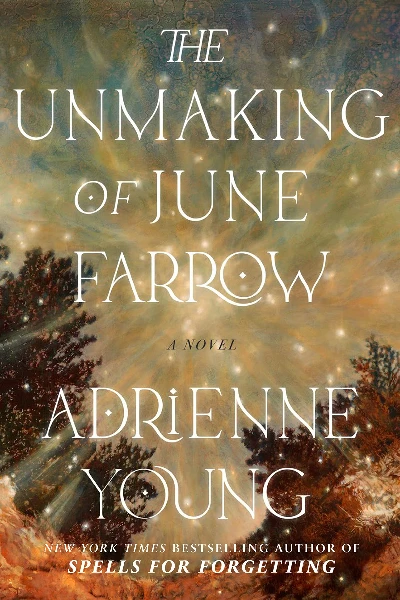
he larkspur was blooming, and that was the first real signT of summer in the mountains.
I worked my way down the narrow row, wedging myself against the wall of dahlias at my back that wouldn’t wake for another couple of weeks. Not until midsummer, Gran had always said, and every year she was right.
I tugged at the collar of my coveralls, pulling it up against the heat of the rising sun. The mornings were cool, the best time to cut, and they were also quiet. Birdsong and the sound of the river behind the tree line were the only companions in the fields at that time of day. Most of the hands were down at the barn getting ready to work, but I’d been at it for hours, happy to have a reason to leave the silence of the house on Bishop Street.
Bright golden pollen covered the knuckles of my worn leather gloves as I found the end of the flower stalks by memory. One by one, I worked down the groupings of leaves until I reached the place to cut. I’d been using the same snips since I was thirteen, a pair of wood-handled clippers I’d notched my initials into and refused to replace.
The Farrow women had a touch. When farms had sprung up from valley to valley and everyone else in North Carolina was
planting tobacco, the Farrows were growing flowers. It had kept the farm working for the last 118 years, and long before there was internet or travel guides, it had been one of the things that Jasper was known for—a peculiar little farm that was growing flower varieties even the richest growers in New England hadn’t been able to get their hands on. The mystery had made the farm something of a legend, even if the women who ran it weren’t exactly considered polite company.
My great-great-grandmother Esther had never come clean about where she’d gotten those seeds, though people in Jasper had their guesses, including some local lore that she’d made a deal with demons. It was more likely that at some point, someone who’d come to work on the railroads had sold them to her. But that wasn’t the kind of story that people liked to tell.
The rattle of a bucket landing on the ground sounded on the other side of the dahlias, and I looked up to see the top of Mason’s hat. The wide-brimmed canvas was stained across the brow with a few growing seasons’ worth of sweat.
“Wasn’t sure you’d come in today,” he said, not finding my eyes over the row.
I cut another bunch of the larkspur, and when my grip was full, I tucked them under one arm, pinning them there so I could reach for the next. “Are you checking up on me, Mason Caldwell?”
He pulled the snips from his belt and got to work, cutting into the rainbow of bloomed ranunculus on the other side. “Do you need checking up on?”
Mason still had a bit of that wry, boyish demeanor he’d had when we were kids fishing on the bank of the river and sneaking out to watch the sunrise up at Longview Falls.
I half laughed. “No. I don’t.”
“Did you look at the schedule?” he asked.
I sighed. “You know I didn’t.”
“The larkspur is tomorrow.”
“Well, it’s getting cut today,” I said, a monotone note creeping into my voice.
I wouldn’t tell him that the tinge of pink at the tip of the petals had told me they were ready, and that tomorrow just a little of their color would be gone. I wouldn’t tell him that the amount of dew on the stalks this morning had me worried about the leaves, either. Mason didn’t believe in the wives’ tales Gran had taught me. He put his faith in plans and data and forecasts, and I’d resolved myself not to argue with him.
He was running things now, and that was best. There was no telling how long I had before I ended up like Gran or my mother.
“We have schedules for a reason, Farrow.”
I rolled my eyes before I found the joint of the next stem, not bothering to look back at him. Again, I wouldn’t argue, because there was no point. That was one of the benefits of working with your oldest, and in my case—only—friend. You got good at not wasting energy where it would be badly spent.
“Well?”
“Well, what?” I echoed.
“You okay?” His voice softened a little, but I could still hear him cutting.
I took the bundle underneath my arm and followed the row to its end, where a bucket was waiting. The memory of those eyes on the porch last night made me clench my teeth. Even now there was a part of me that thought I could still smell that cigarette smoke in the air.
“I’m good.” I dropped the larkspur into the bucket, returning to the place I’d left off.
Every woman in the Farrow family was different, but the end was always the same. Gran hadn’t started showing signs until she was in her sixties, and it had progressed very slowly.
Her mind had crumbled in those last years, the light in her eyes all but flickering out. In the end, I lost her to wherever that other place was. She faded. Disappeared.
But the town had already begun to see it in my mother before she went missing, and by all accounts it had been a fast- growing, hungry thing.
The statements collected during the investigation were filled with accounts of inexplicable behavior. Speaking to someone who wasn’t there. Confusion about things that had or hadn’t happened. There was a particularly concerning story about her walking barefoot in the middle of the night during a snowstorm. And it wasn’t the first time she’d disappeared with no explanation. But the day she left me in Jasper was the last of her. After that, there was nothing left.
This time, the ease of Mason’s voice gave way to hesitation.
“What are you doing later? I’m going into Asheville if you want to come.”
I glanced over my shoulder. He was still hidden behind the towering thicket of dahlias. “You’re never going to find someone if you spend your weekends babysitting me.”
He was quiet for a moment, and I wished I could see his face. We were both thirty-four, and for most of those years, the town had speculated that we were more than friends. We were, I suppose. We were family. In the few times I thought there might be something beyond that, it was smothered by the reality of what we both knew was coming. I’d made promises to myself a long time ago that kept me from ever crossing that line. Mason hadn’t crossed it, either.
“I’m all right, Mason,” I said again, hoping I sounded more convincing this time.
“I’m just saying…”
I made the next cut, irritated now. “I said I’m all right.”
Mason’s gloved hands lifted into the air in a gesture of surrender, and he fell quiet, making me instantly feel guilty.
The truth was, he was waiting for me to fall apart just like Birdie was. He didn’t know that the waiting was over. I just hadn’t figured out how to tell him yet.
We worked in silence, keeping pace with each other as we moved down the row, and when I reached the end of the larkspur, I slipped the clippers into my belt and sank down, taking hold of the full buckets at my feet. When I rounded the corner of dahlias, Mason was crouched low, cutting away the yellowed stalks from where a section of drip line had busted and flooded the roots.
The rim of his hat was low over his eyes, his denim shirt already wet and darkened down the center of his back. When he finally looked up at me, his blue eyes held the question he wasn’t going to ask again. He wanted to know if I was okay.
Really okay.
“Want me to take those?” He stood, wiping his brow with the back of his arm, but his gaze was on the buckets I was holding.
“No, I got it,” I said, readjusting one of them into the crook of my elbow so I could take the one he’d filled with the ranunculus.
Before he could think better of biting his tongue, I ducked past him, heading for the peak of the barn’s rusted rooftop, visible in the distance.
“You look at that schedule tomorrow before you come out here hacking away,” he called out.
A smile broke on my face, and I waved a hand in the air, not looking back.
It was one of the slow days, and I was grateful for that. The barn doors were open to the sunlight, and inside, a few of the farmhands were tying up the blue hydrangeas we hadn’t used up in the shop last week. There they would hang until winter, when there was frost on the fields and the only things to sell were evergreen wreaths and dried flowers.
The old green Bronco that had once belonged to my mother was parked between the barn and a wall of sunflowers that were days from blooming. The engine still ran, and it was more farm truck than anything these days. I set down the buckets on the gravel drive and opened the back, not even flinching at the painful screech of rusted hinges. Withered blooms that had broken off in previous shop runs littered the bed, along with a burlap cloth and the old milk crate bolted into the metal that served as the only real storage space.
I loaded the buckets, taking care not to let the flower tops scrape along the roof, and then unzipped my coveralls, letting them fall to the ground. I stepped out of my boots, reaching for the sandals that were waiting in the milk crate.
“Morning, June.” A few of the field workers passed with sympathetic smiles, the greeting too sweet to pass for normal.
It would be like that for a while, I guessed.
I gave them a nod, shaking out the coveralls before I dropped them into the crate. The farmhands were disappearing into the rows of bachelor’s buttons and soapwort up ahead when I shifted the truck into gear and backed up onto the road.
The road curved into the trees, the summer vines already creeping onto the cracked pavement. It was like that this time of year, as if the woods were nibbling at the edges of town, just waiting for a chance to swallow it whole.
There was a quiet in the mountains, even when the cicadas and the crickets were singing and the wind was howling. It was the sight of those rolling blue peaks in the distance that made me feel like maybe the earth wasn’t really spinning.
None of the farms that were still operating grew tobacco anymore. The river had kept the land fertile, carving through the fields before it began its descent into the lowlands, and now, the families in Jasper mostly raised hogs or grew sweet potatoes. There were even a number of Christmas tree farms now.
The radio cut in and out with bits and pieces of Billie Holiday’s “I’ll Be Seeing You,” and I breathed through the tight feeling in my chest, eyeing the cracked display. I reached for the knob, turning it just to be sure. But it didn’t matter how many channels the dial scrolled past, the song was the same.
The radio had been busted for years, but I could hear the static-muffled notes and butter-smooth voice buzzing in the speakers.
Sometimes, if I focused, I could push the episodes from my mind like tightening the tap on a faucet to stop the drip. But that was becoming less and less easy to do. The man I’d seen on the porch and in the church window last night had been proof of that.
I steered the truck down the winding roads and let one hand fall out the window, splaying my fingers so that the wind could slip through them like warm water. The song faded from my mind as the cool morning burned out of the air and the sun rose higher.
When town appeared in the distance, I saw the doors of the flower shop were already propped open. The engine groaned as I came to a stop at the only traffic light in Jasper, which hung from a tenuous wire over the main intersection in town.
A right turn would take me over the bridge that crossed the
river, now sparkling with sunlight. I could see the steeple of the church, and I resisted the urge to search the cemetery’s green hill for the freshly dug grave we’d stood by the night before.
To the left of the stoplight stood the county courthouse. The red brick was the same that had been used for all the buildings, but its white dome top and marble floors were too grand for Jasper, built at a time when the farms in these hills were producing the east’s best tobacco. No one had known this town wouldn’t ever become anything more than a few farmers and their local gossip, bypassed by an interstate that would run all the way from California to the coast of North Carolina.
The traffic light clicked off and then on again as the bulb lit green, and I let my foot off the brake, pulling into the parking spot in front of the shop. The old metal sign that hung above the door read ADELINE RIVER FLOWER FARM.
Birdie was at work behind the counter, a pen clenched between her teeth as she read the order taped to the wall. Ida’s daughter, Melody, spotted me from the front counter before I even had the gear in place. She’d been our summer hire for the last two years when she came home from college and we needed extra hands for wedding season. We might be in the middle of nowhere, but the brides that came in droves to be married with a mountain view in Asheville wanted Adeline River flowers in their bouquets and boutonnieres.
Melody came outside, her linen apron tied with a perfect bow at her waist. She was eleven years younger than me, and hers was a face that had always reminded me just how much I’d never really fit. Not in this town, my life, or even in my own skin. She was always smiling. Always polite in that way that southern people were taught to be. Like nothing dark had ever touched her.
She made her way around the truck, giving the back a few jerks until it opened. “Morning, June.” Her singsong voice was a pitch even higher than her mother’s.
“Morning.”
“The service was so beautiful last night. Me and Mom both thought so.”
I found Melody’s eyes in the rearview mirror as she slid the buckets toward her. The look on her face made me wonder if Ida had told her to keep an eye on me. I wouldn’t put it past her.
“Thanks.” I tugged at the rolled handkerchief tied around my head, dropping it to the seat beside me before I pulled my hair from its knot. The sun-warmed waves spilled over my shoulders.
“I didn’t know you were cutting the larkspur today.” She said, “This everything?”
“That’s it. They’ll be by with more in a couple of hours, and there should be room in the cooler.”
“All right.” She swayed from left to right as she lugged the buckets to the sidewalk. “Want me to get Birdie?”
“No,” I said, working the stubborn gear back into reverse.
“I’ll catch her later.”
She gave me a dutiful nod as I pulled back onto the road, and I drove the rest of the way to the house, the truck jostling as I turned into the uneven drive. I came to a stop in front of the cottage. It was painted in a sunlit peach color, and the garden was in full bloom, making the house look like a page from a storybook or one of the postcards on the counter at the grocery. It still didn’t feel like that, though.
The screen door of the house squeaked as I worked the keys from the ignition, and I climbed out of the car as Ida appeared
on our porch.
“Oh hey, honey.” She came down the steps as I pushed through the gate. She had the house key Birdie had given her dangling from a hooked finger. “I was just on my way to the courthouse, but I left some dinner in the fridge for y’all. Didn’t want to leave it out here in this heat.”
“Thanks, Ida.”
She hesitated, hands fidgeting with the keys. “I was a little worried about you last night. Looked like something gave you a fright.”
I could see that look in her eyes as they narrowed on me. To her, I’d always be the little girl in a torn dress stealing ripe cherries from the tree in her backyard, and I had a feeling she considered herself something like my keeper now that Gran was gone. That would become a problem, especially if I wanted to keep those flashes of light and vanishing sounds to myself.
I shook my head. “Just tired. It’s been a long few days.”
“Well, of course it has.” She softened, smile turning sad.
I stepped around her on the pavers that led to the porch, climbing the steps. “Thanks again.”
“No problem, honey.”
I watched her in the reflection of the window as I unlocked the door. She stood there a beat too long before she finally went out the gate.
Any other day, I’d walk into the house to find the smell of Gran baking pound cake or the sound of her humming from the sitting room, but this time, there was only silence. It didn’t sting like it had the night before, but it was still there—that emptiness.
I dropped the keys into the bowl on the table and took the pile of mail from its corner before I climbed the stairs. My legs felt heavy, and the tingle of sun still bit my skin. The bathroom I shared with Gran was at the top of the steps, lit by another stained glass window that painted the white penny tile with yellow and orange light. I propped the window open and turned the faucet to fill the tub before I raked a hand through my hair, holding it back from my face. There was still dirt beneath my fingernails. Somehow, there always was.
I rinsed my hands in the sink, studying the dark circles beneath my eyes. I was thinner. More pale than usual despite the morning in the fields. I sighed, folding my hands together beneath the water as it heated, and when I glanced down to turn off the tap, I froze, fingers dripping. A red swirl circled the drain like a ribbon of crimson in the water. It almost looked like…
I lifted my hands before me and turned them over, bringing them close. There were still little dark half-moons beneath my nails, my cuticles a mess from the cutting and digging. Just dirt, I thought. Only dirt.
I squeezed my eyes shut, blinking furiously as I reopened them, and when I looked into the sink again, the water was clear. I turned off the faucet, forcing my exhales to slow before I pulled the towel from the hook. I counted slowly, pressing a wet hand to my face.
Most of the time, I could feel the episodes coming. It was like static in the air, the details of the world sharpening and brightening like the surge of a lightbulb just before my mind slipped. Other times, it snuck up on me.
I turned away from my reflection, taking the mail from the sink and making my way down the hall to the bedroom. It was the same one I’d slept in since I was a girl, a small corner of the second floor with a slanted, wood-paneled ceiling and a
window that looked out over the electric purple blooms of the weeping cherry tree in the yard.
I tossed the stack of envelopes onto the bed and stripped off my clothes, leaving only the locket around my neck. I instinctively opened it, as if to check that the little watch face was still inside. Then I slipped it over my head and set it gently on the dressing table before taking my robe from the hook on the back of the door.
I wrapped it around me and sat down on the bed, reaching beneath the mattress. The notebook was right where I’d left it, the pen making the binding bulge.
July 2, 2022, was the date scribbled on the first page, and I still remembered the feeling that had climbed up my throat when I wrote it. It was a journal, for lack of a better word. A record of every single episode I’d had since they started. The ones I knew of, anyway. I’d begun to wonder if they were happening more often than I was aware of and I just hadn’t caught them. Maybe the man I’d passed on the road this morning wasn’t really there. Maybe Ida hadn’t just been standing on my porch. How would I know? At what point would it all just bleed together, like it had for Gran?
Dr. Jennings had been the one to call them episodes, but I didn’t like that word, and neither had Gran. I understood why she said it was like being in two places at once. It felt like two slides of film placed one over the other. Like an overlap that got clearer and more real each time it happened.
I flipped to the page I’d written on the night before, when I
got home from the funeral.
June 13, 2023 Approx. 7:45 P.M.—I saw a man in the window of the church who wasn’t there.
8:22 P.M.—I saw someone on the porch. The same man, maybe? I could smell cigarette smoke.
I stared at the smudge of ink where I’d set the tip of the pen down for too long on the last letter, remembering that pinprick orange glow in the darkness.
I swallowed down the lump in my throat, turning to the next blank page. The clean, lined paper was the color of milk, a contrast to the creased and stained cardboard cover.
I picked up the pen, writing the date at the top.
June 14, 2023 Approx. 11:45 A.M.—Song on the radio again.
I glanced at the clock on my bedside table.
12:12 P.M.—Blood in the sink, beneath my nails.
I couldn’t stop myself from stretching my hand out to check them again. I’d tasted it—that sharp tinge of copper in the warm air. I’d seen the bright red curling into the drain like a snake.
When my fingers started to tremble, I stuck the pen back into the notebook and closed it, shoving it beneath the mattress. They’d been sparse at first, a few episodes a week, at most. But for the last three months, there were entries nearly every day. Soon, the notebook would be filled.
I took up the stack of mail from the corner of the bed, desperate to put my mind to something else. It was mostly bills to pay and invoices for the farm, but when I spotted the corner of a speckled brown envelope, I paused. It was the same kind we used at the shop, but that wasn’t the strange part.
I slid the other envelopes out of the way, staring at the
script.
June Farrow
12 Bishop Street Jasper, North Carolina 28753
It was Gran’s handwriting.
I picked it up, inspecting it. There was no return address, but the stamp matched the ones we had in the desk drawer downstairs, and the postage was dated only two days before she died.
How long had it been sitting on the entry table?
I turned it over, tearing the envelope open. The scalloped edge of what looked like a small white card peeked out from inside. I pulled it free, brow furrowing when I read what was
written there.
Nathaniel Rutherford and wife, 1911
Rutherford was a name I knew because it was the subject of almost every ghost story told in this town. He was the minister who’d been murdered at the river.
It wasn’t a card, I realized, feeling the thickness of the paper between my fingers. It was a photograph.
I flipped it over, and an old black-and-white image that was yellowed at its edges stared back at me. A man in a white button-up shirt leaned into the side of a brick wall with one shoulder, a cigarette in hand. The memory of the figure on the porch the night before resurfaced in my mind. Those broad shoulders set on a narrow frame.
He was handsome, hair combed to one side, with a sharp jaw and deep-set eyes that looked straight into the camera. A faint, painful twinge crept into the tips of my fingers.
A woman stood beside him, turned in his direction with one hand tucking her waving, windblown hair behind her ear. The other was hooked into the crook of his arm. There was a smile on her lips.
The running water in the bathroom down the hall bled away into silence as I studied her. Every inch of her outline. Every detail of the simple dress she wore. I was looking for
something, anything, that would explain the feeling that erupted in my chest.
Because it was a face I’d recognize anywhere, even if I couldn’t remember ever seeing it myself.
It was the face of my mother.