and boys. Mummy always wants to know whom I’m going to marry. Little does she guess that it’s Peter Schift; one day I managed, without blushing or flickering an eyelid, to get that idea right out of her mind. For years Hanneli and Sanne Lederman have been my best friends. Since then, I’ve got to know Jacqueline van Maarsen at the Jewish Secondary School. We are together a lot and she is now my best girl friend. Hanneli is more friendly with another girl, and Sanne goes to a different school, where she has made new friends.
Saturday, 20 June, 1942
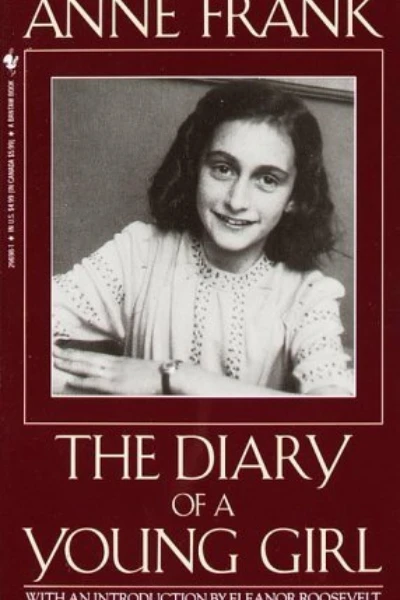
I haven’t written for a few days, because I wanted first of all to think about my diary. It’s an odd idea for someone like me to keep a diary; not only because I have never done so before, but because it seems to me that neither I—nor for that matter anyone else—will be interested in the unbosomings of a thirteen-year-old schoolgirl. Still, what does that matter? I want to write, but more than that, I want to bring out all kinds of things that lie buried deep in my heart.
There is a saying that ‘paper is more patient than man’; it came back to me on one of my slightly melancholy days, while I sat chin in hand, feeling too bored and limp even to make up my mind whether to go out or stay at home. Yes, there is no doubt that paper does have more patience and as I don’t intend to show this cardboard-covered notebook, bearing the proud name of ‘diary,’ to anyone, unless I find a real friend, boy or girl, probably nobody will care. And now I come to the root of the matter, the reason for my starting a diary: it is that I have no such real friend.
Let me put it more clearly, since no one will believe that a girl of thirteen feels herself quite alone in the world, nor is it so. I have darling parents and a sister of sixteen. I know about thirty people whom one might call friends—I have strings of boy friends, anxious to catch a glimpse of me
and who, failing that, peep at me through mirrors in class. I have relations, aunts and uncles, who are darlings too, a good home. No, I don’t seem to lack anything. But it’s the same with all my friends, just fun and joking, nothing more. I can never bring myself to talk of anything outside the common round. We don’t seem to be able to get any closer, that is the root of the trouble. Perhaps I lack confidence, but anyway, there it is, a stubborn fact and I don’t seem to be able to do anything about it.
Hence, this diary. In order to enhance in my mind’s eye the picture of the friend for whom I have waited so long, I don’t want to set down a series of bald facts in a diary like most people do, but I want this diary itself to be my friend, and I shall call my friend Kitty. No one will grasp what I’m talking about if I begin my letters to Kitty just out of the blue, so, albeit unwillingly, I will start by sketching in brief the story of my life.
My father was thirty-six when he married my mother, who was then twenty-five. My sister Margot was born in 1926 in Frankfurt-on-Main, I followed on June 12, 1929, and, as we are Jewish, we emigrated to Holland in 1933, where my father was appointed Managing Director of the Dutch Opekta Company, This firm is in close relationship with the firm of Ges & Co. in the same building, of which my father is a partner.
The rest of our family, however, felt the full impact of Hitler’s anti- Jewish laws, so life was filled with anxiety. In 1938, after the pogroms, my two uncles (my mother’s brothers) escaped to the U.S.A. My old grandmother came to us, she was then seventy-three. After May 1940, good times rapidly fled: first the war, then the capitulation, followed by the arrival of the Germans, which is when the sufferings of us Jews really began. Anti-Jewish decrees followed each other in quick succession. Jews must wear a yellow star; Jews must hand in their bicycles; Jews are banned from trams and are forbidden to drive; Jews are only allowed to do their shopping between 3 o’clock and 5 o’clock and then only in shops which bear the placard ‘Jewish shop.’ Jews must be indoors by 8 o’clock and cannot even sit in their own gardens after that hour. Jews are forbidden to visit theatres, cinemas, and other places of entertainment; Jews may not take part in public sports. Swimming baths, tennis courts, hockey fields, and