28th October
The weather has taken a turn. Some days have proven too foul for me to set foot out of doors, a combination of hail and sleet. I have been able to explore another section of forest, where I found a smaller hot spring and—high above the village— the edge of a glacier. I spied several cavernous fissures amongst the ice where the villagers had left food offerings long ago. I wondered what faerie, or faeries, had abandoned the place.
I was not worried about missing my new friend, for the Folk are not bound by time in the way that we mortals are. He would have my bread for me whether I visited next week or next month. I sent off a letter to my brother with sufficient funds to purchase a bearskin. He will grumble and write to me with complaints that he is very busy with his shop and his wife, not to mention their four children, and that he hasn’t time to assist with my faerie escapades, but he will send it all the same.
My breakfasts continued to be burnt. One morning, my butter had tiny fish bones in it. Yet I could get no explanation from Aud as to how I had offended her. When I attempted to apologize for questioning her about Auður, she gave me a perplexed smile and assured me that no apology was necessary. I was beginning to conclude that the whole thing was some wild imagining of Krystjan’s, until I visited Hrafnsvik’s only shop. That is when the fear that I would freeze to death was replaced by the fear that I would starve.
I took the long way, navigating the steep switchbacks below the cottage and strolling past the Egilson farm. Krystjan and Finn have a handsome home, rustic but large, with more windows than is common in the village. It
is set back from the road at the end of a meandering lane lined with many outbuildings—livestock, hay, farming implements. Sheep grazed against the tall blue mountains.
The weather had ceased its blustering storms and settled into a rainy pattern, dark clouds clustering over the mountains. I wondered if I would ever get used to them rising from the earth like a terrible wave, spitting fantastical waterfalls.
The shop, a rickety structure painted a vibrant red, was closed for no apparent reason, so I waited outside as the drizzle turned into a cold, hard rain.
Across the road was another farmstead, much smaller than Krystjan’s. A mangy goat browsed in the grass amongst a flock of chickens. At the end of the farmer’s lane was a house that had once been blue; the paint had largely peeled off, and the roof was sagging. There was something about the house that made me wish to look away. If not for the animals, I would have thought the place abandoned.
A thin hand pushed back a faded curtain in the upstairs storey.
Something about the hand was terribly wrong, though I could not place it. It may have been the way it moved, a sort of spiderish twitch. For a moment, a face peeped out at me. It was so white that I thought it must have been painted, topped with a dark thatch of hair. Child-sized it was, and while I could not make out any features, I sensed it was smiling. It pressed a hand to the glass as if in greeting, and I started. The hand was covered in blood.
The figure was gone as abruptly as it had appeared, leaving the bloody handprint behind. Habit made me disregard my thundering heart and look away, and I counted to ten. When I looked back, there was no sign at all of blood.
“Hm,” I grunted aloud. I would have to make inquiries regarding the owners of the farmstead. I wondered if they were aware they had a faerie living within their walls. My inquiries would have to be discreet, as I did [*]not like the looks of the creature.
I was interrupted by the appearance of Groa, the shopkeeper. Plump and smiling, she issued a great quantity of apologies as she admitted me into the
shop. Her English was not fluent, but with my smattering of Ljoslander we managed to cobble together an understanding.
The shop was cheery and warm, cluttered with an impressive assemblage of goods, from food to farming and fishing implements. I nearly tripped over a sewing machine on my way to the counter. I requested flour, milk, butter, smoked fish, and tea, and Groa also encouraged me to take a few mutton sausages and a box of fresh carrots, leeks, and cabbage.
Humming to herself, she wrapped my requests in paper. I felt warmed just being in her presence, and though I have not much talent for small talk, I found myself compelled to ask her a few questions about herself. She was older than I had first guessed, and had run the shop alone for twenty years since the death of her husband. She informed me that the blue house belonged to a young couple named Aslaug and Mord, who lived with their son, Ari. Her cheer dimmed a little when I broached this topic, and I did not press her.
“How much?” I enquired, and she cheerily named an exorbitant sum ten times what such supplies would cost in Cambridge.
I had to ask her to repeat herself. She did so, just as cheerily, seeming not to notice my consternation. She bustled about the shop, chattering absently about the buns she left outside for the wee ones—I should have pressed her on this score, but I was too flustered.
I emptied my pockets—quite literally. At this rate, I would run through the entirety of my funds in less than a month.
“Wait!” Groa said. She placed one of her small glazed cakes, wrapped in cloth, atop the bundle in my arms, and tapped her lips. “Aud says you do not wish to be treated as a guest, but to pay foreigners’ rates for everything.
But I cannot resist. My mother’s svortkag is for everyone, and it is priceless. Please accept.”
I nodded, a grimness settling inside me. Shadow and I made our way back to the cottage, where I deposited our supplies. Then, the dog having settled himself in for an afternoon nap on my bed, I made my way to the spring alone.
As before, I seated myself by the water and removed my boots. I admit that I am increasingly tempted to do more than this. I continue to have difficulty with the firewood, managing to cut only a few pieces if I am lucky and relying on Finn for the rest. But Finn is not always available, and so I am hesitant to use the fire for anything other than maintaining a bare minimum of warmth in order to ration my fuel. Thus, I have heated water for bathing only once, and that a small quantity. I still feel as if I am thinly layered in salt from the voyage north, like a bookshelf that has been left undusted.
My friend was prompt in arriving. I had the beaverskin ready, and he marvelled over it for a very long time. Beneath his gruesome ravenskin he looked much like a branch, covered in autumnal moss. He discarded the raven and, after pulling and prodding at the beaverskin, folded it over his shoulders.
Noticing me watching him admire himself, he blushed. He pushed the grass aside and wrapped his sharp fingers around a fine loaf of bread. It smelled of sulphur, but was perfectly golden and soft.
“Thank you,” I said quietly. I had certainly not intended to rely on the Folk for sustenance—my bargain with the little faerie was to have been for the purposes of trust-building only.
Well. There was nothing for it. I tucked the loaf away, feeling low. I couldn’t help but worry that I was harming my scientific objectivity through this arrangement, and that put the cap on a day of frustrations. Or so I imagined then.
“When you run out, I will bring you more,” the faerie said, turning from the spring, in which he had been admiring himself.
“In exchange for?”
“Nearly nothing,” he said. “Only clear a path from my tree to the spring when the snows come.”
“And which is your tree?” I enquired, though I had already guessed. The faerie pointed to a lovely white aspen, clad in moss like himself, the only one I had noticed in that part of the forest. Thinking back to the loaf Finn
had served me with breakfast, all yeast and salt, I had no choice but to agree.
I hurried back to the cottage, intending to spend the rest of the day adding to my notes. That morning, Finn had pointed out several faerie rocks scattered about the farmstead, and I had a mind to map and investigate each one.
The rain started up again as I walked. My boots sank into mud up to the ankles, and I was quickly soaked through and shivering. I nearly ran back to the cottage, an ill-advised decision, for the slope was treacherous even in fair weather. I slipped and ended up on my back in the mud.
Once I finally slogged my way up the cottage steps like some ungainly monster of the mountains, I almost failed to notice that the door was ajar. I thought first of Finn, and then I thought, strangely, of the pale face and the bloody hand. Breath coming fast, I pushed on the door.
A sheep stared back at me.
No—two sheep. One stood upon the carpet, enjoying the heat of the coals, while another roamed to and fro, chewing at something green.
Green. My cabbages!
The table where I had left my groceries was askew, the pitcher of milk shattered on the floor and Groa’s svortkag smashed into bits that seemed to be scattered everywhere there wasn’t milk. The sheep had also overturned a pile of my books, and half-chewed pages decorated the flagstones with hoofprints on them—not my book, thank God; I had put that carefully back into my trunk. Shadow sat in the bedroom doorway, politely puzzled as he watched the baggy field-dwellers bulldoze their way through his home.
Good dog that he was, he’d given no thought to obstructing the sheep’s rampage, having been admonished many times against menacing them.
I erupted into shouts, a mixture of commands in English and Ljoslander alongside various garbled ejaculations of no meaning at all. I lunged at the nearest sheep, intending to pry the remnants of the cabbage—worth more than the sheep itself—from its maw, but the creatures only took fright and stampeded round and round the cottage. No sooner had I managed to force one towards the door than its companion got it into its head to run in the
opposite direction. More books were trampled, the frying pan and various pots tumbled off their hooks with a clang, the wood box tipped onto its side, and the armchair fell atop one of the sheep, setting off a storm of horrified bleats quickly echoed by its accomplice. Shadow, noting my distress, leapt into the fray, but as he could do nothing to the sheep, he merely ran aimlessly amok, howling, which had a predictable effect upon the interlopers. Amidst the chaos, I did not hear the knocking at the door, which grew louder by the second, nor the creak when it opened.
“God’s grace, Em,” came a lilting voice from the threshold. “I’ve never heard such— Ah! Away with you, woollen rat!”
This last was directed at the sheep, which, having had quite enough of the screaming madwoman in the cottage, now sought the relative peace of their rain-soaked abode. Together they hurtled at the tall, black-clad figure obstructing their egress, sending him sailing back down the stairs.
Shadow followed them out the door, still barking (for he had established that he was allowed to bark at the sheep, at least), and plowed into the figure who had been collecting himself from his tumble onto the grass, knocking him over once more.
The figure lifted his head, revealing himself as none other than Wendell Bambleby.
“Any more?” he called from his sprawl at the foot of the stairs.
“What?” I shouted. I believe I had gone slightly deaf.
“Any more of your demented beasts lurking within? Should I simply lie here until they take their leave?”
“They’re not mine,” I felt it necessary to say. “Well, one of them is.”
Bambleby was not alone. In his wake trailed two young persons whom I recognized as his students, though I could not recall either of their names— Bambleby is regularly trailing students, you see. The young woman—red- haired and wide-eyed in a way that gave her a perpetually bewildered look —reached down and helped him to his feet.
As he brushed himself off, I began to comprehend that Wendell Bambleby was standing outside my cottage. You would think this would
have happened before, but there hadn’t been space for it amidst the pandemonium.
“Dear Emily,” Bambleby said as he tugged a leaf from his hair. The hair was golden and entirely perfect, like the rest of him. “Always one for the unexpected.”
He gave the girl who had helped him a smile so thoughtlessly beautiful that she seemed momentarily incapable of movement, before turning his amused black eyes upon me again. His slender frame was clad in its customary blacks, all immaculately tailored from the line of his cloak— which had an upturned collar—to the folds of his scarf. You would not think a scarf could be tailored, until you met Bambleby. His age was difficult to place, though I knew it to be twenty-nine, for he had told me.
“I, unexpected?” I managed finally. “What the bloody hell are you doing here, Wendell?”
“What am I doing here?” he repeated with a breath of laughter. “Well, I thought to myself, why take a first-class carriage to the south of France for sabbatical when only five days of seasickness can grant you the luxury of a fishing village in an icebound wasteland? What do you think I’m doing here, Em?”
He motioned to the students and then swept up the stairs and past me into the cottage. The students bent to collect a large quantity of luggage— several bags each, and a trunk. They too tromped into the cottage.
“Oh, God,” I said to no one in particular. And I had thought I had been at my wit’s end with the sheep.
“This place looks as if it’s being tenanted by raccoons,” Bambleby noted, looking about him. His graceful Irish brogue formed a bizarre contrast with the recent din, which still rang in my ears. “And why isn’t the fire lit? Enjoy the cold, do we, Em?”
Now, I have never once suggested he call me Em, and am in fact accustomed to greeting the sobriquet with a stony glare. “The fire isn’t lit because I am nearly out of firewood,” I said. I settled myself in the chair in an attempt to collect my scattered wits. “Perhaps you’d care to rectify that?”
He frowned at the fireplace. He was such a picture in his splendid blacks (collar upturned), framed against the dusty dishabille of the cottage, that I had to laugh; it was as probable a sight as a prince in a cowshed. I know Bambleby has been in the field, and I suspect he was somewhere else entirely before that, but I only know him set against his oak-panelled Cambridge office, the warm cathedral of the library, the manicured leafiness of the university grounds with their stone fountains and statuary.
“Henry will take care of all that—won’t you, dear?” Bambleby said. The faintest alarm had come upon his face at my suggestion—either he hadn’t any idea of how a fire came to be or he was in terror of dirtying his sleeves.
The hapless Henry, who had the sharp-edged proportions of a man not a day over twenty, nodded eagerly and set to prodding the sullen wet logs with one of the candlesticks. Now, I was no enemy of poor Henry’s and should not have been amused by his ineptitude, but I will admit that I watched this performance for several minutes without comment. Wendell drifted off down the hall with his unnamed and equally hapless admirer, clearly viewing his duty as complete.
“There are only two additional bedrooms,” he informed Henry upon his return. “I shall give you two the larger of them. See to all that later,” he instructed Lady Hapless, who had begun to lift the trunk again. “We must first make this place liveable. Emily, I must warn you away from your own bedroom temporarily. If you hadn’t already noticed, the sheep have been in there too, and they’ve given it rather a smell. Em?”
He seemed to look at me properly. “What have you done to yourself? Is this some sort of camouflage, to fool the Folk into thinking you’re one of the flock? Oh, don’t look at me like that, you’re the one who turned our
cottage into a byre.”
“Our cottage!”
He ignored me. Tsking over the empty cauldron, he said, “Henry, let’s collect water. I noticed a stream out back. Lizzie, perhaps we could gather up the rubbish?”
In the space of a few minutes, Henry had water bubbling over the fire (started with pages of my ruined books), and I had a cup of tea in my hand.
The two of them were sweeping and scrubbing up the mess while Wendell leaned back in the other armchair he had dragged over to the fire, offering occasional directives phrased as suggestions. I had changed clothes and done what I could to wash off in the stream out back, which wasn’t much, if I’m being honest. I could still feel the mud clumping in my hair.
“This is quite good,” Bambleby said, helping himself to another piece of toast. It was the faerie’s bread, warmed over the fire. He looked perfectly comfortable slouched in his chair in that gracefully boneless way of his, clad in a fresh cardigan. “You say the creature is a brownie?”
“Yes—tree. Though he also seems to act as a guardian of the spring, which is unusual.” I do not like to admit it, but I was in better spirits, and this was not only due to the tea. Unwelcome as his presence was, Bambleby was a piece of Cambridge, and I felt more myself with him there.
Bambleby stretched, interlacing his hands behind his head. “Dunne noted a similar phenomenon among the Finnish keiju. What did she call it?
Elemental decoupling?”
I snorted. “Dunne invents theories to hide her shoddy methodology. You cannot generalize about such things with her sample sizes.”
Bambleby murmured assent. I realized that he was smiling at me sleepily. Lizzie would have been beside herself with blushes at that smile, but I was too used to him. I simply gazed levelly back, waiting for him to explain this latest outrageousness.
“I missed you, Em,” he said. “It was strange not having you across the hall, scowling at me.”
“I wonder at your ability to detect my scowls through the wall. Are your senses heightened in other ways?”
I was needling him. I do this sometimes. I believe Bambleby knows my suspicions about him.
“You alone have the talent of scowling loudly. I’ve often wondered how you manage it.” He turned to Henry. “Summon our host, would you? I’ve a mind to have a hot meal before I retire. And do ask after the possibility of dessert. Nothing elaborate—an apple tart or bread pudding will suit. God in Heaven, but I am tired of fish stew and sailor’s bread.”
I could not imagine such a message eliciting a favourable response from Krystjan Egilson, so naturally I said nothing. Bambleby leaned forward and took my hand. “I suppose you’ve guessed why I’m here. Let me assure you, it’s not what you think.”
“Oh?” I knew exactly why he was here. To take credit for my research.
“I have the utmost respect for your abilities, Emily. Please do not interpret my presence to mean that I think you’ll make a mess of this opportunity. Nothing could be further from the truth.”
I withdrew my hand, shrivelling into a ball of anger. “Oh, wonderful.”
“I’m here to assist,” he assured me, perfectly oblivious.
“And I’m sure that this desire to be helpful has nothing to do with a fear that someone other than yourself might get the credit for conducting the first comprehensive investigation of a yet unproven species of Folk?”
He gave me a wide-eyed look of surprise. “That wouldn’t be very sporting. I like to think that I’ve always been a good friend to you. Why else would I have volunteered to write the foreword to your encyclopaedia?”
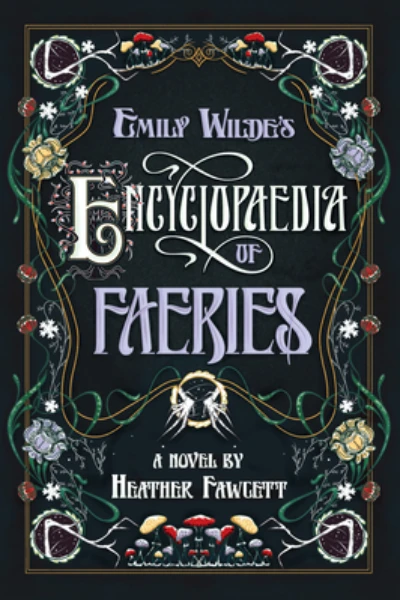
I was going to club him over the head with my encyclopaedia when it came out. Was it really necessary for him to always be reminding me that I needed him? “As a matter of fact, my findings are quite advanced,” I said.
“So you may discover that whatever research you undertake here only serves to back up my conclusions.”
“Indeed?” To my chagrin, he looked excited rather than resentful, and I realized that he truly did see us as colleagues rather than competitors. The problem with Bambleby, I’ve always found, is that he manages to inspire a strong inclination towards dislike without the satisfaction of empirical evidence to buttress the sentiment. “Will you show me the data you’ve collected thus far?” His eagerness was interrupted by a yawn. “Tomorrow, perhaps?”
I tapped the rim of my mug, watching him. “What form do you anticipate this assistance taking, precisely?”
He gave me a different sort of smile, and I felt a chill creep down my back. There is something that Bambleby does which would be noticeable
only to those who spend a great deal of time around the Folk. It is the way in which his emotions seem to slide through him like water, one giving way to another as abruptly as waves on the shore. This changeability would seem disconcerting or false on a human face, but it is just the way the Folk are made.
He leaned forward. “Are you familiar with the International Conference of Dryadology and Experimental Folklore?”
His voice had a teasing edge, for of course I was familiar. ICODEF is the most prestigious conference in our field, held annually in Paris, to which I had not once been invited. Bambleby went every year, damn him.
“I’m a featured speaker this year,” he said. “There is a particular sponsor attending whom I wish to impress. Very deep pockets. It could mean funding for not one but several research expeditions I have been putting off for lack of resources. Few things would be more impressive than a paper presenting even preliminary findings of a heretofore unknown Folk. As you say, these Hidden Ones are regarded with scepticism by even the most open-minded of scholars. But, as I’ve always argued, the fact that the Folk are absent in other regions of Arctic and sub-Arctic Europe cannot be taken as evidence of their absence in every winter country.”
I narrowed my eyes. “I’ve not been invited to ICODEF this year. Will you credit me in a footnote?”
“We will present our findings together. I will impress my sponsor. You will make a name for yourself and set the scientific community clamouring for your book, which I understand is out next year.”
He sank back into his slouch, looking merry, utterly convinced that I would be delighted. I kept my expression bland, to deny him that pleasure at least, but of course there was no option besides agreement.
Bambleby was being modest—no doubt an oversight of fatigue. He was not merely a featured speaker at ICODEF this year; he was likely the only one people would be talking about, though I doubted the reasons were entirely to his liking.
“I planned to see through the winter here,” I said. “To attend ICODEF would mean departing Hrafnsvik—”
“February the first,” he said. “At the very latest. The plenary is on the tenth. And, well, we need a day or two to settle in, don’t we? I have already promised half a dozen of our continental colleagues that I would dine with them on the Champs-Élysées—you will come along, of course—among them Leroux and Zielinski. She’s been awarded some sort of medal by the Polish queen and has been rather big-headed about it—snubbed three- quarters of her old circle, though I’ve managed to stay in her good graces… They say even the king of Paris may make an appearance this year; if so, I’m sure I can convince Leroux to make the introductions…”
My heart gave a nervous flutter. That would shorten the duration of my field study drastically. I would have only three months—three months!—to accomplish what took most scholars a year or more. Could I do it?
Instead of answering, I sipped my tea and said, “I’m a little surprised you were invited back this year. But I suppose the furor over the Schwarzwald expedition has died down somewhat.”
He slouched deeper and became preoccupied with his sleeve. “A misunderstanding, that. I’ve no doubt future studies will validate my findings.”
“Of course.” I’d no doubt they would do the opposite. I suspected that Bambleby’s paper concerning the snow-weavings of the trooping faeries of the Schwarzwald was not the first of his to contain exaggerated or patchy evidence, but it was probably the first he had entirely falsified.
Probably. Wendell Bambleby’s research is all flash and dazzle, and he has an uncanny knack for uncovering outlandish new faerie rituals and enchantments that turn much of the related scholarship on its head—a knack I have often found less uncanny than suspicious.
Shadow placed his head on Bambleby’s knee, and he reached his long fingers down to stroke the dog’s head. In the early days of our friendship, Bambleby had been unsure of Shadow, often appearing to have little idea of what to make of him, so much so that at times I wondered if he had ever seen a dog before. But Shadow had no such hesitancy. From their first meeting, he regarded Bambleby with a thoughtless and entirely undeserved ardour that would have filled me with jealousy had I not already been so
secure in Shadow’s affections. As time went on, Bambleby grew accustomed to offering hesitant pats in return, and now—to my chagrin— they are old friends.
“This book of yours is important to you, isn’t it?” he said. He reached into his briefcase and pulled out a stack of neatly typed pages. I recognized the excerpt I had sent him last month, comprising the first fifty pages or so.
“You’ve read it?” I demanded.
“Of course.” He riffled the pages—they were much marked-up with his elegant scrawl. “It’s quite remarkable. I’d like to see the rest once you’ve had it typed out.”
I was startled by the flush that crept up my neck at his words. I’ve never attached particular consequence to Bambleby’s opinion of my work, but I suppose it wasn’t just about his opinion. The encyclopaedia has been mine alone for the better part of a decade. It is one thing to think highly of one’s own research, quite another to hear that opinion corroborated.
“Remarkable?” I repeated.
“Well—it’s never been done before, has it? An encyclopaedia of faeries?
This will form a cornerstone of all scholarship on the subject for years to come. Probably it will lead to the formation of new methodologies that will enhance our core understanding of the Folk.”
He said it without any hint of flattery. I could only reply honestly, a little overwhelmed, “Yes, that was the intention.”
He smiled. “I thought so. You don’t need the chapter on the Hidden Ones, you know.”
“It will be less impressive without it.”
“And who is it you are wishing to impress? Ah.” He leaned back in his chair. “The faculty position. That’s it, isn’t it?”
“And if it is?” I couldn’t interpret the look on his face. “You don’t think
I have a chance?”
“Well, you’re a little young—”
“And you’re not?” Cambridge had given him tenure two years ago, the bastard.
“I’m an exception.” He said it absently, looking down at the pages, and a smile came over his face. “When is old Sutherland retiring?”
“This fall.” I was leaning forward, twisting my fingers together. “I plan to put my name forward when I return. It would give me money. Resources.
I wouldn’t have to scrape together the funding for a one-month expedition; I could run multiple field studies at once if I chose. Think of the discoveries I could make, the mysteries I could solve. And—” And I would never have to leave Cambridge, I almost said.
“Yes.” He flicked another page. “And you shall shut yourself away forever in those old stones with your books and your mysteries like a dragon with her hoard, having as little association with the living as possible and emerging only to breathe fire at your students.”
He has an irritating way of understanding me, at least in part, which is more than anyone else does—no doubt some faerie gift of his. “You intend to stay here, do you?” I said, to change the subject.
“Where else? This is not the sort of place for a hotel, is it? I received your host’s assent to my enquiry the day after I wrote to you, and departed Cambridge immediately thereafter. I assumed he would have told you.”
I winced. “Egilson and I have not been on the best of terms.”
“What?” He gave an exaggerated affectation of surprise. “Dear Emily.
Don’t tell me you’ve had trouble making friends.”
My scowl was interrupted by the creak of the door. As before, Krystjan strode into the cottage without knocking. I could tell by his expression that Bambleby’s message had been as well received as I had guessed. Lizzie trailed behind him, looking uselessly apologetic.
“Mr. Egilson!” Bambleby was on his feet immediately, his smile broadening. “I see that you don’t stand for formalities, my good man. How refreshing. I must convey how much I appreciate your hospitality at such short notice. I had heard tales of the warmth and generosity of your compatriots, but you have gone above and beyond.”
He said all of this in accented but fluent Ljoslander. It stopped Egilson in his tracks, but only for a moment. “Professor,” Egilson said warily, accepting the proffered hand. I could see his frostiness melt a little upon
exposure to the onslaught of Bambleby’s charm, but he was a hardy man, and his smile was tight. “There’s been a misunderstanding. You’re welcome here, but unfortunately, we aren’t in a position to provide meals—beyond the essentials at breakfast, of course. I run a large farm—you understand.”
He had responded in English, which Bambleby acknowledged with a grateful smile that somehow managed to convey an admiration for Egilson’s fluency. I detected a distinct hint of amusement in his gaze that, fortunately, seemed to evade Krystjan’s notice. “I understand entirely. I hope you don’t think I expected you to prepare our repast. I was, of course, offering to cook for your family.”
Egilson blinked, his reserve dissolving into amazement. “You were.”
“Oh, God,” I muttered. “Please say yes.”
Bambleby clapped Egilson on the shoulder. “Of course. It’s customary in Ireland for the guests to prepare at least one meal for their hosts. As a token of appreciation. What is your preference? We have some supplies here.” He stormed about the cottage, collecting the smashed remnants of the cabbage and carrots along with the smoked fish I had purchased, managing to convey a cheerful but manic energy. I could see from Egilson’s face that he was envisioning Bambleby unleashed upon his kitchen.
“I— While I appreciate—” Krystjan began.
“Say nothing about it. I’ve a recipe for spice cake that’ll set your mouth on fire. That’s how we like it in Ireland. And as for the mains…”
“Truly, Professor, it’s all right.” Krystjan was smiling—a grudging but very real smile, not his customary smirk—as Bambleby stomped about, radiating good cheer. “You’ve only just arrived. I couldn’t trouble you to cook for my son and me. Not that I don’t appreciate the offer.”
Bambleby stilled, blinking. Cabbage leaves swirled in his wake as in a contrary wind. “Really? Well, if you—”
“Finn’s putting together a stew. We’ll send some down to the cottage. If that’s all right.”
“Of course, my friend,” Bambleby said. Then, to my astonishment, he added, “And I’ve no preference between the bread pudding and the apple
tart.” He snapped his fingers. “How rude of me! Emily, dear, which would you rather?”
I found myself suppressing a laugh. “Apple tart would be lovely.”
“There we are.” Bambleby smiled at Krystjan, who blinked as if trying to clear his vision. “And we’ll talk tomorrow, won’t we? It’s my custom to interview the townsfolk—those of stature, you understand—at the outset of these investigations. It’s good to get a lay of the land. I’ve no doubt you’re inclined to be helpful?”
As he spoke, he moved closer to Egilson, taking the man’s hand again.
“Of course,” Egilson murmured, helplessly staring. Bambleby’s eyes are not actually black, but the green of a forest at dusk, something you notice only when you are very close. I have seen people become lost in that gaze, foolishly wandering about and entangling themselves in thorns and God knows what else—Krystjan was certainly not the first. He should have looked away, counting to ten or focusing on his breathing or other mundane distraction, but of course he has no experience in evading the tricks of the Folk.
I cleared my throat. Krystjan blinked at me as if only just realizing I was there. “Thank you, Krystjan,” I said. And I suppose some of Bambleby’s mischief must have infected me against my will, for I added, “And we’ll take a half dozen goose eggs with breakfast tomorrow.”
Krystjan nodded like a man struck over the head and exited the cottage, politely pulling the door shut behind him.
“Spice cake?” I said.
Bambleby tumbled back into his chair. “How hard could it be?”
“Have you ever made spice cake?”
“I’ve certainly eaten it.”
“Have you ever made anything?”
“That’s neither here nor there.”
I snorted. My stomach gave such a growl that Bambleby wrinkled his nose. It had been days since I’d had a proper meal, I realized.
“Could we build the fire up?” Bambleby said, indicating by means of the plural first person Henry and Lizzie.
Henry strode gallantly over to the wood box, where he frowned. “It’s empty.”
Wendell looked alarmed. I said, “You’ll find more out back. There’s a woodshed. My axe is in the garden.” Still buried in a stump from my last attempt, but I saw no need to clarify.
“Ah,” Bambleby said, “the woodshed,” in precisely the same tone I had used upon my arrival. And thus we commenced our partnership.
SKIP NOTES * The scholarly community has long since moved past such dated distinctions as seilie or unseilie, light or dark, in reference to the Folk, recognizing the general tendency towards malevolence that exists even within seemingly beneficent fae (see de Grey and Eichorn’s Tutelary Spirits). But there are certainly those whose chosen sport is to frighten and spread misery wherever they go.